An official website of the United States government
Here's how you know
Official websites use .gov
A .gov website belongs to an official government organization in the United States.
Secure .gov websites use HTTPS
A lock (
) or https:// means you’ve safely connected to the .gov website. Share sensitive information only on official, secure websites.

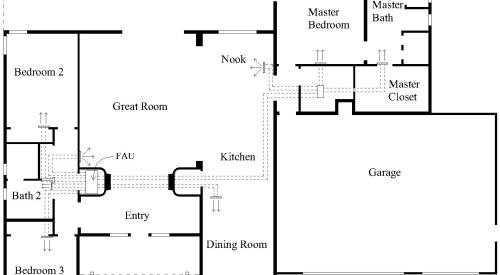
Guide describing how to design HVAC systems to be located within the conditioned space of the home, either in a utility closet or in an attic, basement, or crawl space.
Guide describing how to conduct testing for adequate combustion air in the space where a combustion appliance is located if the appliance is located within the conditioned space of the home.
Guide describing how to thoroughly seal HVAC ducts to ensure air delivery without leakage, and to ensure economical and quiet performance of the HVAC system.
Guide describing how to install jump ducts in bedroom walls to balance air pressures between rooms, enabling stale air to return of the central air handler, even when room doors are closed.
Guide describing removal of construction debris from flex ducts and protection of ducts and HVAC equipment during construction to keep them free of dust and debris.
Guide describing how to improve boiler efficiency in multifamily central hydronic heating systems by installing thermostatically controlled radiator valves (TRV) to reduce temperatures in overheated spaces.
Guide describing how to conduct duct leakage tests per RESNET protocols on all components of the HVAC system (including the air handler, ductwork, register boxes/boots, and all air devices such as diffusers, registers, or grilles).