An official website of the United States government
Here's how you know
Official websites use .gov
A .gov website belongs to an official government organization in the United States.
Secure .gov websites use HTTPS
A lock (
) or https:// means you’ve safely connected to the .gov website. Share sensitive information only on official, secure websites.

Document providing background and approach for the prep work necessary prior to adding attic insulation - focusing on combustion safety, ventilation for indoor air quality, and attic ventilation for durability.
Information guide providing links to guides describing specific ways to air-seal, insulate, and ventilate attics and roofs to minimize heat gain in new and existing homes.
Presentation by Home Performance Contractor Academy giving building science advice for for homes in dry climate zones, specifically building envelope, air sealing, and attics. Part 5 of 7.
Video from Cold Climate Housing Research Center on how warm air typically leaks out of homes through attics via the stack effect and how to mitigate these effects through building practices.
Article describing the causes that form ice dams, as well as solutions for preventing future ice dams on roofs, focusing on air sealing to prevent hot air leakage.
Information guide describing the use of attic ventilation fans to mechanically pull outside air through the attic in an attempt to cool the attic, control moisture, and prevent ice dams.
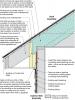
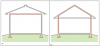
Video describing roof and attic construction for cold climates, including cathedral roof design and insulation strategies, from Cold Climate Housing Research Center.
Article describing the importance of air sealing, insulation, and roof ventilation in reducing the likelihood of ice dam formation on roofs in cold snowy climates.
Report about a project that examines implementation of advanced retrofit measures in the context of a large-scale weatherization program and the archetypal Chicago, Illinois, brick bungalow.
Guide describing how to add spray foam insulation to the underside of the existing roof deck as part of the conversion of a vented attic to an unvented, insulated attic.