Drawings
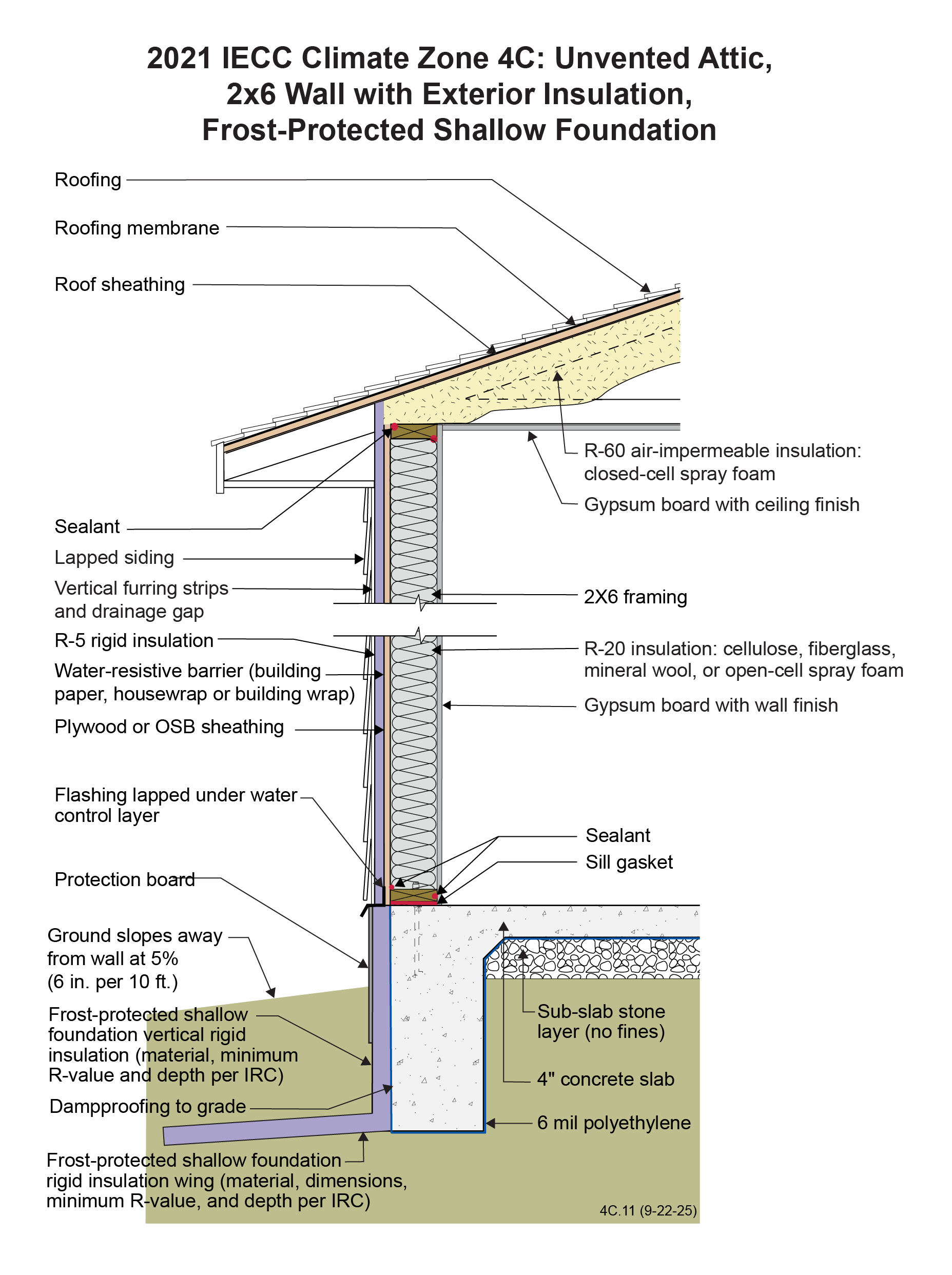
2021 IECC Climate Zone 4C: Unvented Attic, 2x6 Wall with Exterior Insulation, Frost-Protected Shallow Foundation
Notes
IECC Climate Zone 4C: Unvented Attic, 2x6 Wall with Exterior Insulation, Frost-Protected Shallow Foundation
- Provisions from Section R806.5 of the 2021 IRC should be followed to allow for the installation of an unvented attic, including considerations for vapor control, minimum thickness of air-impermeable insulation (by Climate Zone), and ignition barriers.
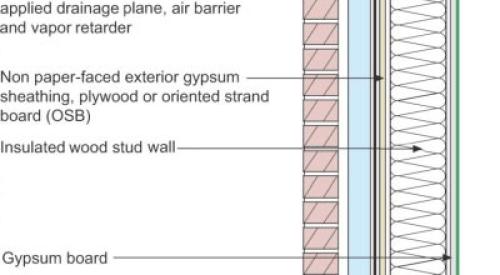
- The water-resistive barrier (WRB) is shown installed between the continuous insulation and the wall sheathing. Alternatively, the WRB can be on the exterior of the continuous insulation. In either case, all flashing details must ensure water is directed to the outside of the WRB.
- The R-5 rigid insulation on the exterior of the wall framing allows the wall to be constructed without an interior vapor barrier according to the provisions in Section R702.7 of the 2021 International Residential Code. To maximize drying potential in the wall assembly, the interior side of this wall assembly should not have a Class I vapor retarder.
- Rim joist insulation should align with R-value requirements for above-grade exterior walls.
- Exterior cladding fastening requirements should follow guidelines from cladding manufacturer or Section R703.15 of the 2021 IRC.
- Backfill placement should prevent damage to exterior continuous insulation.
- Exterior insulation should be protected above grade.
- Provisions in Section R403.3 of the 2021 IRC should be followed to determine the R-value, depth, and placement of insulation to satisfy frost-protected shallow foundation requirements.
- Horizontal sections of insulation should be installed in accordance with Table R403.3(1) of the 2021 IRC.
- Unvented attics in locations with a ground snow load greater than 50 lbs/ft2 (293 kg/m2) require venting over the insulation layer. This can be achieved by creating a vented “over-roof” (not shown in this assembly drawing). The thermal resistance of deep snow can be high enough to allow the lower level of snow in contact with the roof to melt and cause ice damming unless the roof is vented.