An official website of the United States government
Here's how you know
Official websites use .gov
A .gov website belongs to an official government organization in the United States.
Secure .gov websites use HTTPS
A lock (
) or https:// means you’ve safely connected to the .gov website. Share sensitive information only on official, secure websites.

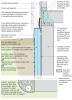
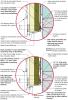
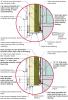
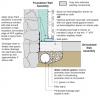
Guide describing different options for providing seismic and thermal resistance for homes with basement foundations, crawlspace foundations, or crawlspace foundations with a "cripple" wall.
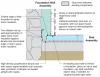
Guide describing how to insulate the sill beam or sill plate on the exterior side in a way that allows drying to the exterior, as part of an exterior wall upgrade.
Checklist highlighting the requirement for metal structural connections and materials fasteners used to retrofit or construct FORTIFIED buildings less than 3,000 ft from saltwater to be suitably protected from corrosion.
FEMA mitigation assessment team report following Hurricane Charley in Florida including observations, recommendations, and technical guidance for retrofitting hurricane-damaged homes.
Video showing how to protect your home against both earthquakes and high winds and how similar design strategies can work for both events per FLASH Strong Homes guidelines.
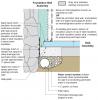
Vapor retarder plastic should not be installed over fibrous insulation on basement or crawlspace walls; rigid foam or spray foam should be installed directly against the concrete, behind the blanket insulation.
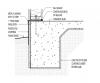
Report describing how to construct a frost protected shallow foundation (FPSF) as a practical alternative to a deeper, more-costly foundation in cold regions with seasonal ground freezing and the potential for frost heave.
Video describing an “excavationless” retrofit technique developed by the University of Minnesota to install exterior insulation around the foundation of an existing home by using high-pressure water to cut a trench through the dirt along the edge of a concrete foundation, remove the mud with a...
Report describing dry floodproofing technologies for non-residential buildings, including information about regulatory requirements, design considerations, and descriptions of floodproofing methods and equipment.
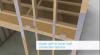
Video presentation describing the importance of a continuous load path and how good design and construction practices can improve storm resistance per APA guidelines.
Video illustrating the importance of a properly installed continuous load path in homes for the home's structural integrity including where and how to properly install bracing measures per IBHS FORTIFIED Home specifications.
Study characterizing how foundation heat exchangers (FHXs) used in residential ground source heat pump systems represent a potential cost savings due to their lesser first cost over other types of heat exchangers.
Conference paper presented at the 8th International Conference on Thermal Performance of Exterior Envelopes of Whole Buildings describing moisture from basements and crawlspaces as a source of indoor humidity and providing recommendations for finishing below-grade spaces to limit potential indoor...
Documents describing the similarities and differences between the National Flood Insurance Program (NFIP) minimum requirements and the requirements of the International Codes® (I-Codes®) and ASCE 24, Flood Resistant Design and Construction, a standard referenced by the I-Codes., and illustrating...