



What this tool does
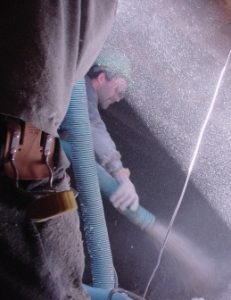
This tool will help determine the information you need for insulating an attic with loose-fill insulation. The insulation can be cellulose, fiberglass, rock wool, or any other loose-fill insulation. Four results can be calculated, including the all-important number of bags of insulation.
Calculated values
- Settled R-value or settled depth.
- Bags of insulation required.
- Installed depth of insulation.
Tips
- Clicking the label for any input or result will cause a popup help box to appear. This help box includes the allowed and normal values (for inputs).
- This tool is for added insulation only; it does not account for existing insulation.
- Wood framing is assumed for the ceiling/floor structure.
Background
Loose-fill insulation is a common solution for insulating an attic. It will cover the surfaces well without voids or gaps, is inexpensive to install, and is readily available. All three of the most common loose-fill insulations are considered “environmentally positive” because they are manufactured from recycled waste.
Cellulose is the favored type of loose-fill insulation used for the DOE-funded low-income weatherization programs. This fire-retardant insulation is made from recycled newspaper and boxes and does a good job of slowing airflow, even at loose-fill densities. Additional advantages include the ability to store small amounts of water and, because it is usually manufactured locally, it is not shipped long distances. Cellulose has the disadvantages of breaking down when it gets saturated with water and it is relatively heavy. Because of its weight, it is not recommended for use in mobile home ceilings or floors. Loose-fill cellulose will settle from 10 to 20 percent over time due to gravity and vibration. The settled density range for loose-fill cellulose is 1.5 to 2.0 lb/ft3 (36 to 24 kg/m3) and its settled R-value per inch is from 3.2 to 3.8 (0.222 to 0.2636 RSI per cm).
Fiberglass is lighter than cellulose and will not be permanently damaged if it is saturated with water. It may be used in the ceilings and floors of mobile homes because of its lightweight. Currently, about 20 to 40 percent of the fiberglass sold as insulation is recycled. This is a significantly lower percentage than cellulose, but the fiberglass industry continues to make gains. Disadvantages of fiberglass include an inability to slow airflow as well as cellulose and rock wool and a higher cost than the other two common insulations. Loose-fill fiberglass will settle at a rate of from 2 to 4 percent over time. The settled density range for loose-fill fiberglass is 0.5 to 1.0 lb/ft3 (10 to 14 kg/m3) and its settled R-value per inch is from 2.2 to 2.7 (0.1526 to 0.1873 RSI per cm).
Rock wool is similar to fiberglass in that it is spun from molten material, but from blast-furnace slag rather than glass. This process uses products that would otherwise be discarded. Of the three loose-fill insulations discussed here, it is the least common. Rock wool will settle at a rate similar to fiberglass, from 2 to 4 percent over time. The settled density for loose-fill rock wool is 1.7 lb/ft3 (27 kg/m3) and its settled R-value per inch is from 3.0 to 3.3 (0.208 to 0.229 RSI per cm).
| Cellulose | Fiberglass | Rock Wool | |
|---|---|---|---|
| R-value/inch | 3.2 - 3.8 | 2.2 - 2.7 | 3.0 - 3.3 |
| Inches (cm) needed for R-38 | 10 - 12 (25 - 30) | 14 - 17 (35 - 43) | 11.5 - 13 (29 - 33) |
| Density in lb/ft3 (kg/m3) | 1.5 - 2.0 (24 - 36) | 0.5 - 1.0 (10 - 14) | 1.7 (27) |
| Weight at R-38 in lb/ft2 (kg/m2) | 1.25 - 2.0 (6 - 10) | 0.5 - 1.2 (3 - 6) | 1.6 - 1.8 (8 - 9) |
| OK for 1/2" drywall, 24" on center? | No | Yes | No |
| OK for 1/2" drywall, 16" on center? | Yes | Yes | Yes |
| OK for 5/8" drywall, 24" on center? | Yes | Yes | Yes |
| Source: Department of Energy. ‘Loose-Fill Insulations’ (May 1995) | |||
Best Practices
Loose-fill insulations should always be installed at the manufacturer’s recommended densities. In the Loose-Fill Insulation tool, include this density as the “Settled density” input.
Do not “fluff” the insulation. “Fluffing” occurs when loose-fill insulation is installed below the manufacturer’s minimum density. If fluffing occurs, the project requires fewer bags of insulation, which allows air to flow through the insulation more easily and leads to excessive settling. Fiberglass insulation is easier to fluff than cellulose or rock wool.
Install the insulation evenly with no voids. Ensure that all code requirements for setbacks and damming are followed.