





Reference
Description
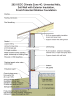
Part I of the Guide addresses walls constructed with 2x6 wood frame studs, wood structural panel (WSP) sheathing as exterior sheathing, gypsum board as interior sheathing, and a cladding system installed over WSP sheathing in low-rise residential buildings up to three stories in height. Walls with...

Case Study
Description
Case study describing the application of insulated siding on an existing home.



Presentation
Description
Webinar from Keenan Watson and Samantha Kambo of DuPont on how to correctly install a weather-resistant barrier on a home for code compliance effectiveness. Free EEBA login required.
Reference
Description
This ANSI/RESNET/ICC standard provides a consistent, uniform methodology for evaluating the airtightness of building, dwelling unit, and sleeping unit enclosures and heating and cooling air distribution systems, and the air flows of mechanical ventilation systems.
Guide
Description
Guide providing guidance on insulating attic eaves in new and existing single-family homes and multifamily buildings.
Reference
Description
Wind test comparing conventional Midwest construction with FORTIFIED construction.
Reference
Description
2018 edition of code establishing a baseline for existing building retrofits to reach appropriate safety levels under new construction requirements covered in other ICC codes.
Reference
Description
Standard describing two techniques for measuring air leakage rates through a building envelope in buildings that may be configured to a single zone which was published in the year 2022 and is available for preview and purchase at the reference link.
Reference
Description
Standard describing a test method measuring air-leakage rates through a building envelope under controlled pressurization and de-pressurization which was published in the year 2019 and is available for preview and purchase at the reference link.
Presentation
Description
Webinar from a group of green residential home building experts on how the Ultimate Z.E.N. Home, a production-built home is able to operate comfortably and successfully without the use of fossil fuels, including insulation, heating and cooling strategies, and other energy efficient design measures.