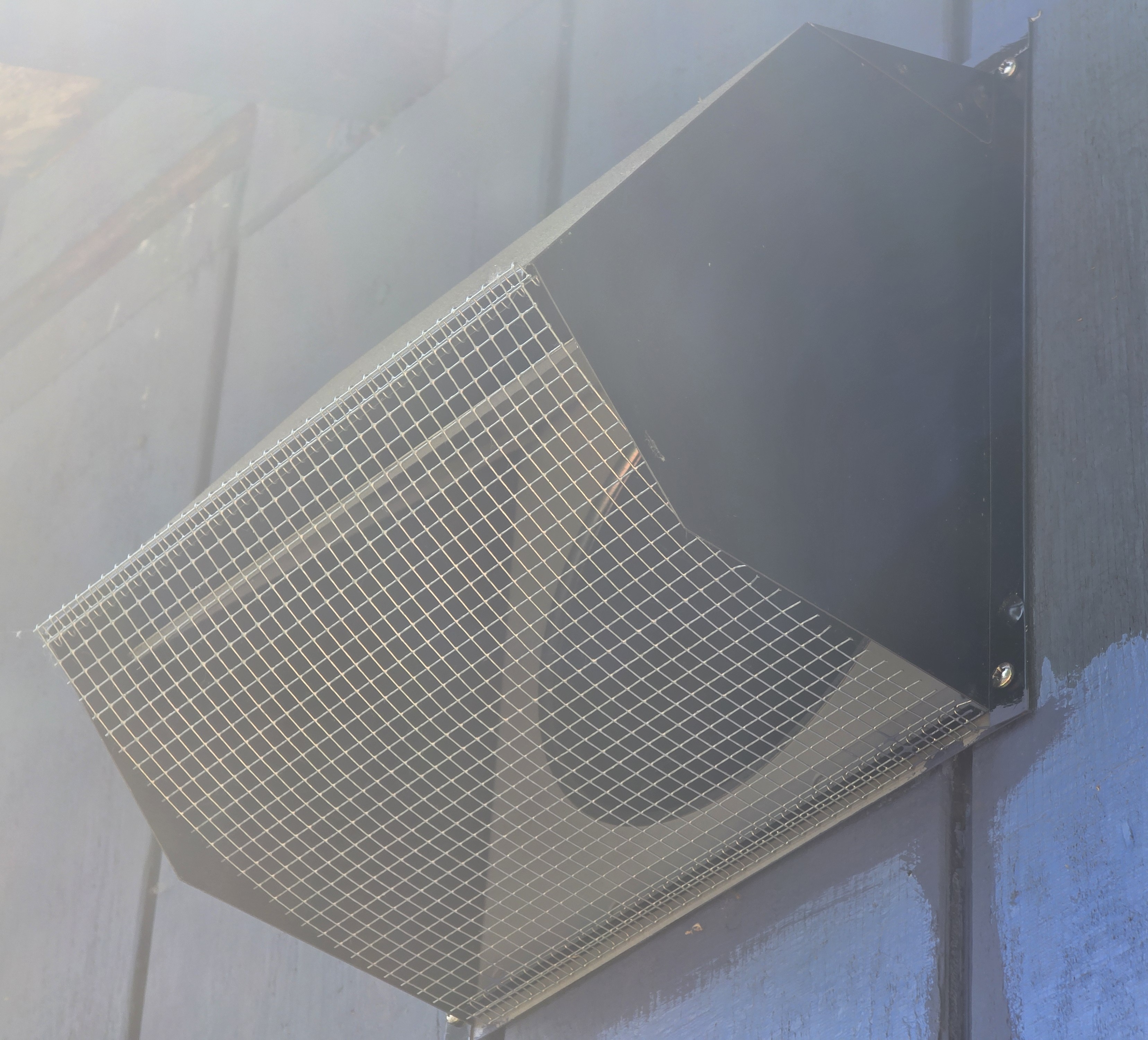
Materials Cost: FREE
Difficulty Level: 1

Introduction

Look in the attic or crawlspace to make sure your bathroom and kitchen exhaust fans are venting outside instead of into the attic or crawlspace.

Why

Moisture from bathroom and kitchen exhaust fans that are exhausting into the attic or crawlspace can cause mold growth and damage to the wood in the attic or crawlspace.

What You'll Need

  • A ladder 
  • A headlamp or flashlight
  • A camera or camera phone to take pictures
  • An N95 or better mask
  • A disposable coverall suit
  • Work gloves

1. Locate the exhaust fans.

Find all of the working exhaust fans in your home - check the bathrooms, kitchen, and laundry room. Make a sketch noting the location of each fan relative to the exterior walls of your home. If you have ducts in your attic, you may want to note the location of heating registers in the ceilings near these exhaust fans too (Figure 1).
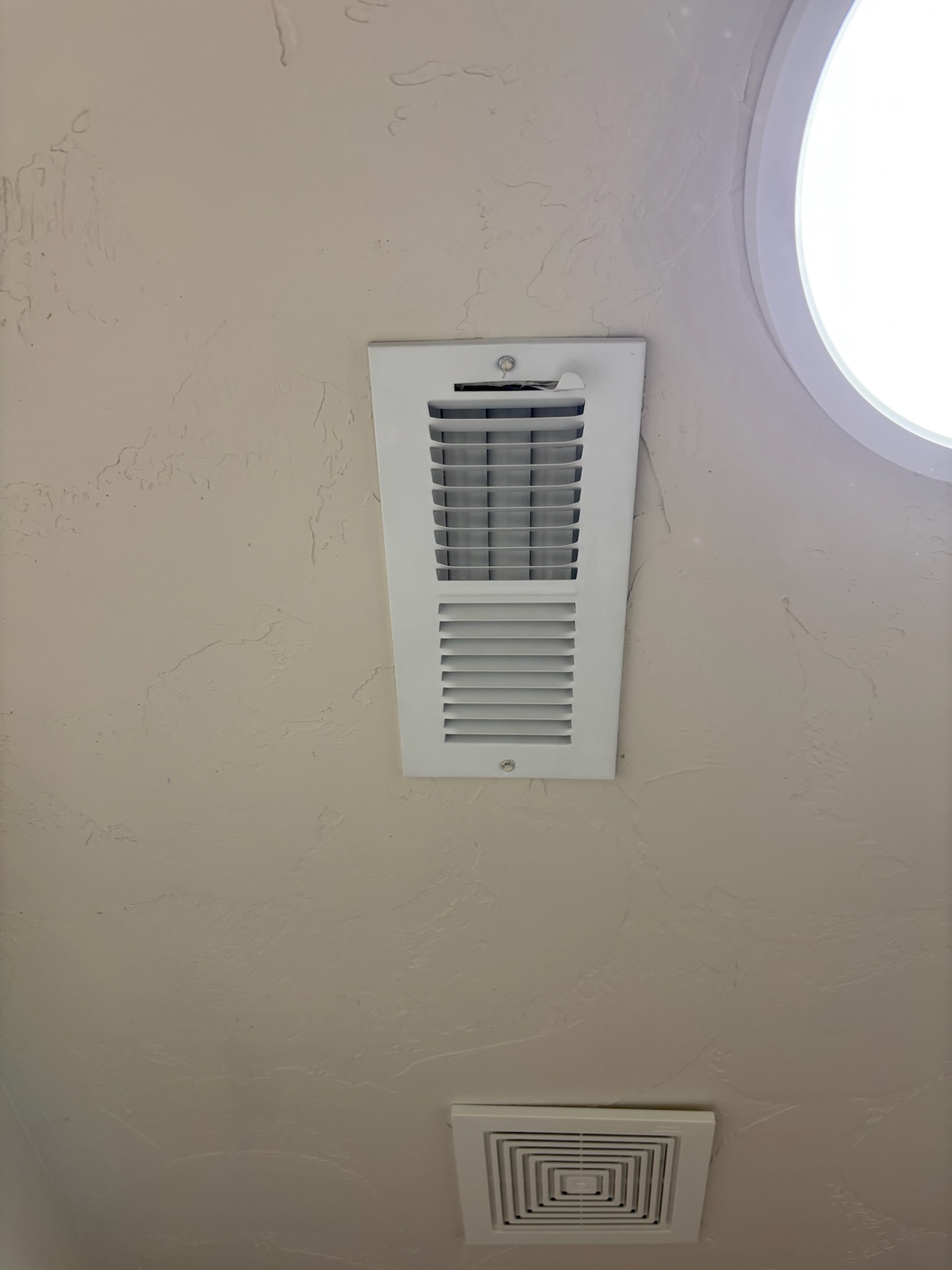
Figure 1. An exhaust fan (lower square grill) is installed in a laundry room ceiling next to an HVAC supply register (upper rectangular grill) (Source PNNL).

2. Go into the attic.

Gain access into the attic. If access is through a hatch in the ceiling, make sure items below are moved well away from the access hole and lay a tarp on the floor to catch falling insulation before setting up the ladder and pushing open the hatch. Wear gloves and a mask when entering an attic insulated with blown insulation (Figure 2). Eye protection and disposable coveralls are recommended to protect your skin and clothes from the loose fiberglass or cellulose insulation.
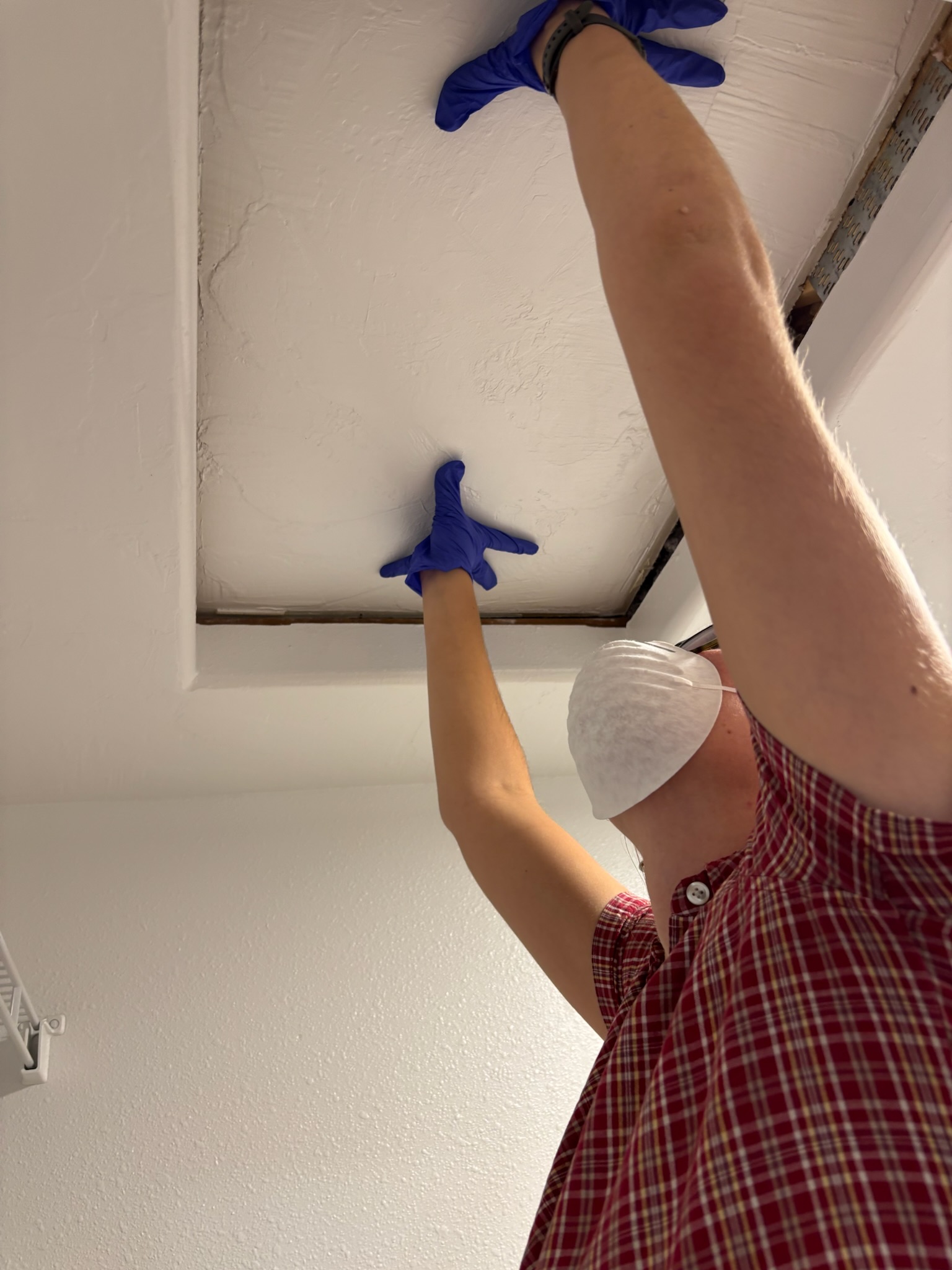
Figure 2. This attic access hatch is in the master bedroom closet ceiling - be prepared for falling insulation when you lift the hatch (Source: PNNL).

3. Find the exhaust fans.

Once in the attic, orient yourself to the exterior walls of your home then refer to your sketch to locate the exhaust fans. While the exhaust fans may be buried in insulation, the exhaust ducts should be visible. They may be rigid metal ducts, corrugated (ridged) plastic ducts, flex ducts, or flex ducts that are covered with insulation and a foil-faced or dark plastic vapor wrap. If you also have heating ducts in the attic, one way to tell them apart is that heating ducts are typically larger and heating ducts will all attach to one or more main trunk ducts, or to the furnace if it is in the attic, while exhaust ducts will be separate individual ducts. Each exhaust fan will have one duct. If you don’t find any exhaust fan ducts in the attic (rare), look in the crawlspace and check exterior walls for fan vents, especially if the fans are located on or near exterior walls.


4. Find the end of each exhaust duct.

All exhaust fan ducts located in the attic should go directly from the exhaust fan box on the attic floor to either the eaves (edges) of the attic or up through the roof (Figure 3). The duct should terminate at either a dampered roof cap vent in the roof or to a vented opening in the soffit or side wall of the attic (Figure 4). The duct should be insulated and it should attach to the vent with an air-sealed connection to properly vent moisture.
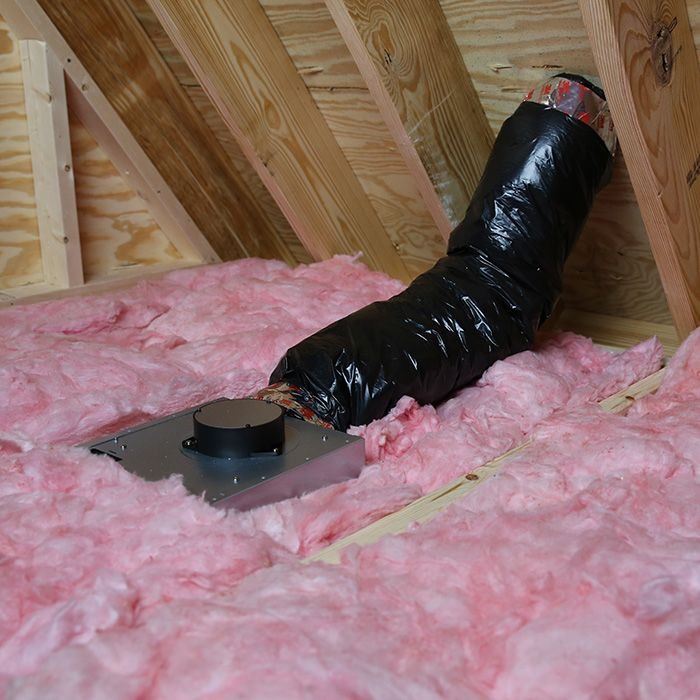
Figure 3. This exhaust fan duct is properly insulated and is properly vented through the roof (Source: PNNL).
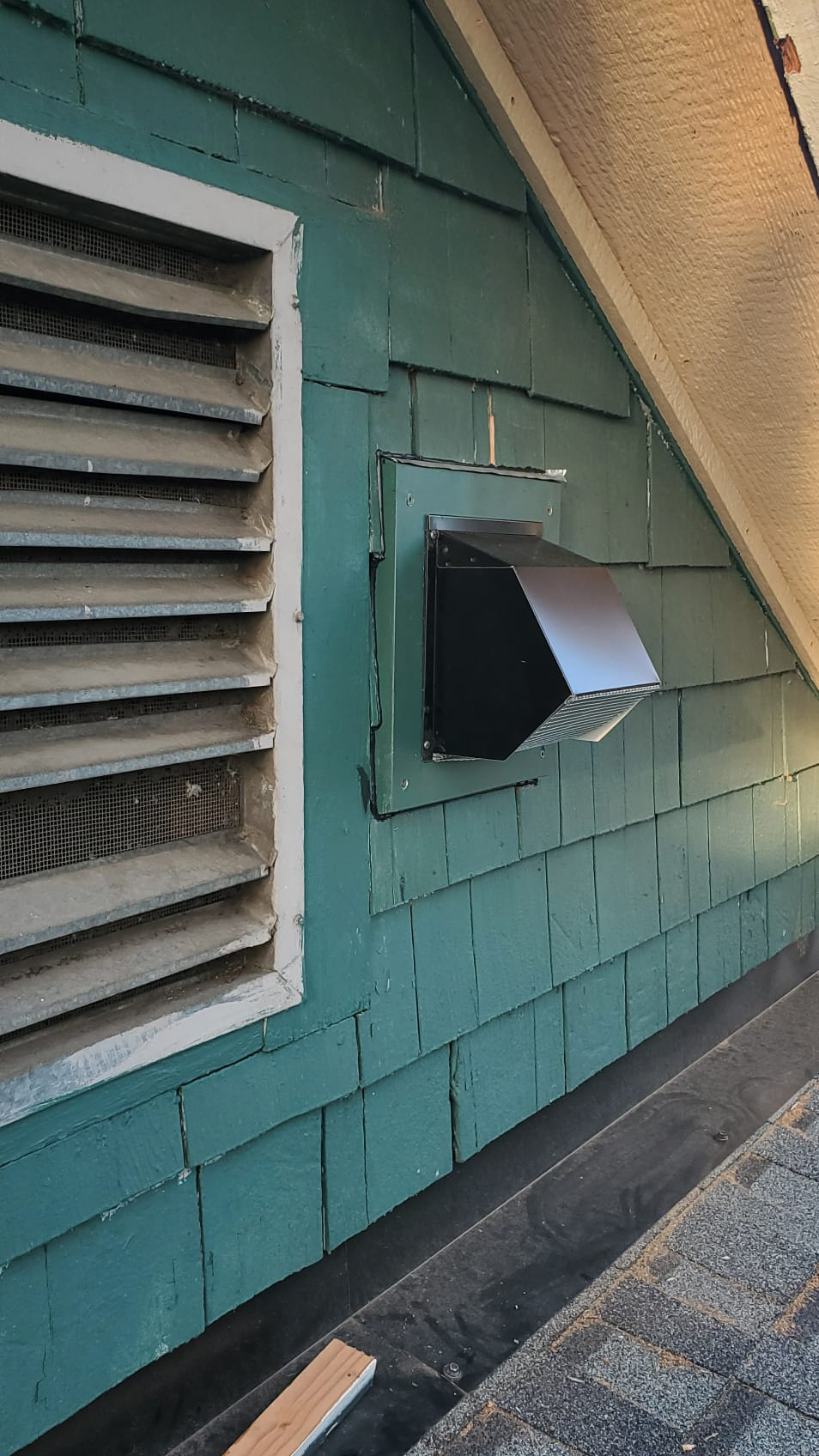
Figure 4. An exhaust fan is properly ducted to an exterior wall vent (Source: PNNL)

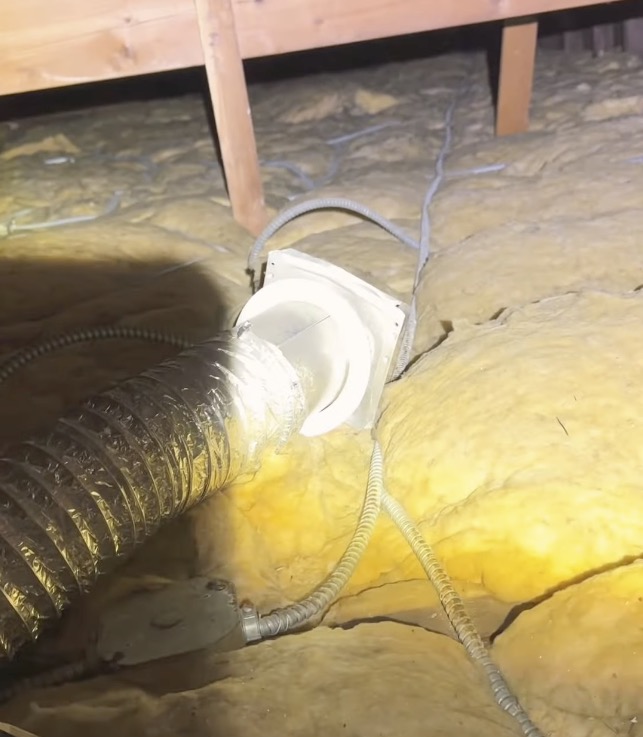
In many older homes, the exhaust ducts are not ducted to the outside but instead the exhaust duct ends near a pre-existing attic ridge, gable, or soffit vent (Figures 5, 6, 7) or sometimes just on the attic floor (Figures 8 and 9). Moist air coming out of the duct can condense on cold rafters, trusses, and sheathing in the attic, producing water droplets that can cause damage and encourage the growth of mold in the attic. The best duct material for exhaust fan ducts is smooth metal. The duct should be insulated. The duct should be installed with the shortest, straightest path to the roof or soffit. Excessive duct length (Figure 11), excessive bends, and heavily corrugated duct material all contribute to poor airflow, and lack of insulation can encourage condensation in and on the ducts.
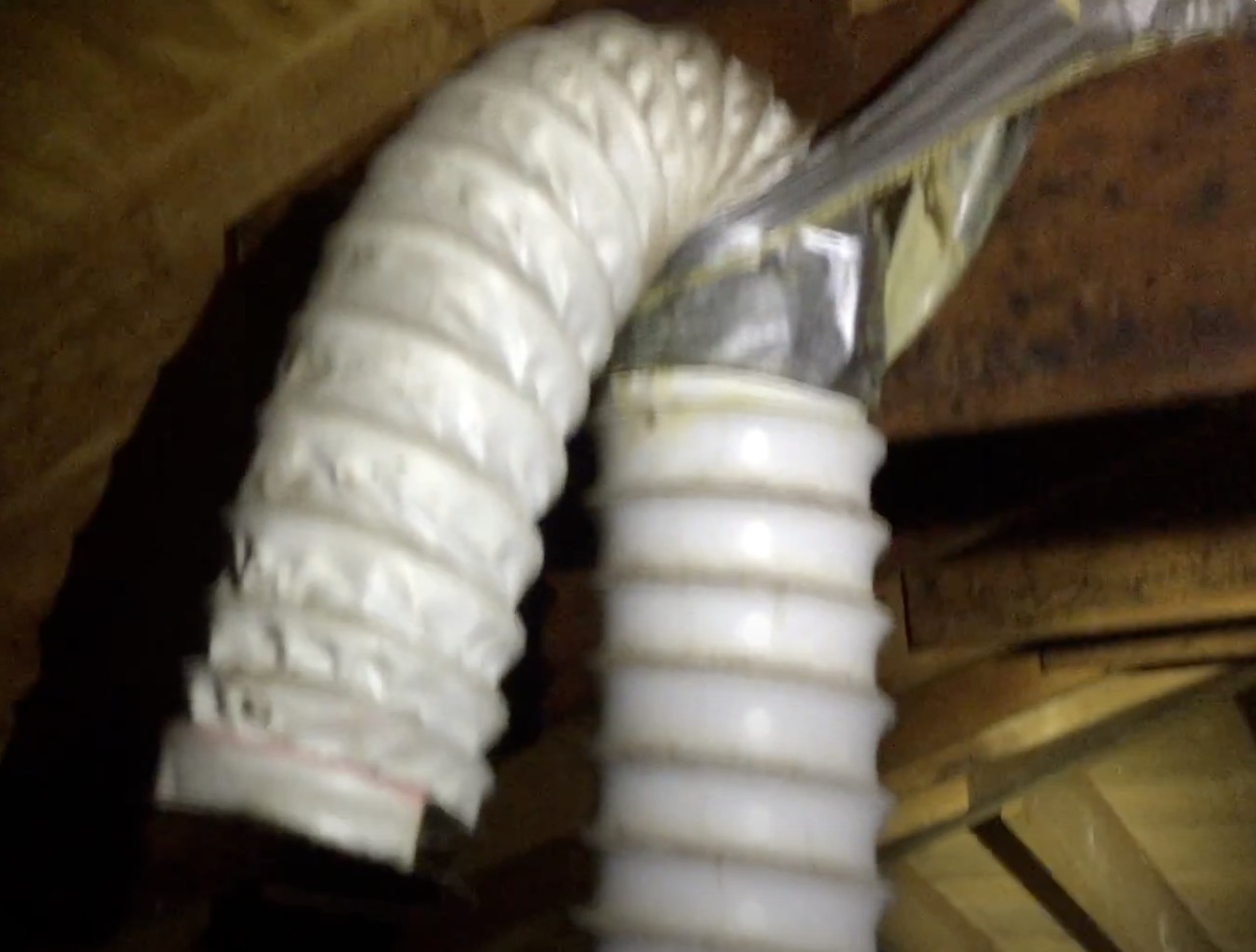
Figure 5. This exhaust fan duct is problematic for several reasons: it ends in the attic without being vented through the roof, it uses corrugated plastic pipe instead of metal pipe, and it is not well supported with a sharp bend that restricts air flow (Source: PNNL)
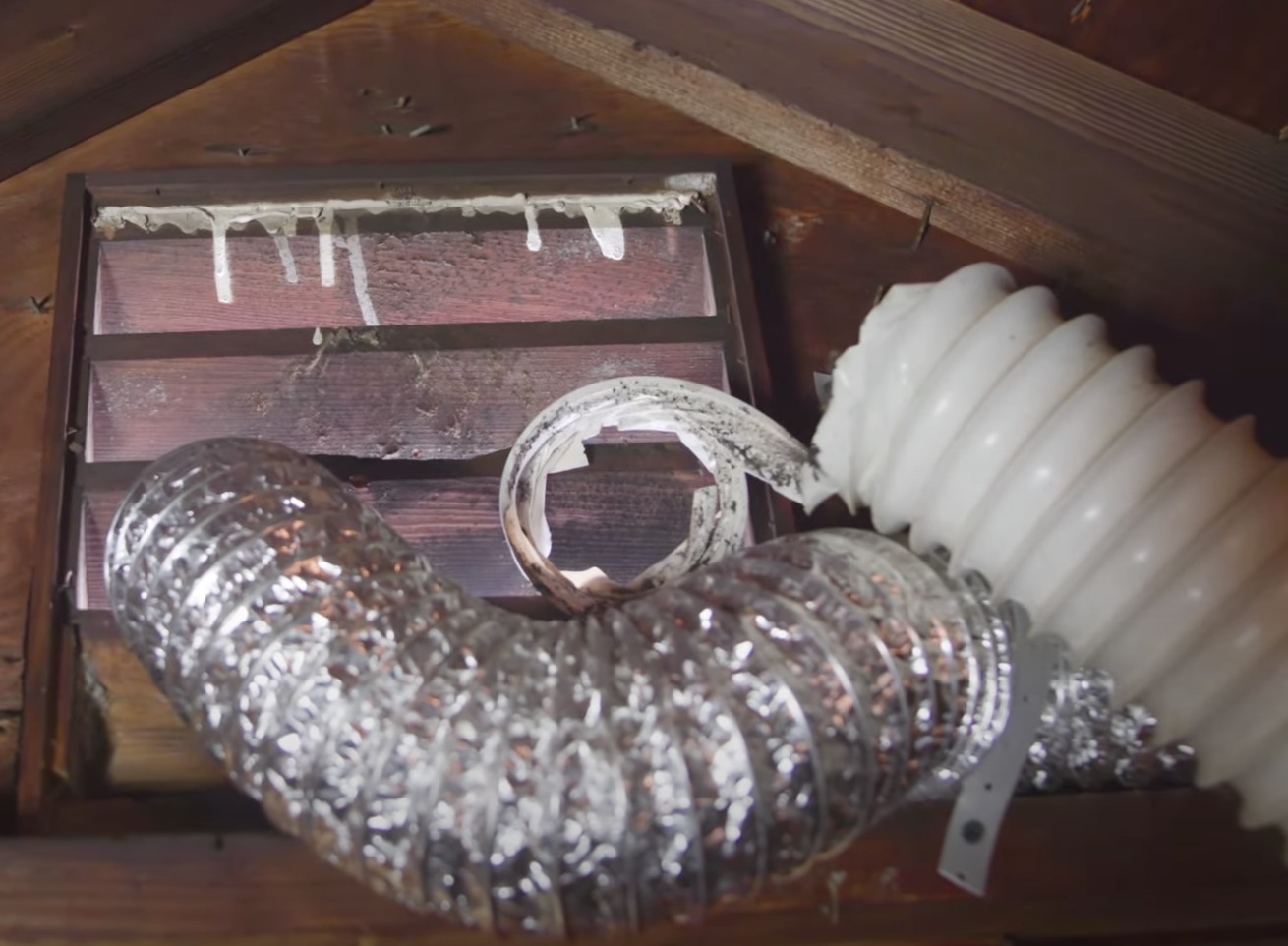
Figure 6. The exhaust ducts use gable end vent- the foil duct exits the vent but likely does not have a proper terminating vent with grill; the corrugated plastic vent does not go outside. Smooth metal ducts, rather than corrugated, provide best air flow (Source: PNNL).
Figure 7. This exhaust fan duct is not properly attached to the roof vent so most of the moist bathroom exhaust air will vent into the attic instead of out through the roof (Source: PNNL).
Figure 8. This bath fan duct is venting humid air directly into the attic and mold is visible on the roof sheathing above (Source: PNNL).
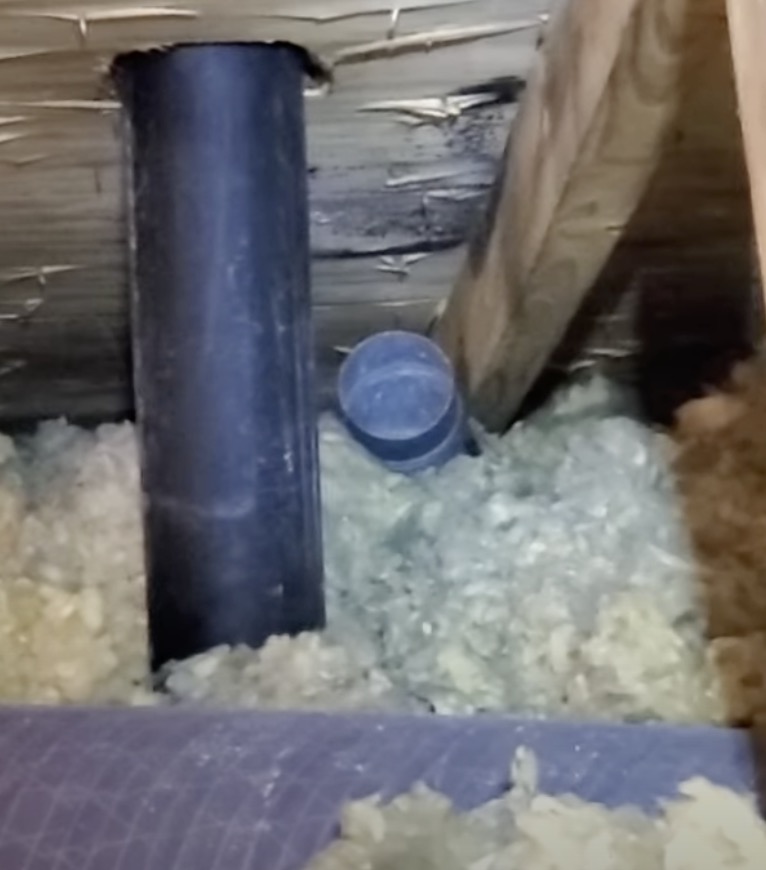
Figure 9. This bath fan duct actually has a termination vent attached at the end of the duct but the vent is sitting on the attic floor instead of attaching through the roof so humid air is exhausting into the attic (Source: PNNL).
Figure 10. This bath fan is ducted through the roof but the ducting is so excessively long that airflow is likely to be very poor (Source: PNNL).

5. Call a contractor.

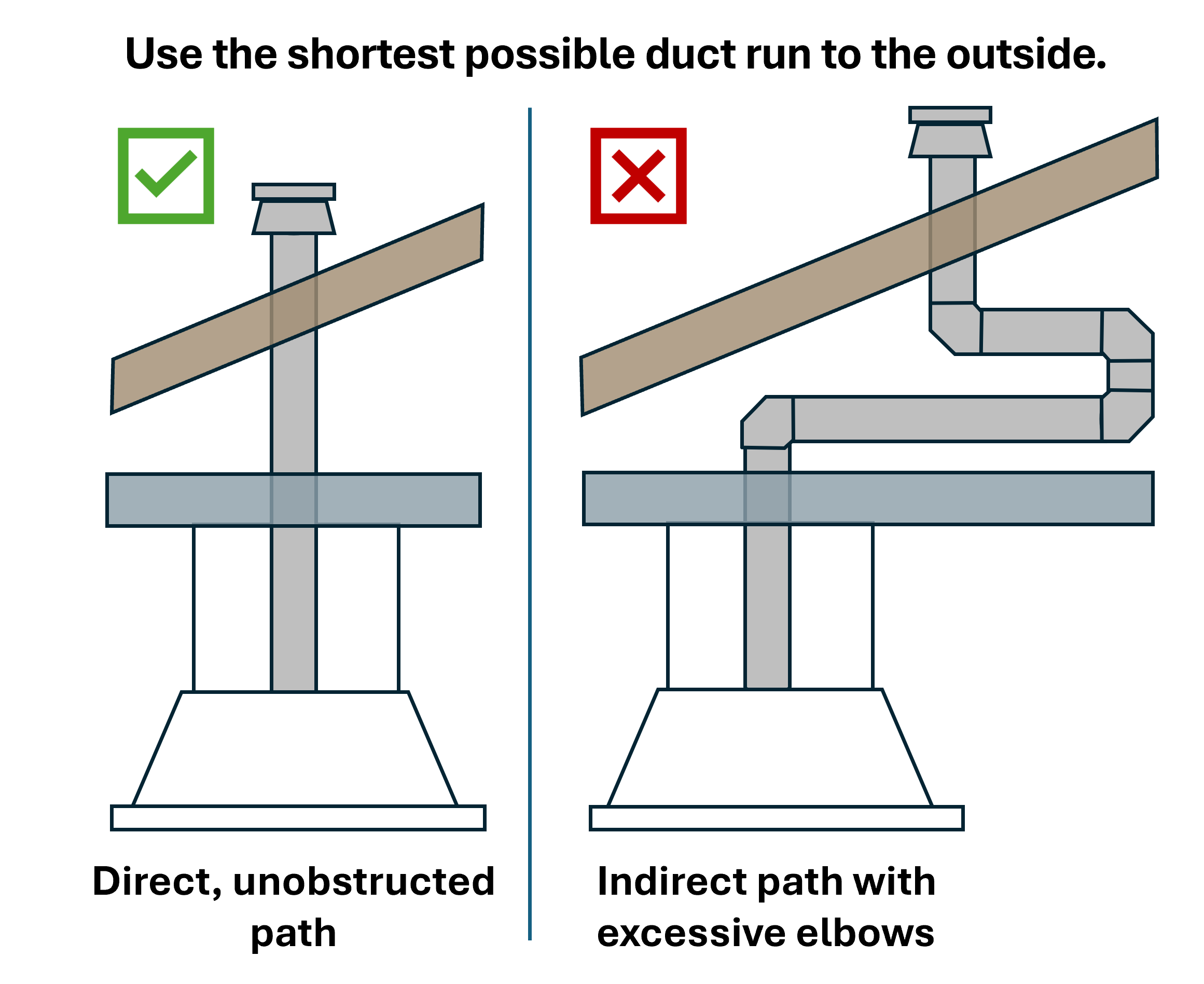
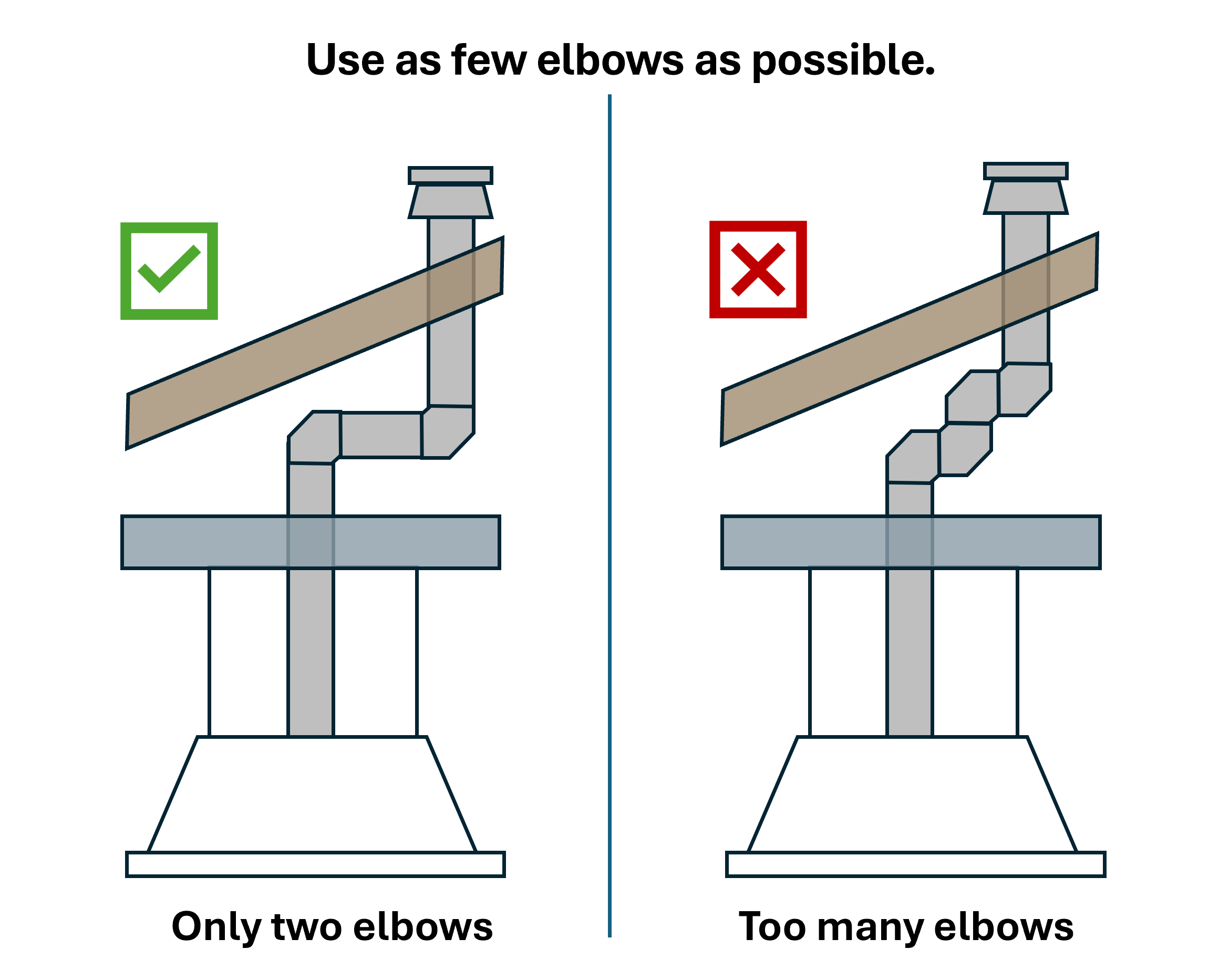
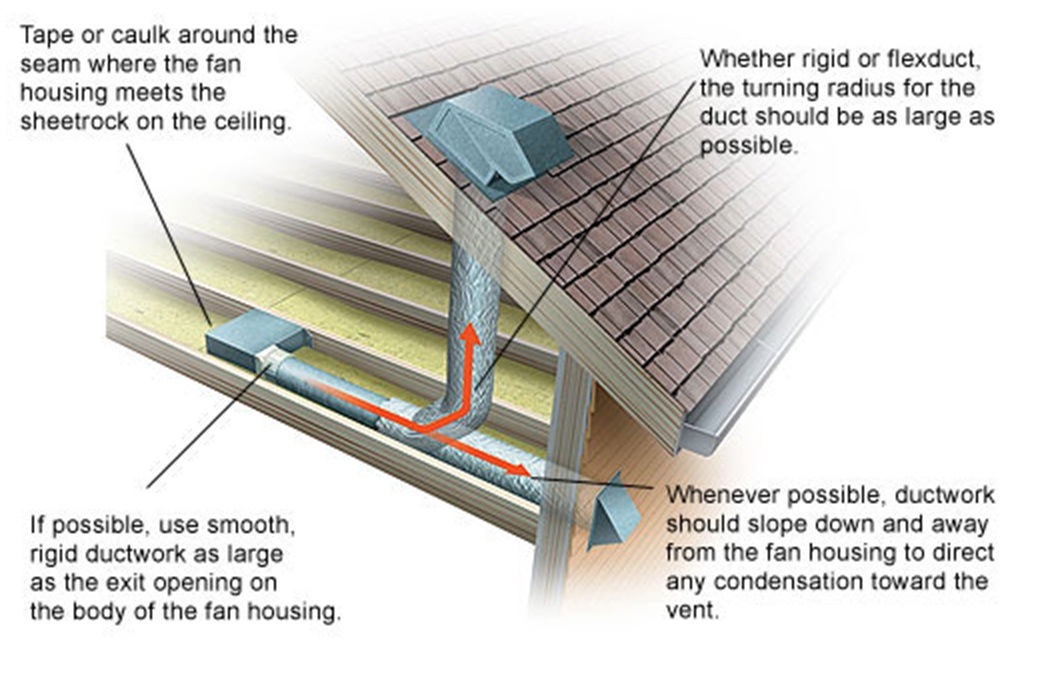
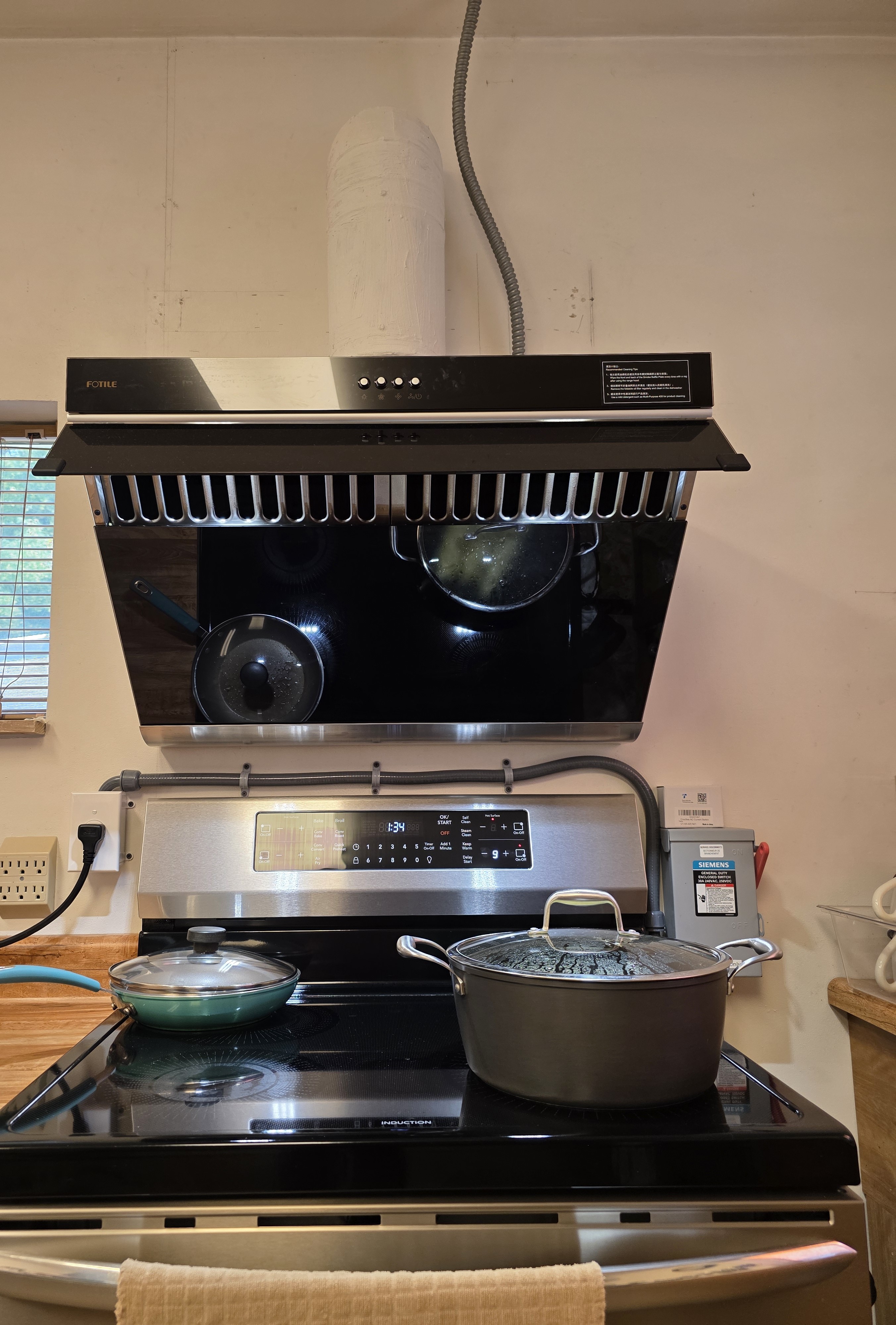
If you find that your exhaust ducts don’t duct through the roof or soffit to the outside, and/ or if they are of excessive duct length, have excessive bends, use plastic or foil corrugated duct material, or lack insulation, call in a contractor to help install the proper termination vent. Typically, a roofer is the best trade to call to have a termination vent installed in a roof or gable wall. An HVAC technician or skilled handy man can also help route insulated ducts from the exhaust fan to the termination vent. The contractor should follow these guidelines when fixing the exhaust fan ducting (Figures 11-14). Figures 15 and 16 show an example of a range hood that vents directly to the outside of the home.
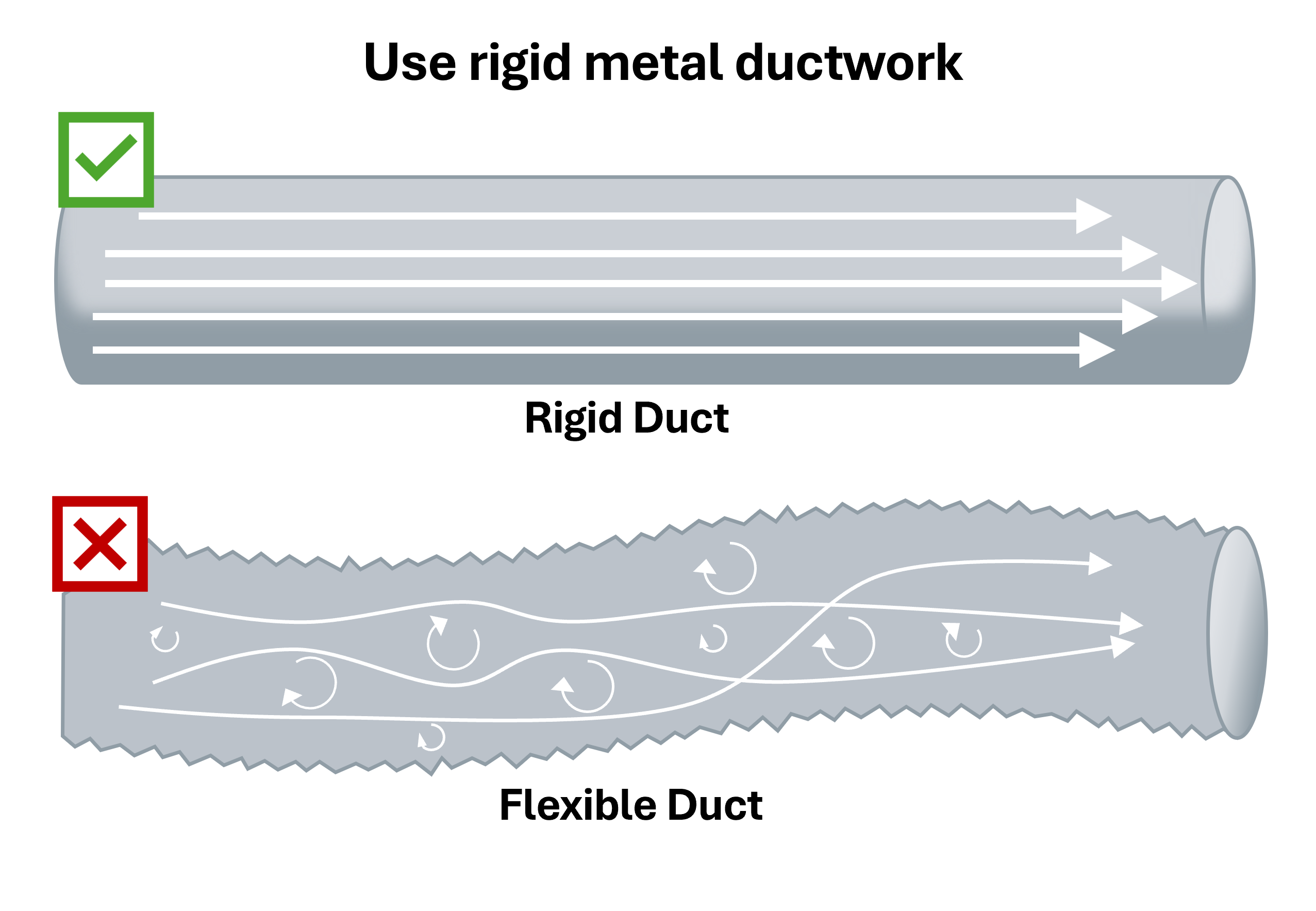
Figure 11. When installing exhaust fan ducts, use rigid metal ductwork (PNNL).
Figure 12. When installing exhaust fan ducts, use the shortest duct runs possible to the outside (Source: PNNL).
Figure 13. When installing exhaust fan ducts, use as few elbows as possible (Source: PNNL).
Bathroom exhaust fan can vent out through the wall or up through the roof
Source
Figure 14. When installing exhaust fan ducts in the attic, use short rigid metal duct runs and vent through the roof, side wall, or soffit to a terminating vent cap (Source: PNNL).
Figure 15. Example of a range hood that is clearly venting to outside and the ducting is short and direct (PNNL).
Figure 16. Directly on the outside, the wall vent is clearly visible. The spring-loaded damper visibly opens when the range hood is turned on. And there is a screen to prevent pest entry (PNNL).


Additional Info

Last Updated

Related Guides

Disclaimer

This content is a work created with funding provided by the United States Department of Energy under Contract no DE-AC05-076RL01830 for the operation of Pacific Northwest National Laboratory. The information and guidance provided by Pacific Northwest National Laboratory (PNNL) in the content are intended solely for educational purposes only and do not constitute formal training or certification. It is provided with the explicit understanding that neither the United States Government nor the United States Department of Energy, nor the Contractor, nor any or their employees, nor any jurisdiction or organization that has cooperated in the development of these materials, makes any warranty, express or implied, or assumes any legal liability or responsibility for the accuracy, completeness, or usefulness or any information, apparatus, product, software, or process disclosed, or represents that its use would not infringe privately owned rights. Reference herein to any specific commercial product, process, or service by trade name, trademark, manufacturer, or otherwise does not constitute or imply its endorsement, recommendation, or favoring by the United States Government or any agency thereof, or Battelle Memorial Institute. The views and opinions of authors expressed herein do not necessarily state or reflect those of the United States Government or any agency thereof. Viewers assumes full responsibility for all actions that they may take from information provided in this content including ensuring the safety, code compliance, and proper functionality of any products they choose to install. Installation and use of such products should be performed in accordance with local regulations and manufacturer instructions.