



Scope
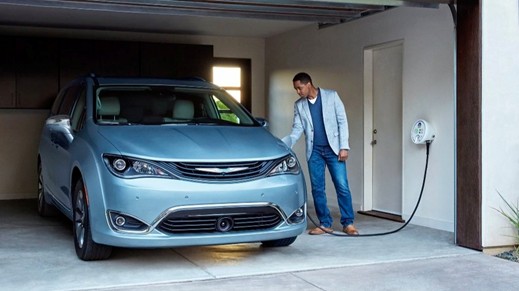
Install an electric vehicle (EV) charger in a single-family home:
- Choose an EV charger that aligns with your household’s charging needs (in miles of range per hour charged).
- Choose a style of EV charger (plug-in, wall-mounted, or pedestal-mounted) and a location that will allow clear floor and wall space around the charger.
- If your household has multiple EVs that will need to be charged at the same time, consider a dual-port charger.
- Before installation of a hardwired charger, have a professional conduct an electrical assessment to ensure that your home has either:
- Sufficient electrical capacity for a new circuit, or
- An additional circuit that is already available.
- Engage with your local permitting authority before the charger is installed to ensure you are complying with all code requirements for your area.
- Have a licensed professional install the EV charger.
See the Compliance Tab for links to related codes and standards and voluntary federal energy-efficiency program requirements.
Description
Electric vehicle supply equipment (EVSE), also referred to as electric vehicle chargers, refers to the equipment that delivers electricity from the electrical grid or onsite energy sources to the battery of an electric vehicle (EV).
Most EV chargers installed in the United States provide alternating current (AC) charging at 120 – 240 volts (V). EV chargers utilizing a 120V circuit are sometimes referred to as “Level 1” (L1) chargers (Figure 1), while EV chargers on a 240V circuit are commonly referred to as “Level 2” (L2) chargers. “Level 3” (L3) EV chargers provide direct current (DC) charging to the vehicle, often at 480V or higher, enabling a faster rate of charging – these “DC fast chargers” (also sometimes referred to as DCFC) are often installed to enable long-distance travel or to provide public charging for those without access to home charging. This guide focuses on Level 1 and Level 2 chargers, as those are most commonly installed in single-family residences.
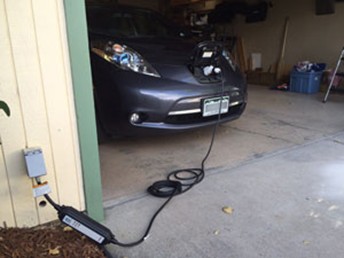
L1 charging uses 120V electrical supply, the same as common household appliances. L1 chargers are typically portable and plug into a standard wall outlet (Figure 1). For most residential applications, L1 charging is sufficient for daily driving, assuming an 8 to 10-hour overnight charge, which will provide up to 40-50 miles of driving range. Those who drive more may consider L2 charging.
Source
Website describing electric vehicles, electric vehicle charging stations, and incentives for installing electric vehicle charging stations.
L2 charging uses 240V electrical supply, similar to most electric clothes dryers. L2 chargers can be hardwired into the building electrical supply, or plugged into a 240V outlet. L2 charging can provide 200 miles or more of range in an 8 to 10-hour overnight charge.
Low Power Level 2 (LPL2) charging provides an option between L1 and L2, utilizing 240V electricity, but at lower amperage. LPL2 chargers, like L1, are typically portable, and plug into a 240V outlet, but use a less common wall plug type. This solution may be preferable for drivers that want a faster charging solution than L1, but have limited panel capacity that will not support an L2 charging circuit.
Table 1 summarizes these charging station categories and their capabilities. Average costs are dependent on multiple factors, which are covered in the “General Steps and Considerations for Installation” section.
Type of EV Charger | Voltage Required | Estimated* Charging Rate |
|---|---|---|
Level 1 Charging (L1) | 120V circuit | 2-5 miles |
Low-Power Level 2 Charging (LPL2) | 208/240V circuit | 8-12 miles |
Level 2 Charger (L2) | 208/240V circuit | 20-30 miles |
| *charging rates are rough estimates and can vary depending on the vehicle efficiency and vehicle’s current state of charge | ||
Charging rates can vary depending on the vehicle efficiency and vehicle’s current state of charge (SoC), particularly for DC fast charging. Charging occurs fastest at low SoC levels and slows as the battery approaches full capacity to prevent battery damage and optimize battery life. Improvements in battery technology and vehicle architecture may improve these values in the future.
Plug-In EV Chargers and Outlets vs Hardwired EV Chargers
EV charging can be provided with either a dedicated EV outlet or a hardwired EV charger. Outlets (also known as receptacles) allow the EV driver to plug in an L1, LPL2, or L2 EV charging cord, which is typically provided with the purchase of a new EV. Hardwired EV chargers are typical for L2 or L3 charging stations, and can be wall-mounted or pedestal-mounted.
Plug-in EV chargers that utilize outlets provide a low-cost solution for charging an EV. A portable charging cord is typically provided with the EV or can be purchased for $200-$300 (as of 2025), depending on the functionality and level of energy it can transfer to the vehicle.
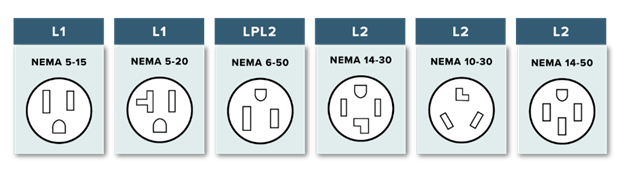
L1 chargers plug into a National Electrical Manufacturers Association (NEMA) 5-15 or 5-20 receptacle, depending on the type of plug on the charger. LPL2 chargers utilize a NEMA 6-50 receptacle, and L2 chargers can utilize a variety of 30- or 50-amp NEMA receptacle types. Some portable EV chargers have adapters to allow compatibility with multiple outlet types.
Figure 2 shows the typical outlet types used for L1, LPL2, and L3 chargers.
Source
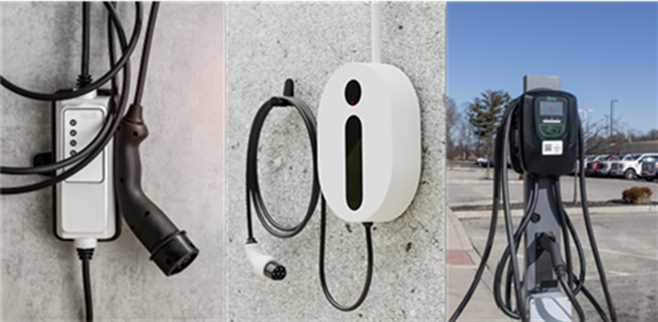
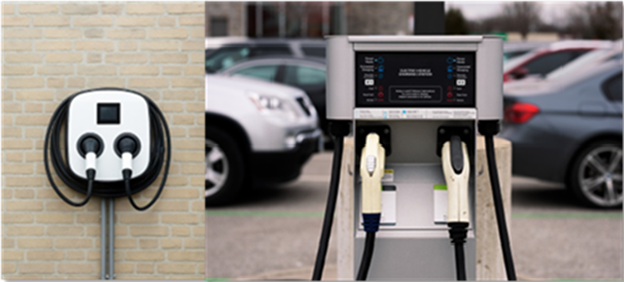
L2 charging stations are frequently hardwired, and can be either wall-mounted or pedestal-mounted depending on the site configuration (Figure 3). Wall-mounted EV chargers are most common in homes with a garage or driveway. With the added cost of the EV charger and higher power, L2 charging (both plug-in L2 chargers and hardwired L2 chargers) is typically more expensive to install than a lower-powered L1 or LPL2 outlet, but can provide faster charging in addition to more functionality (covered in the next section).
Source
Some L2 chargers also come in the form of dual-port chargers, which allow two EVs to be charged by the same charger (Figure 4). These may have two circuits (one for each connector) or share a single circuit, splitting the power when multiple vehicles are charging. Dual-port chargers are not common for single-family homes, but they may be helpful for single-family households with more than one EV and limited physical space or electrical capacity.
Source
Some households may also want to consider cable management systems (Figure 5) to keep the charging cord off the parking surface, as most EV charger designs intend the cable to be wound around the charging unit. There is an additional cost for cable management, otherwise the cord must be manually restored after each use to prevent a tripping hazard. Some systems supply a retractor to automatically retract and store the cable.

Source
EV Charging Ports
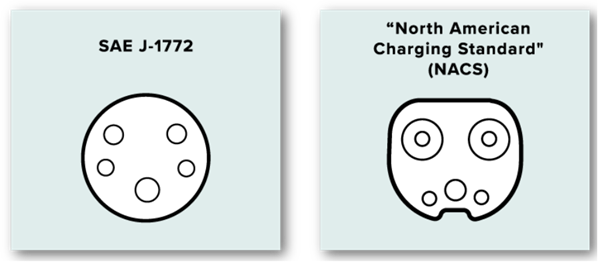
Different vehicle makes and models may utilize different connector types to connect the charger to the vehicle (see Figure 6). Historically, most automakers in the United States used the SAE J-1772 plug type. This connector is used for L1, LPL2, and L2 charging.
One major manufacturer has historically used the North American Charging Standard (NACS or J-3400) plug type, which can charge at L1, LPL2, L2, and L3. Most other automakers have made announcements that they plan to switch their vehicle designs to utilize the NACS connector beginning in model years 2025-2026. Since many older vehicles will remain on the road for years to come, drivers will likely rely on adapters for cross-compatibility while the vehicle stock slowly transitions from J-1772 to NACS.
Source
Networked vs Non-Networked EV Chargers
EV chargers are often categorized as networked or non-networked. Non-networked chargers have no capability to communicate or manage their use; they simply plug in and start charging once connected to a vehicle. Given their simplicity, they typically cost less than networked chargers.
Networked chargers, also known as “smart chargers,” have greater functionality due to their ability to communicate with other chargers, devices, and cloud management systems via a network. For single-family homes, this functionality is typically less necessary compared to larger multifamily properties or commercial settings that need to manage multiple EV chargers. However, future load flexibility capabilities such as managed charging, vehicle-to-building or vehicle-to-grid may use this functionality or may manage charging through communications technologies embedded in the vehicle. To learn more about this functionality, read the Vehicle-to-Home or Vehicle-to-Grid Capabilities section below.
In addition to allowing vehicle-to-home, vehicle-to-grid, and managed charging, networked chargers can also be beneficial in single-family homes to allow participation in demand response programs and time-of-use (TOU) or EV rates (where EVs are charged during low-demand hours when electricity is the cheapest). Participating in these programs can reduce utility bills, and also can support the grid during high demand periods by shifting EV charging loads to lower demand periods. Some programs don’t require a networked charger. Instead, an onboard vehicle timer can be set, or the driver can manually charge at the appropriate time of day to meet the requirements of the program.
These chargers typically use a cell modem, Wi-Fi, Bluetooth, or hardwired networking for communications. Smart chargers can come with capabilities such as user access permissions, payment processing, data tracking, and load management. These technologies can improve the user experience as well as the operators’ ability to minimize electricity costs and manage charging. Smart chargers can come in all levels of charging but are typically L2 or L3 chargers. Smart outlets are also becoming available in the market that provide simple levels of smart functionality such as power sharing and data collection.
Networked chargers typically come at a premium cost, with higher upfront costs for the equipment, and some require ongoing networking or service plan fees. Due to their more complex nature, networked chargers have more opportunity for maintenance issues. While some maintain basic charging functionalities when the network is down, some models rely on the network to function properly.
Smart outlets can be lower cost than smart chargers, but like smart chargers, they can have ongoing fees to cover networking costs. These products typically need to be installed by an electrician.
Vehicle-to-Home or Vehicle-to-Grid Capabilities
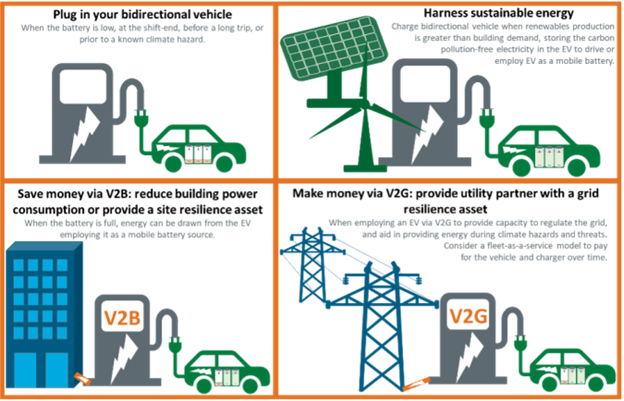
Bidirectional vehicles can provide backup power to buildings or specific loads, sometimes as part of a microgrid, through vehicle-to-building (V2B) charging, or provide power to the grid through vehicle-to-grid (V2G) charging (Figure 7). V2B and V2G power solutions can complement solar photovoltaic (PV) arrays and other distributed energy resources (DERs), or supplement generators as backup power.
Source
Article describing bidirectinoal charging and energy storage methods using electric vehicles.
Some V2B applications can add resilience to a property by:
- Acting as backup battery storage
OR - Decreasing the cost of grid electricity through TOU arbitrage (charging the vehicle during low-cost, low-demand hours and providing battery power to the home during high-cost, high-demand hours)
OR - Increasing the value of local generation by storing energy produced on-siteOR
- Avoiding utility-scale curtailment of renewables during clean energy periods, and feeding electricity back into the home during periods with less utility-scale renewable generation.
To take advantage of these functionalities, residents will need to have both an EV and an EV charger with bidirectional charging capabilities. Typically, this includes added costs for bidirectional capable charging equipment and necessary infrastructure upgrades such as a smart inverter, panel capacity, a transfer switch, and additional software.
This strategy is still in its nascent phase at this time, but the technology is becoming increasingly available in vehicles and chargers and is worth noting.
EV Capable, EV Ready (Outlets), EV Charging Station Installed
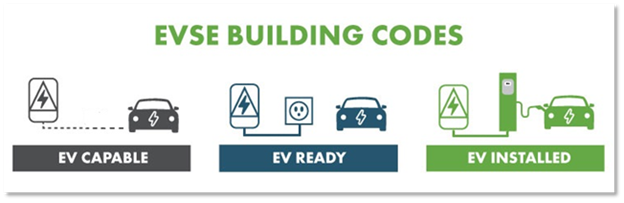
There are 3 categories of electric vehicle infrastructure (EVI) that are typically referenced in building codes and standards. These include EV-Capable, EV-Ready, and EV-Installed (Figure 8).
Source
An EV-Capable space is a parking space that is prepared for an L2 charger (but can also serve L1 or LPL2) and includes the following components:
- Electrical Panel Capacity: The electrical panel has enough physical space and capacity to handle the additional load of a minimum 40-ampere, 208/240-volt branch circuit for future EV charging
- Dedicated Breaker: There is a specific breaker slot dedicated to powering the EV charging station, preventing other loads from taking its space. A breaker is not required to be installed.
- Raceways (Conduits): Conduits are installed to allow for the easy and safe installation of future wiring for the EV charging station.
- Transformers: Due to the cost and difficulty in upsizing electrical transformers in an existing building, transformers should be sized according to anticipated future EV loads.
- No Charging Equipment Installed: EV-Capable spaces do not have the circuitry or EV charging equipment installed, but should have a termination like a junction box near the intended parking space for easy future installation.
An EV-Ready space builds upon the requirements of an EV-Capable space by ensuring there is a dedicated branch circuit (wiring) installed that terminates in a junction box and outlet (or receptable) near the EV parking space. By installing a receptacle at an EV-Ready space, an EV driver can easily plug in their own connector cord and begin charging.
EV-Installed is when all of the elements of an EV-Ready space are installed, plus an EV charging station is installed. The parking space can charge an EV without the need for any additional installation or equipment.
General Steps and Considerations for Installation
Planning and Preparation
Planning and preparing for installing EV infrastructure is crucial to ensuring a successful project. Preparing entails understanding both your current limitations and future needs. This includes assessing your current available electrical capacity, identifying the appropriate installation location(s), assessing the type of chargers, and determining your potential costs and budget, as well as potential funding opportunities available to help lower the cost of your installation.
For most single-family homes, the decisions required are minimal, but there can be a big difference in costs depending on how quickly the resident(s) would like to charge their EV and what capabilities they want from the EV charger.
Electrical Assessment
One of the first steps is understanding your available electrical capacity at the site. This will allow you to understand the potential limitations of what level charger or quantity of chargers you can install.
For single-family homes, an in-depth electrical assessment may not be required if you choose to install an L1 charger that can plug into a standard 120V outlet. If you plan to install an L2 charger, you will need to consider if the home’s breaker panel has sufficient capacity for a new 40A circuit, or if they have a 240V circuit or outlet available.
As of 2025, upgrading your electric panel from 100 to 200 amps can cost $1,500 to $4,000 or more, in addition to standard EV charging installation costs. A panel upgrade may also trigger an upgrade to the resident’s electrical service through the utility. This can take several months and add thousands more in costs to the project.
Alternatively, there are several strategies and products to work around the house’s limited electrical capacity. See the Retrofit tab for more information.
Identifying Locations
Finding the best location for the EV charger is important as it will impact both costs and accessibility for the user. Generally, identifying locations that are closer to the electric panel will reduce infrastructure and installation costs, as many materials and installations costs increase per foot of distance from the power source.
For single-family homes, this process can be as simple as finding the most accessible 120V outlet and ensuring a charging cord, typically 15-25 feet, can reach it. If installing an L2 charger, you will need to identify an available 240V outlet or install a new branch circuit that is adjacent to the parking space.
Assess Type and Quantity of Chargers
While your electrical assessment, ideal location, code requirements, and budget will be the main factors in determining what type of charger to install, it’s important to understand that there are a variety of chargers to choose from to meet your needs. To understand your charging needs, it’s helpful to understand first how far the resident typically drives. This will help you understand what level of charging speed they need for the vehicle’s dwell time (how long a vehicle is parked at a station).
To ensure you are thinking about your residents’ EV charging needs appropriately when shopping, see Good Questions to Ask EV Charging Equipment Vendors
Primary features of a residential installation include the following:
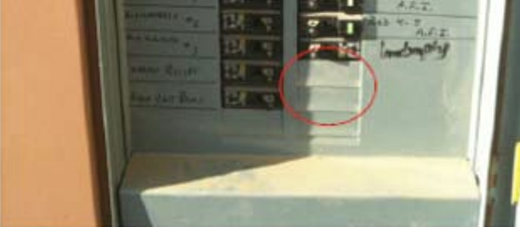
- An electric service panel with at least two open breaker spaces (to allow installation of a double-pole breaker) (Figure 9).
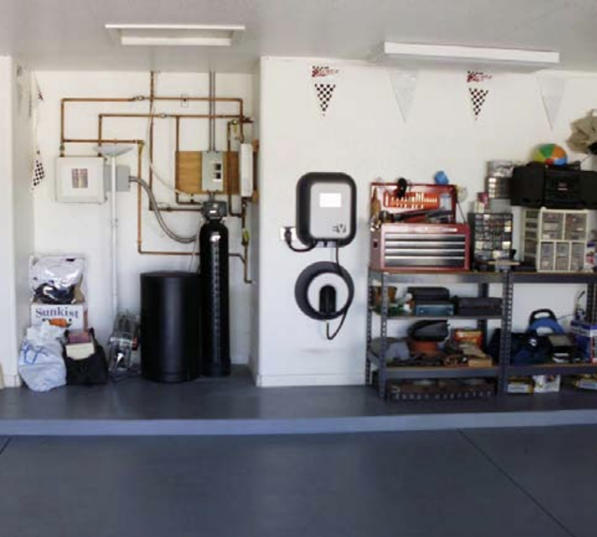
- Clear wall and floor space around the EV charger installation location (Figure 10).
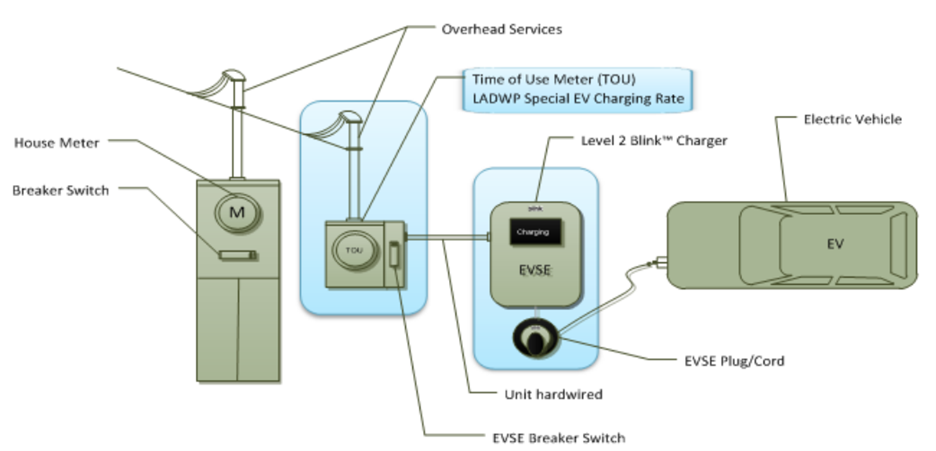
- A plug-in charger or hard-wired charger (Figure 11)
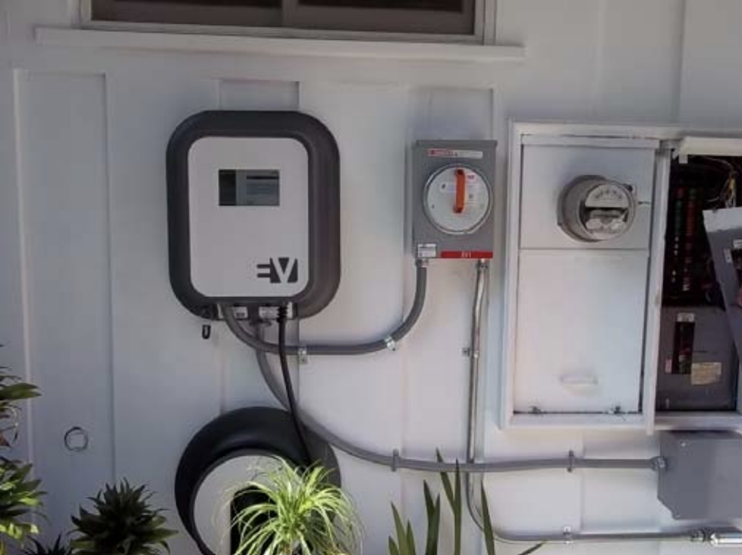
- Electrical distribution panel nearby (within 8 ft) the EV charger installation location (Figure 12).
Source
Report describing the best practices that were observed during installations of electric vehicle chargers for residential homes.
Source
Report describing the best practices that were observed during installations of electric vehicle chargers for residential homes.
Source
Report describing the best practices that were observed during installations of electric vehicle chargers for residential homes.
Source
Report describing the best practices that were observed during installations of electric vehicle chargers for residential homes.
Electrical Code and Workmanship Requirements
Hard-wired EV charger installation should be completed by a licensed professional. The Department of Energy’s Alternative Fuels Data Center can provide information on where to find electrical contractors that are qualified to install EV chargers. An electrical contractor should be aware of the relevant codes and standards and should obtain a permit from the local building authorities before installing charging infrastructure, if required.
The National Electrical Code (NEC) is widely adopted by certain states and local jurisdictions. Article 625 of the NEC covers the majority of electric vehicle power transfer systems requirements, including the following key points:
Branch Circuits: All EV charging equipment must be installed on a dedicated branch circuit, separate from other loads, to prevent interference and potential overloading.
- Rating: The equipment must be rated for the voltage and current levels expected during normal operation. For residential installations, this typically ranges from 120V to 240V.
- Wiring Methods: NEC requires the use of listed wiring methods and materials, such as those approved for wet locations when the conduit is installed underground or outdoors.
- Ground-Fault Protection: Ground-fault protection is required for EV charging systems to minimize the risk of shock. GFCI protection is particularly important in outdoor or wet environments.
- Determining Proper Electrical Load: EV charging is a continuous load. The NEC requires wiring size and overcurrent protection for EV chargers must be 125 percent of the charger’s nameplate continuous output rating. Load calculations or a load study may be required to ensure there is sufficient electrical capacity to support EV charging. Load control strategies may be employed to fit charging within existing capacity.
The National Electrical Contractors Association (NECA) Standard 413 is the standard for the installation and maintenance of EV chargers. It provides guidelines for Level 1, Level 2, and Level 3 chargers, covering safe installation, system capacity, and compliance with the NEC.
In addition, EV charger installations must comply with local and state codes and regulations for installation and safety. Check with your local building and permitting authorities to ensure you are complying with all state and local codes and regulations for EV charger installation.
Equipment
Equipment should be certified by a nationally recognized testing laboratory and listed for electric vehicle use. The American National Standards Institute (ANSI) and Underwriters Laboratories (UL) have defined four main product safety standards for EV chargers: ANSI/UL 2202 (for L3), ANSI/UL 2594 (for Level 2), UL2252 (for adapter safety), and UL 9741 (for bidirectional charging).
Products listed on the ENERGY STAR Product Finder and the EPRI Product List will meet industry safety standards.
To learn more about relevant codes and standards for EV charging equipment, see the Compliance tab.
Engaging the Utility and Local Jurisdiction Early
For projects that will need to upgrade electrical service to meet the needs for EV charger installation, it is important to engage the utility early to ensure you can plan according to their availability to upgrade your service. Furthermore, engaging a local jurisdiction early helps with understanding the local code requirements and permitting process which could require a site installation plan, and approval from fire, environmental, or electrical inspection entities.
Utilities can provide in-depth analysis of power availability and capacity for infrastructure planning. Some utilities also offer EV charging programs to mitigate grid impacts such as demand response programs. This allows a utility to remotely control EV charging by increasing, decreasing, or turning off charging to help meet the needs of the grid. In addition, utilities can offer incentives or unique ownership models for charging equipment and installation.
Use the U-Finder tool to identify utility partners, get contact information, and learn about their EV charger installation efforts.
Strategies to Future Proof Properties / Retrofits and Existing Buildings
The costs associated with installing EV charging infrastructure during new construction are substantially lower than during a retrofit. Installing infrastructure during new construction avoids the retrofit costs of breaking and repairing existing materials (e.g., walls, slabs, sidewalks, etc.), installing longer raceways, and using more expensive methods of upgrading service panels.
When planning, it’s important to consider future plans for the site. For example, does the resident plan to install more EV chargers, electrical appliances, solar panels, or battery storage? Are there energy efficiency opportunities that can lower current electrical demands? This forward-thinking planning during installation can help to reduce costs in the future. By understanding the resident’s future needs, you can plan their electrical capacity accordingly, ensure panel space for breakers, and run conduit and even circuits to ensure simple and cost-effective installations of EV chargers or other electrical appliances in the future.
For strategies to work within a home’s available electrical capacity when installing EV chargers, see the Retrofit tab.
Ownership and Cost Considerations
Determine Costs and Funding Opportunities
Determining the cost for your project is in part the result of all the decisions discussed in the previous sections. Installation costs can vary significantly based on factors including the type of charging station, geographic location, site location, existing electrical or required electrical upgrades to accommodate charging needs, labor costs, and permitting.
In 2019, the International Council on Clean Transportation found the average cost to install a Level 2 charger in an existing home was $1,400 across the 100 most populous metropolitan areas in the U.S (Schey 2022). A separate study by NREL analyzed multiple sources of pricing data and found that installations for Level 2 chargers can cost up to around $2,900, though some projects can cost more if significant electrical or utility upgrades are needed (Salcido 2024).
For more information on charging infrastructure cost considerations, see reports on Reducing EV Charging Infrastructure Costs, and Breakdown of Electric Vehicle Supply Equipment Installation Costs. Additionally, the EVI-LOCATE tool is helpful for determining EV charger cost estimates.
To help offset costs, there are many incentives and grants available to support the installations of EV chargers depending on location and utility provider offerings. Incentives can be found through the Alternative Fuels Data Center and the Database of State Incentives for Renewables and Efficiency (DSIRE).
Purchasing Options
Most homeowners purchase their own EV charger and have an electrician install it. Some utilities may offer programs where a residential charger is installed at low or no cost, and the homeowner can pay for the installation over time on their bill, or “pay” through participation in a load management program.
On-Going Costs
The main cost for operating a charging station includes paying for the electricity used. Electricity costs for the charging equipment owners will differ based on the level of equipment installed, utility rates, and the time of day, season, and length of time the charging station is used.
Single-family homes will experience minimal maintenance costs for L1 or L2 chargers, especially if the charger is placed indoors. Additionally, networked chargers may incur ongoing networking fees.
For single-family homes, some utilities offer reduced-cost time-of-use rates or other EV rate incentives for EV charging infrastructure owners. Time-of-use (TOU) rates are typically designed with on- and off-peak prices during different hours of the day. Most EVs and networked chargers are capable of shifting EV charging to occur during the lower-cost off-peak hours, which can decrease the cost of electricity. Some utilities may offer special EV rates that may reduce the cost of their electricity if charged during a specific time. Some vehicles have the ability to set preferred charging times, so drivers with non-smart chargers can still manage their charging to benefit from TOU or specialized EV rates.
Warranty Costs
Warranty pricing varies depending on manufacturer; plans can be fixed-term, renewable, and included with equipment costs. While routine charging infrastructure maintenance can be minimal, repairing broken chargers can be costly if they are no longer under warranty. In some cases, the easiest or cheapest option is to replace the broken charger with a new one.
Helpful Resources
- Installation of Electric Vehicle (EV) Charger for Single-Family and Multifamily Homes
- EVI-LOCATE
- Getting Started with Home EV Charging
- Home EV Charger Calculator
- Good Questions to Ask EV Charging Equipment Vendors
- Alternative Fuels Data Center
- Database of State Incentives for Renewables and Efficiency (DSIRE)
- ENERGY STAR Certified Product Finder
- EPRI Product List
Ensuring Success
Choosing and EV charger:
o The EVI-LOCATE tool can be helpful in choosing a layout and determining a cost estimate for your project.
o The EPA’s Home EV Charger Calculator can be helpful with determining the best type of home charger for you based on your vehicle and charging needs.
o To understand your charging needs, it’s helpful to understand first how far the resident typically drives. This will help you understand what level of charging speed they need for the vehicle’s dwell time (how long a vehicle is parked at a station).
o When choosing a vendor for your EV charger, ask the vendor questions to make sure their products will meet your needs. San Francisco PUC has provided a list of Good Questions to Ask EV Charging Equipment Vendors.
Planning and Installation:
- Equipment should be located away from potential hazards to be protected from physical damage.
- Equipment should be positioned to minimize tripping hazards from cords or include cord management devices, such as self-retracting reels.
- Identifying locations that are closer to the electric panel will reduce infrastructure and installation costs, as many materials and installation costs increase per foot of distance from the power source.
Region
No climate-specific information applies.
Compliance
Retrofit
EV charging with an existing building will ultimately be limited by the size of the site’s electrical service, unless an electrical service upgrade is performed. The good news is that there are several strategies that allow for EV charging without necessitating electrical service upgrades. For installations where one or more EV chargers or outlets are installed on a residential panel, there are a few strategies to consider to stay within the available capacity. These are listed below in order of affordability.
- Low Power Chargers: L1 or LPL2 chargers require 25-50% the power of an L2 charger, which can help installations stay within existing electrical capacity while providing the overwhelming majority of the driving miles needed for typical residents.
- Meter Collars, Circuit Splitters, Smart Breakers, or Energy Management Hardware Device: These devices monitor the overall power available on the panel or an individual circuit and temporarily pause or decrease the power to the EV charging circuit when the power draw could exceed the maximum rating. They are relatively easy to install on a utility meter, and can be employed even if there are no more breaker spaces on the electrical panel.
- Smart EV chargers: For homes that need two EV chargers to charge multiple vehicles, smart chargers can monitor the total electrical load across multiple chargers and limit their power draw to stay within the allotted amperage of the circuit they share.
- Smart Panel: If replacing or upgrading an existing electrical panel, installing a smart panel can allow the system to intelligently monitor and manage every energy load on the panel and adjust energy delivered based on user settings
More Info
References and Resources
*For non-dated media, such as websites, the date listed is the date accessed.
Questions? Comments? Contact our webmaster.