Introduction
Use caulking and spray foam to flash and air seal piping and wiring that comes through exterior walls.
Why
Electricians, plumbers, and HVAC (heating, ventilation, and air conditioning) technicians don’t always seal the holes they drill into exterior walls to run wiring, plumbing, and piping. Rainwater can enter the walls through these holes and damage building materials. Pests like rodents, squirrels, bats, and bugs can also use these holes in exterior walls, attics, and foundations to get into the home and cause extensive damage. Thus, as a homeowner, it is worth checking for unsealed holes in your exterior walls and sealing them yourself before they lead to bigger problems.
What You'll Need
- Spray foam
- Spray foam gun
- Spray foam cleaner
- Caulk
- Caulk gun
- Steel wool – to deter pest intrusion
- Disposable nitrile gloves
- Coverall protective suit, if you’ll be entering a crawlspace or attic
- N95 or better dust mask, if you’ll be entering a crawlspace or attic
- Ladder, to reach an attic access hatch in the ceiling or penetration high on an exterior wall
- Headlamp, if entering dark places
1. Locate piping and wiring in exterior walls.
Look for any instance of piping and wiring running through the exterior walls of your home. Check for gaps around the pipe or wiring that have not been sealed. The goal is to air seal pipes, wiring, and other penetrations through exterior walls from the interior and the exterior if accessible (Figure 1). Some holes may be at ground level and easy to reach from the exterior of the home, but most holes are likely in hard-to-reach places such as in the crawlspace, basement rim joist area, inside a cabinet, behind a tub or shower enclosure, inside an attic, or high above the ground in a soffit or gable wall. Use a ladder and proper personal protective equipment as needed to reach the location.

Source
Guide describing measures that builders in the cold and very cold climates can take to build homes that have whole-house energy savings of 40% over the Building America benchmark with no added overall costs for consumers.
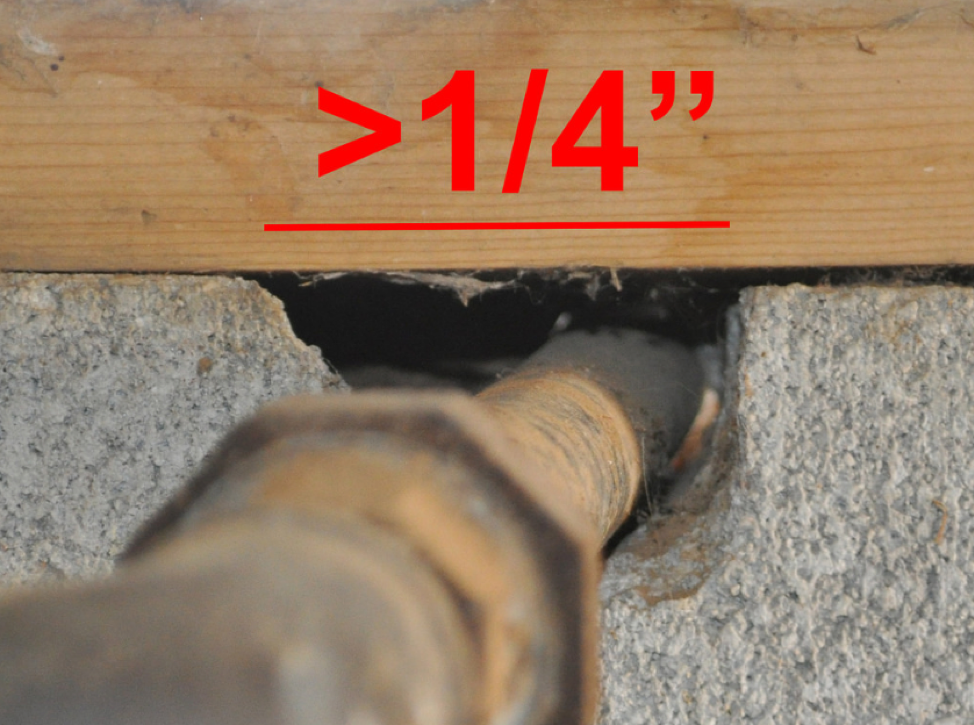
Figure 12 shows a hole that was cut into the concrete foundation wall to run a pipe; the hole was not filled in.
Source
2. Install metal screening in holes.
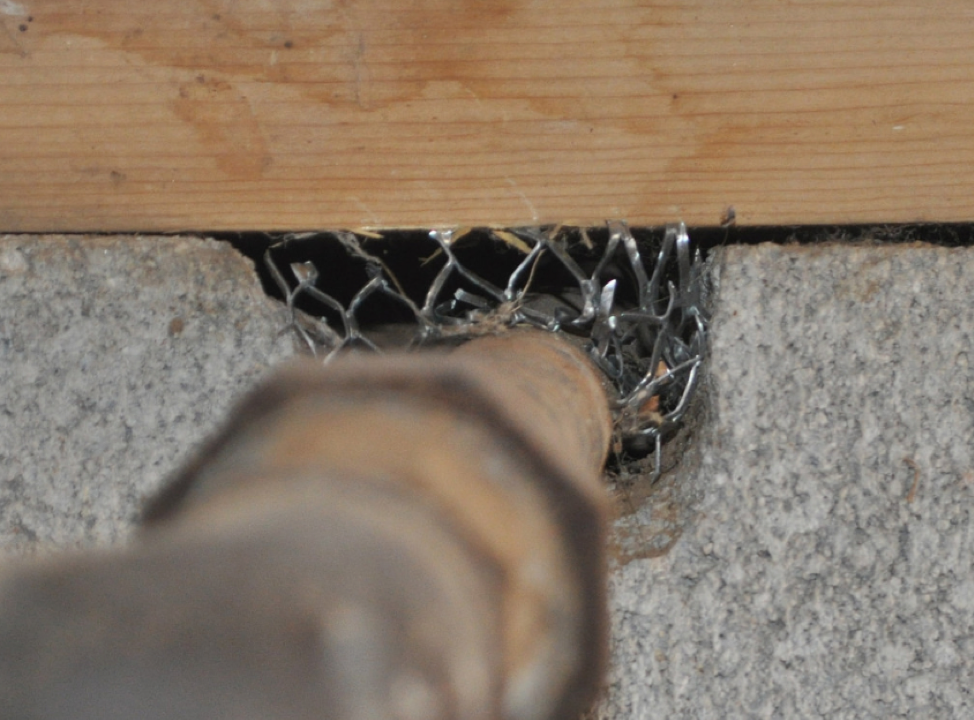
Push some steel wool or metal screening or metal hardware cloth into the gap around the pipe or wiring to keep out rodents (Figure 3).
3. Air seal.
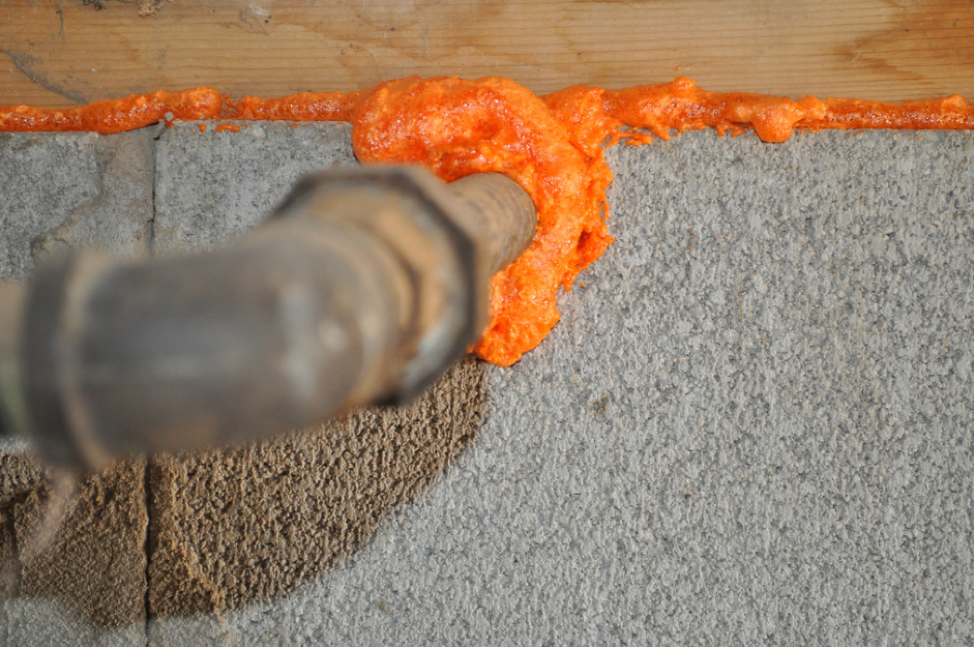
Cover the metal screening with canned spray foam or caulk to air seal the hole from inside the attic, basement, or crawlspace (Figure 4).
4. Seal pipes and wires from outside.
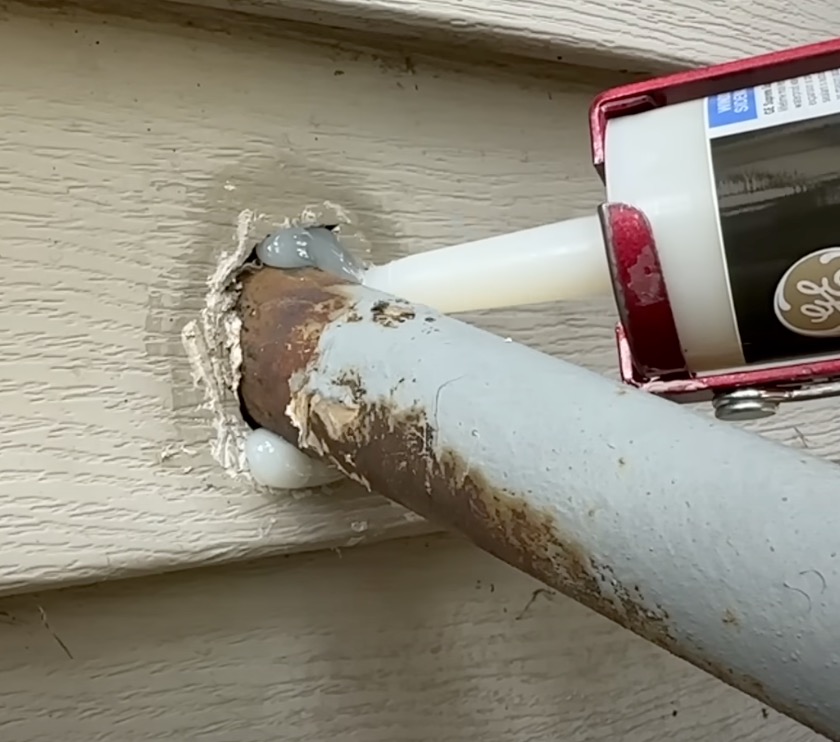
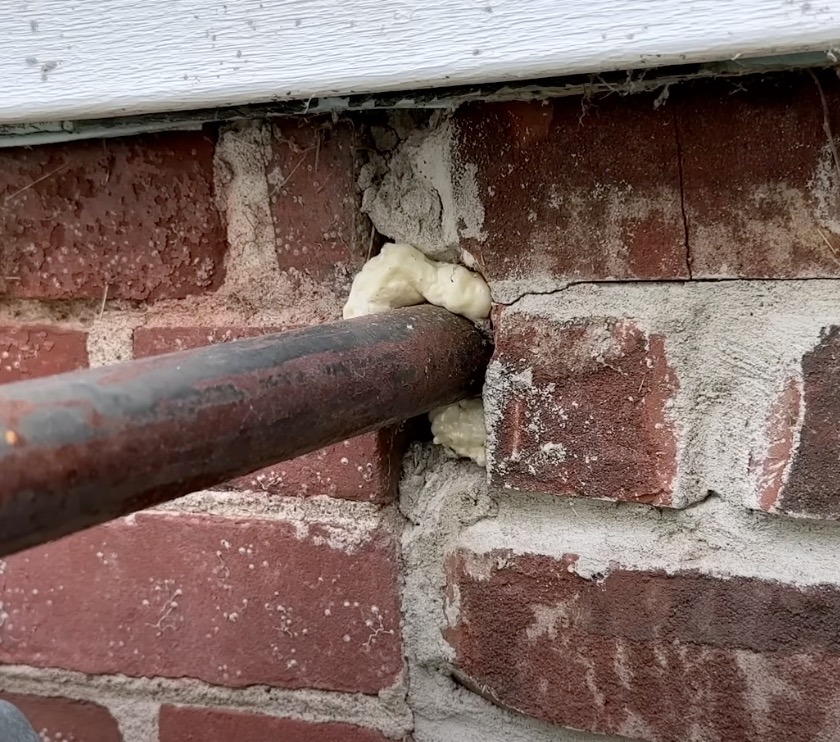
Seal the gap around the pipe or wiring from outside with a water-resistant caulk or foam to keep out water. For smaller gaps use caulking like that shown in Figure 5. For larger gaps, use canned spray foam like that shown in Figure 6. Note that spray foams formulated with pest-resistant chemicals are available.
Source
Source
5. If you are re-siding, ensure proper sealing details.
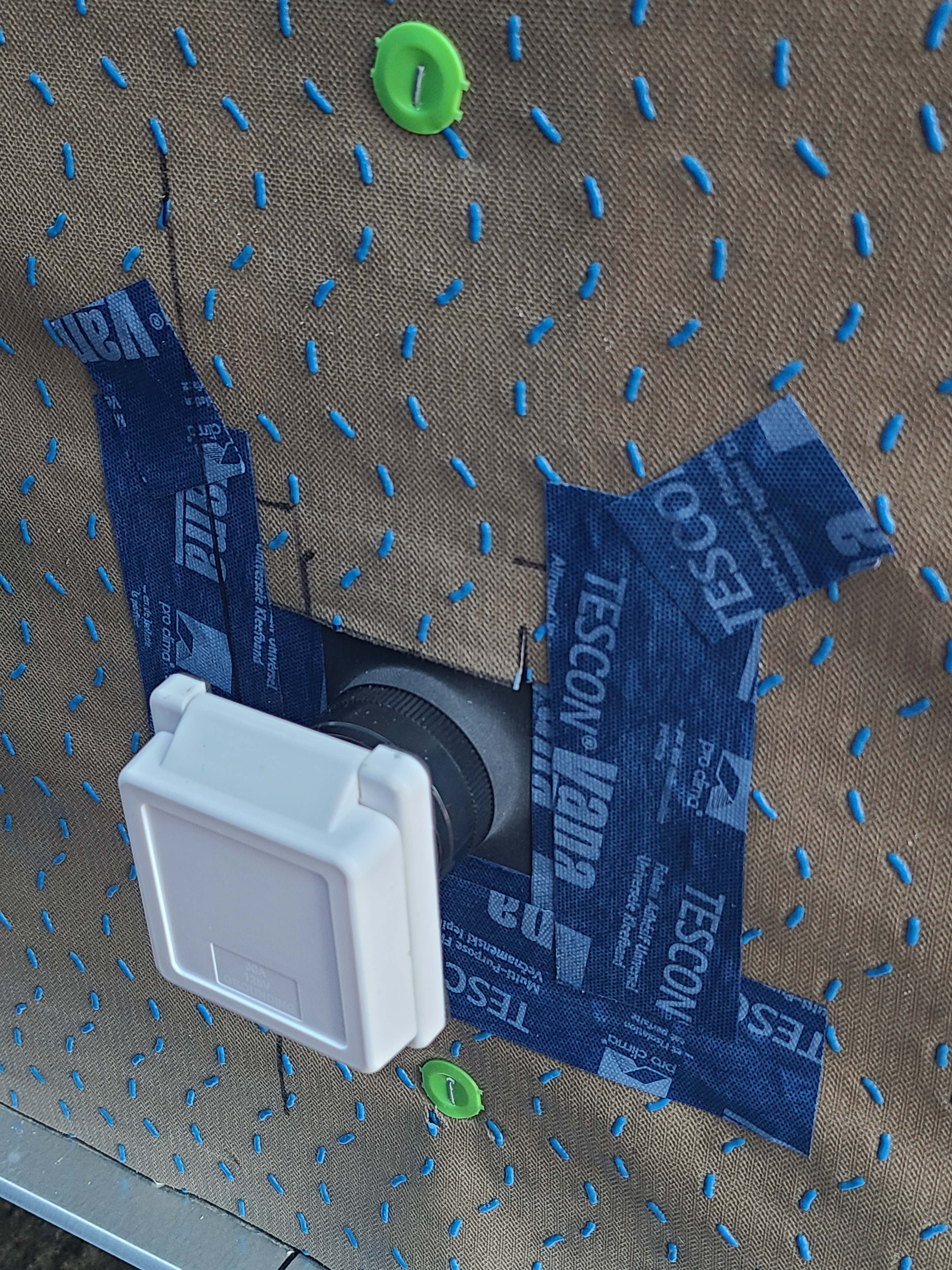
If the siding is being removed for replacement or repairs, that is a good chance to check that water and air barriers are layered and detailed correctly, especially around pipes, wiring, windows, and doors. Figure 7 shows a good example of how a pre-made pipe flashing gasket, flashing tape, and house wrap are integrated around a vent pipe to direct water down and out of the wall.