An official website of the United States government
Here's how you know
Official websites use .gov
A .gov website belongs to an official government organization in the United States.
Secure .gov websites use HTTPS
A lock (
) or https:// means you’ve safely connected to the .gov website. Share sensitive information only on official, secure websites.

Report analyzing design heating load sizing methods for superinsulated homes in cold climates and comparing them to the actual energy usage to determine if the building load calculation methodology should be changed for calculating the design heating load of these homes.
Part of a larger LBNL report (Deep Energy Retrofit Guidance for the Building America Solutions Center), the Source Energy and Carbon Decisions chapter helps users carefully assess the impacts of switching from gas to electricity for heating end-uses, using source energy and/or carbon emissions...
Report evaluating mechanical AC precooling strategies in homes as a method for improving the load factor by shifting cooling operation from on-peak to off-peak hours.
Guide describing proper application, design, and installation of mechanical ventilation cooling systems for homes located in hot-dry and cold-dry climates, as well as a means of understanding the benefits, costs, and tradeoffs of these systems.
Report on a project conducted to better understand the current usage of thermostatic radiator valves by key market players in steam and hot water heating and to conduct limited experiments on the effectiveness of new and old thermostatic radiator valves as a means of controlling space temperatures...
Web article describing the evolution of evaporative coolers, water usage of evaporative coolers, and links to information on selecting an evaporative cooler.
2012 edition of code establishing a baseline for the design and installation of fuel gas systems and gas fired appliances through performance requirements.
This Standard establishes the minimum requirements to evaluate a residence with regards to energy efficiency, water conservation, occupant comfort, and indoor air quality.
2012 edition of code establishing minimum regulations for mechanical systems, including heating, cooling, ventilation, exhaust, ducts, fireplaces, combustion and hydronic systems, using prescriptive and performance-related provisions.
2015 edition of code establishing minimum regulations for mechanical systems, including heating, cooling, ventilation, exhaust, ducts, fireplaces, combustion and hydronic systems, using prescriptive and performance-related provisions.
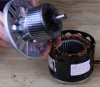
Article describing how replacing permanent split capacitor (PSC) motors with electronically commutated motors (ECM) can boost bottom line for HVAC contractors as well as improve customer comfort and satisfaction.
Report presenting construction methods, building products, appliances and equipment of four single-family houses that achieve dramatic energy reductions and approach “net zero energy” use.
The manual covers residential zoning issues - multiple, single-zone, and central multi-zone systems - and includes advice on working with homeowners to adapt the heating or cooling system design to meet modern home design features.