



Introduction
Look at a gas furnace for signs of backdrafting, if the furnace is an older model that does not have a sealed combustion chamber and sealed exhaust pipe.
Why
Backdrafting is a dangerous situation that can occur with older gas furnaces that don’t have a sealed combustion chamber and sealed flue but instead rely on a hot flue pipe to carry exhaust fumes out of the home. These appliances are sometimes referred to as natural-draft, atmospheric-combustion, or ambient-combustion furnaces because they pull their combustion air from the room or space they are located in through an open grill on the front of the combustion chamber. These types of appliances are susceptible to backdrafting, where combustion gases, including carbon monoxide, spill out of the base of the flue or the combustion chamber vents into the space around the furnace instead of exiting the home through the flue. Another dangerous situation that can occur with gas appliances with open combustion chambers is flame rollout. This is when the home, or the space where the appliance is located, is at such negative pressure that the flames from the burner are pulled out of their normal position; sometimes, the flames will be even come out of the appliance’s combustion chamber through the vent screen. Back drafting and flame rollout are dangerous, potentially life-threatening, situations. If you see signs that a gas furnace is backdrafting or has experienced flame rollout, don’t try to fix it yourself. Contact an HVAC professional as soon as possible.
The likelihood that your gas furnace has backdrafted in the past or is currently backdrafting depends on the type (natural-draft furnaces have a chance of this phenomenon), age (an older furnace is more at risk and might not have sensors to sense flame rollout), level of maintenance (a furnace that hasn’t been inspected by a professional in a long time is more at risk), whether it was installed correctly in the first place, and whether modifications to the home have been made since its installation that inadvertently affected the furnace’s ability to draft correctly (for example, insulating and air sealing a previously unfinished basement containing the furnace).
What You'll Need
- A ladder (if the gas furnace is in the attic)
- A screwdriver
- Battery-powered lights if the gas furnace is in a dark location
- A portable, battery-powered carbon monoxide detector
1. Determine if your gas furnace is an ambient-combustion furnace.
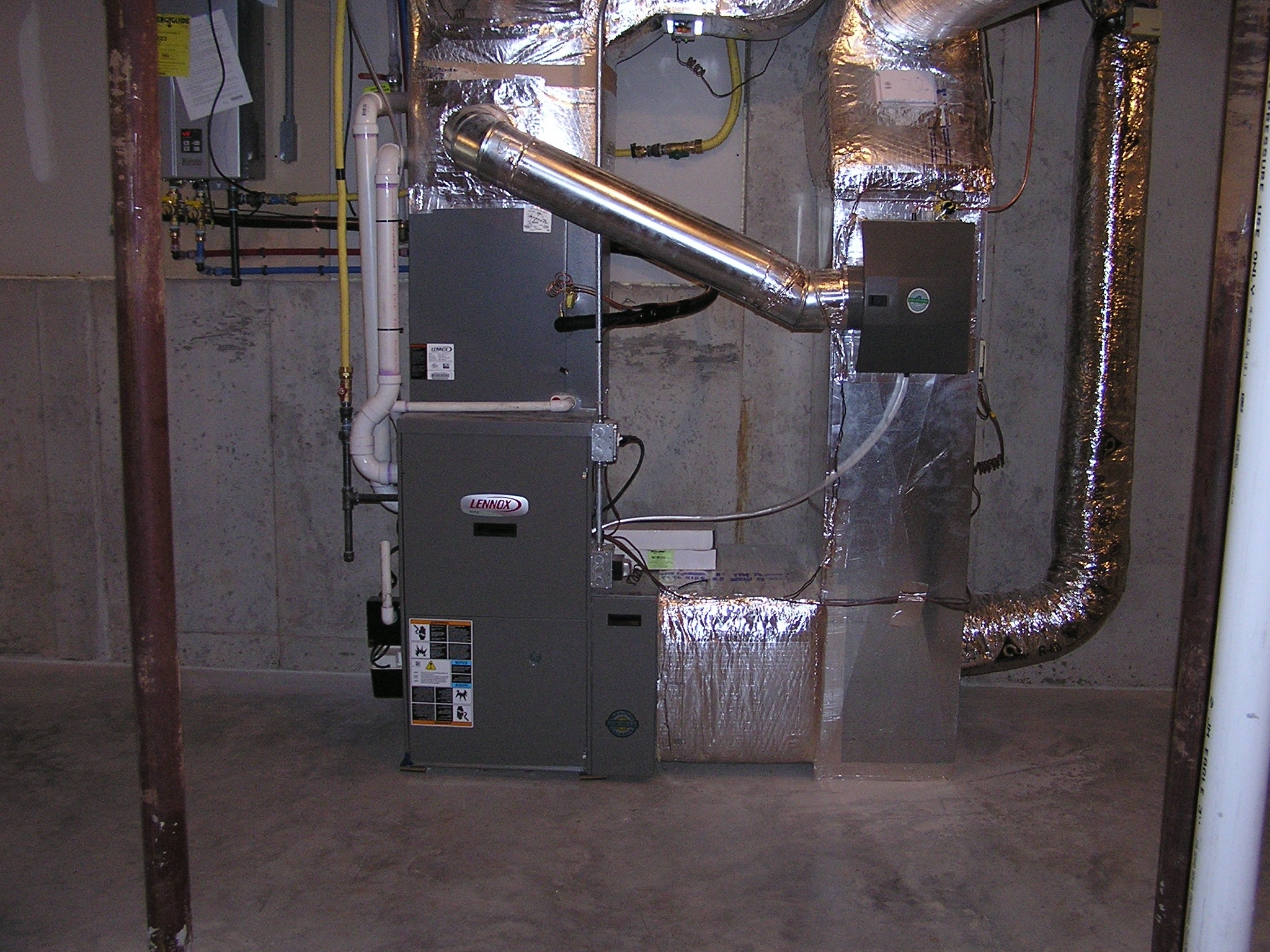
Your gas furnace is an ambient-combustion furnace if it has an open grill on the front and a metal flue, like the furnace shown in Figure 1; the flue is the wide silver metal pipe going up to the left. (The white plastic pipe going across and down to the right is the air conditioner condensate drain.) Ambient-combustion furnaces lack a sealed combustion chamber and a sealed flue; therefore, they have the potential to backdraft. If your gas furnace is a newer high-efficiency furnace with a sealed combustion chamber, it is very unlikely that backdrafting will occur. A sealed-combustion furnace will typically have a PVC flue pipe and PVC air intake pipe, like the furnace shown in Figure 2. Because high-efficiency furnaces have not one but two heat exchangers to pull as much heat as possible out of the heated air that passes over the burners, the flue gases are considerably cooler so the flue pipe for these sealed-combustion furnaces (also known as condensing furnaces) can be made of PVC plastic rather than metal. Sealed-combustion furnaces are usually much higher efficiency with an annualized fuel efficiency (AFUE) of 90% to 96%, compared to ambient-combustion furnaces, which typically have an AFUE of 80% or less.
The furnace in Figure 2 is set up in a typical configuration for a high-efficiency furnace. The furnace has two 2-inch PVC pipes shown here going up the left side of the furnace cabinet and exiting through the exterior wall of the basement to the outside – one PVC pipe is the air intake to the combustion chamber, the other is the exhaust flue. Figure 3 shows what these pipes look like where they exit the house. In less typical cases, the two PVC pipes join a few feet from the furnace into a single wider concentric vent pipe before leaving the house. Another variation (not recommended) is for the air intake to be a shorter pipe that does not go through the exterior wall but extends only a few inches to a few feet from the furnace and draws in air from the surrounding space in the attic, crawlspace, or garage. This is still considered a closed-combustion system. Like all high-efficiency furnaces, a small fan within the furnace operates to pull in the combustion air and push the air past the burners, and through the heat exchangers to the flue. Because of this fan-assisted exhaust, flue gases are very unlikely to come back into the home, so backdrafting of these furnaces is almost impossible.

Source
Source

Source
2. Turn on the carbon monoxide detector.
Turn on the portable battery-powered carbon monoxide detector (Figure 4) outdoors away from potential combustion emission sources such as an idling car tail pipe, so it gets a clean zero reading before taking it along to the area where the furnace is located. A home with properly operating gas appliances located inside the home may show levels of up to 5 parts per million (ppm). Under 9 ppm over an 8-hour period is generally considered safe. Levels above that can cause headaches, fatigue, and flu-like symptoms. Levels as low as100 ppm can cause brain damage and death. If your detector indicates levels of 30 or higher, leave the home and call an HVAC technician.

Source
3. Remove the cover or door to the gas furnace.
Turn off the furnace at the thermostat. Open or lift off the gas furnace cabinet door. On some furnaces the door is in two pieces, where one piece of the door must be removed first and then the other. Take note of how the covers come off to know how to reinstall them.
4. Look for signs of back drafting.
Look at the furnace for signs of back drafting including soot marks and discoloration on the metal near the burner tubes (Figure 5). If the metal all around the burners looks clean and shiny, it is unlikely that back drafting is occurring (Figure 6).

Source

Source
5. Re-install the cover to the gas furnace.
Make sure you have an operating carbon monoxide alarm operating in your home if you have gas appliances located inside the home. Turn the furnace back on at the thermostat. If you saw signs of backdrafting, contact an HVAC technician to inspect and repair your furnace.
Indoor air quality sensors may provide more sensitive readings than carbon monoxide alarms. Federal standards indicate the home should be evacuated if levels reach 35 ppm of carbon monoxide, but any reading above 10 ppm bears investigation.