Materials Cost: FREE
Difficulty Level: 1

Introduction

Ductless heat pumps should be checked periodically to see if they need a deep cleaning to remove dust and mold and keep them operating efficiently.

Why

Ductless heat pumps are powerful, highly efficient heating and cooling devices but because of the amount of indoor air that flows through these small indoor units and the temperature changes they are subject to, they can be prone to collecting dust, cooking grease, and particulates, which could lead to the formation of bacteria and mold inside the unit. The indoor units should be checked periodically and if needed, deep cleaned every few years to keep them running at their best and to maintain a healthy indoor environment.

What You'll Need

  • Step stool or ladder to reach the ductless heat pump
  • Flashlight 

1. Turn Off the Heat Pump.

Use the remote controller or wall thermostat to turn off the ductless heat pump air handler (Figure 1). Now you are ready to see if needs to be deep cleaned. This examination can be done every time you remove and clean the air filters in the ductless heat pump, a routine maintenance task which should be done every 2 to 3 months. (See the DIY guide Clean Ductless Heat Pump Filter)
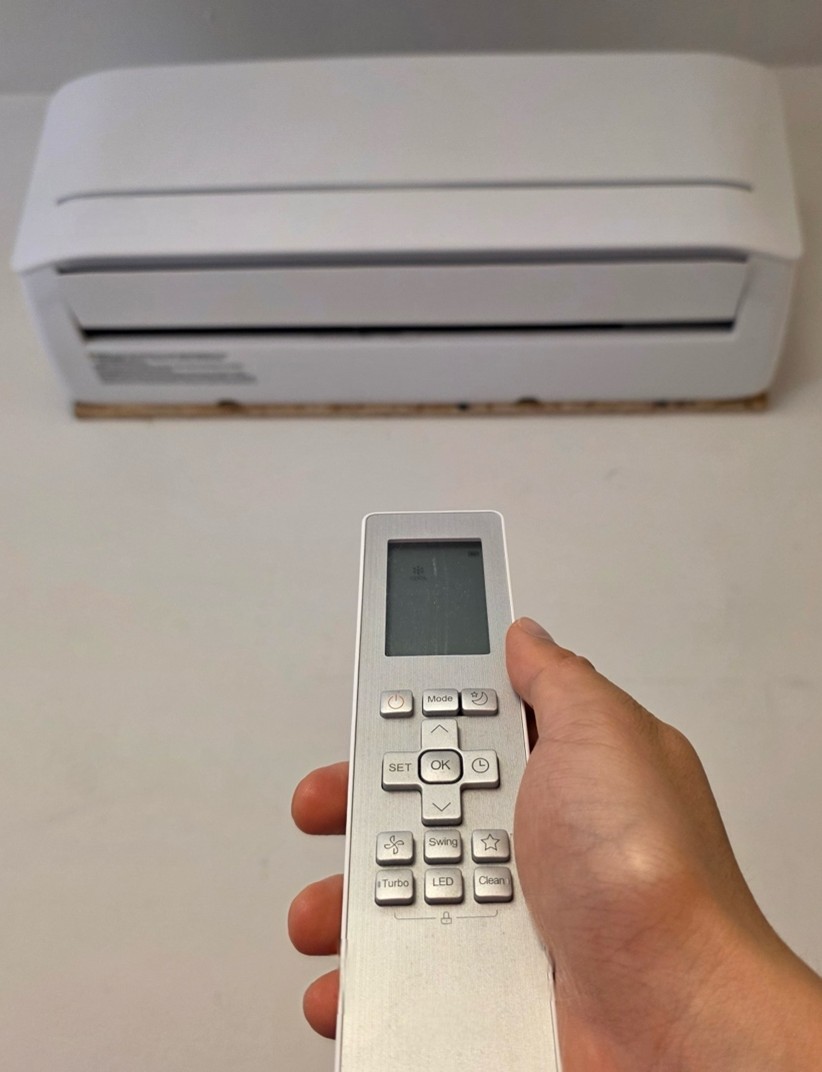
Use the remote control or your thermostat to turn off the heat pumps
Source
Figure 1. Ductless heat pumps are small, highly efficient heating and cooling systems but they do need regular maintenance and checks for deep cleaning; start by using the remote control to turn off the heat pump (Source: PNNL)

2. Get a step stool.

Get a ladder or step stool if needed to reach the ductless heat pump.


3. Examine the blower wheel.

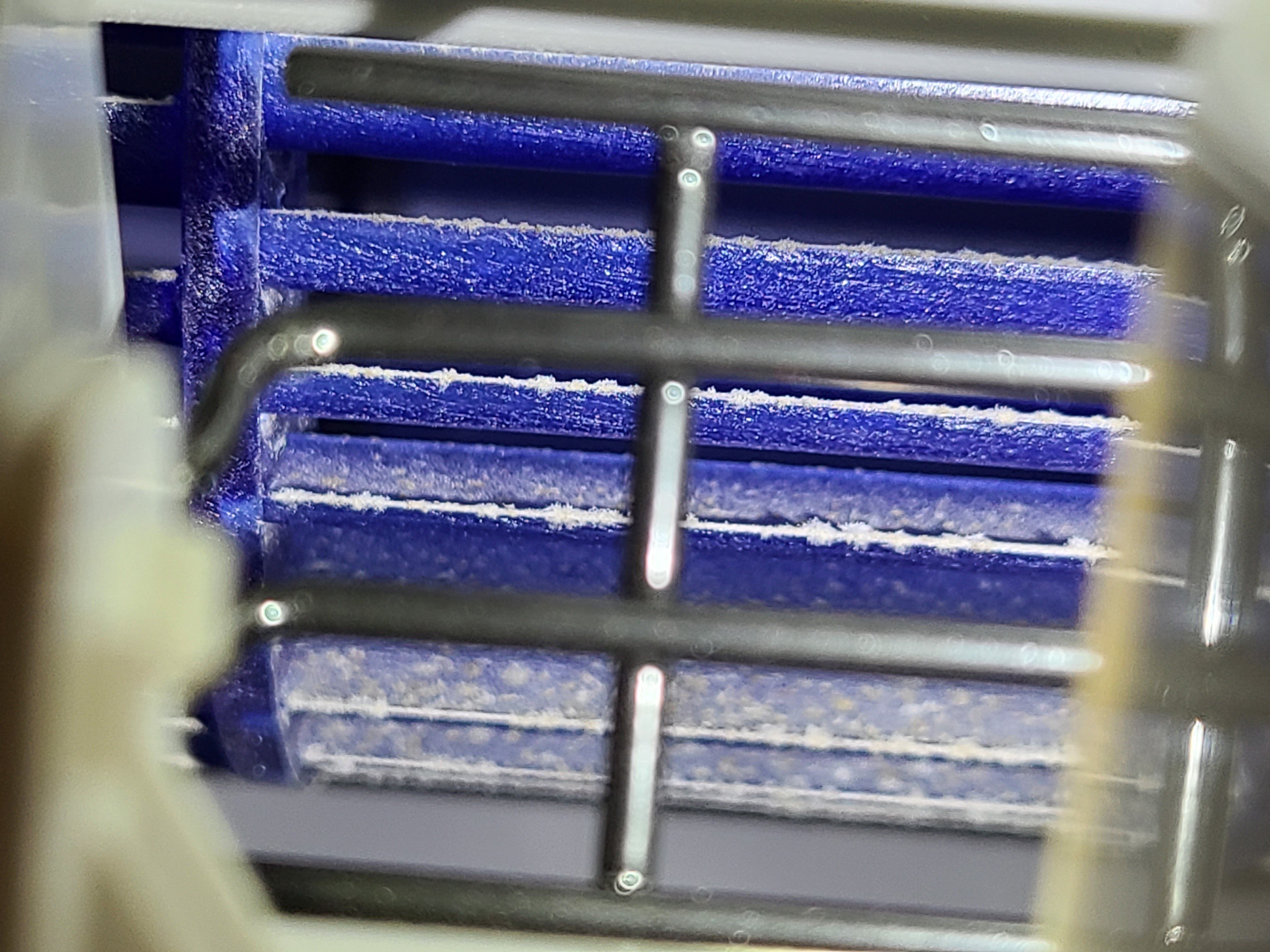
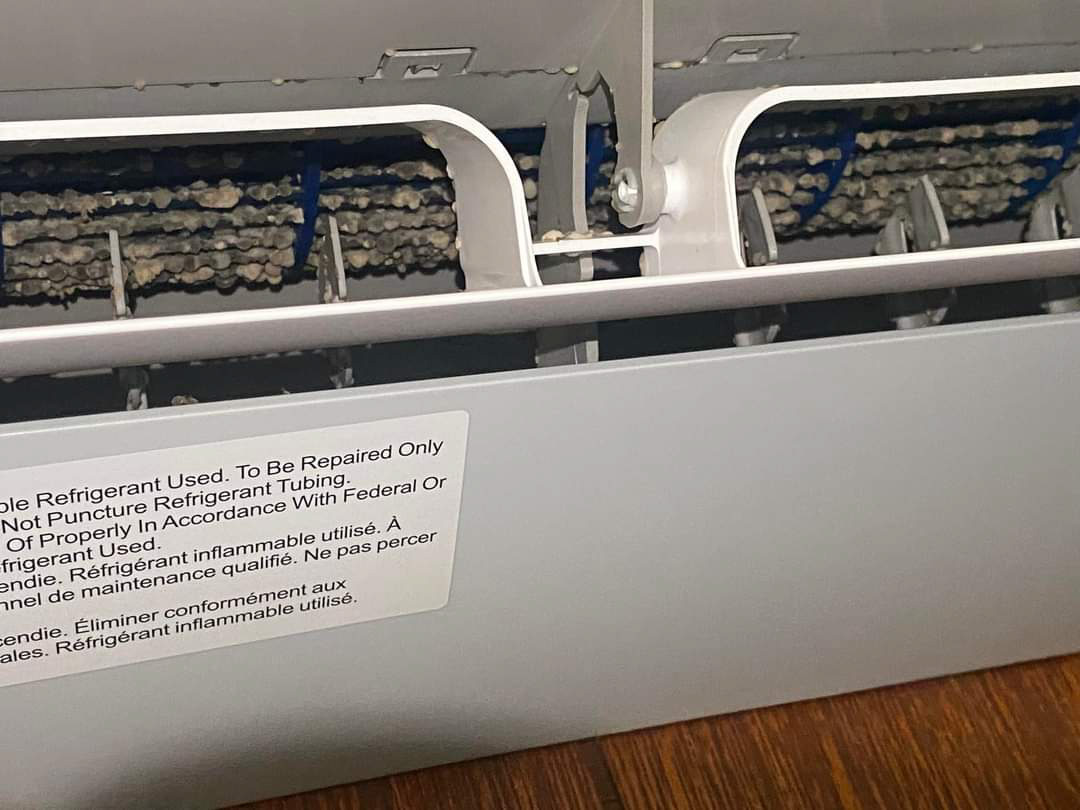
Use your fingers to manually open the louvers (Figure 2). If your unit has two louvers, manually open both. Use a flashlight to look inside at the blower wheel to see the level of dust build up. If it looks like Figure 3 showing a mild amount of dust build up on the blower wheel, the unit doesn’t need a deep cleaning just yet. However, if the blower looks like Figure 4 showing a high amount of dust build up, then it is time to call an HVAC company to do a ductless heat pump deep cleaning.
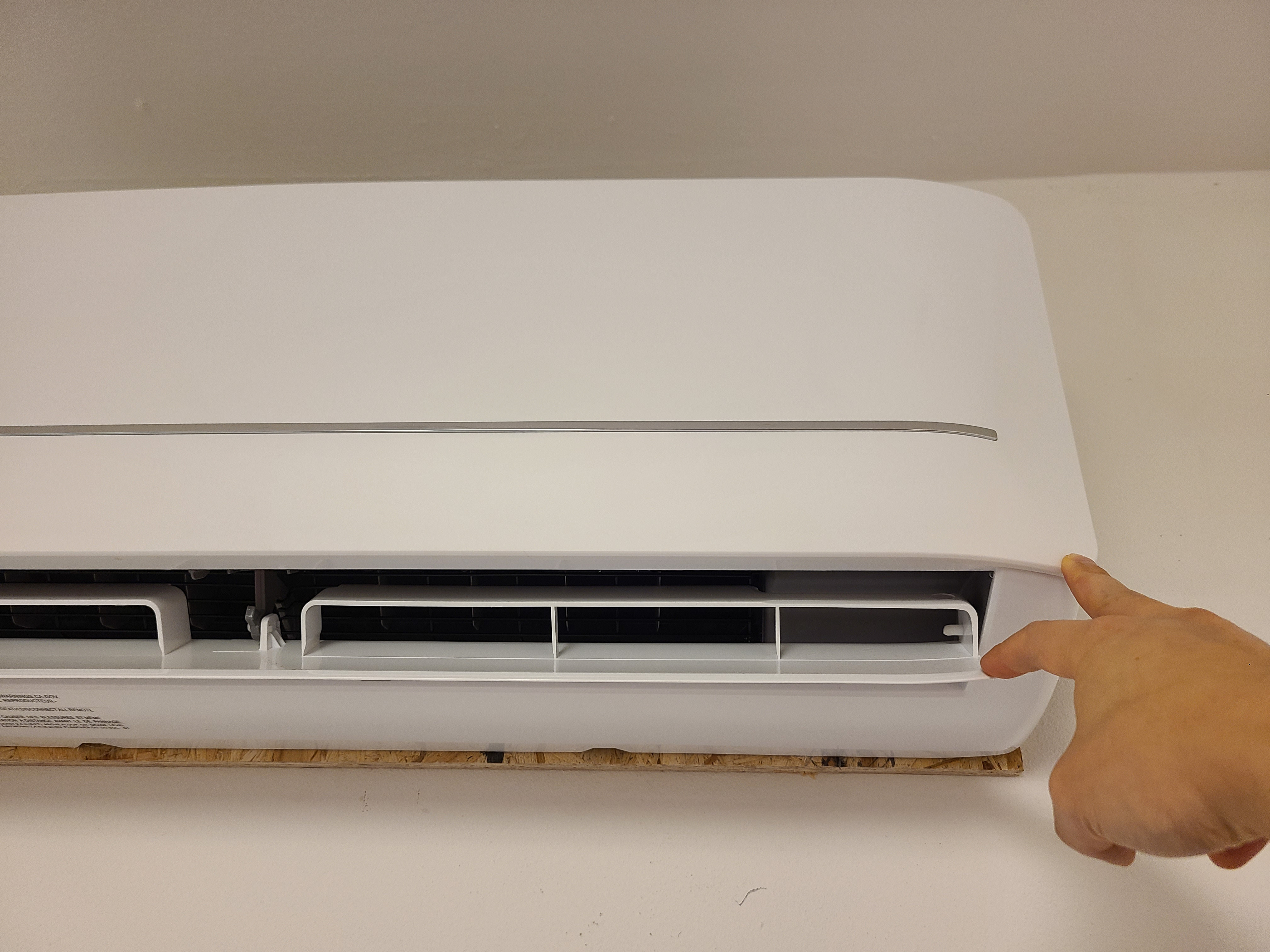
Minisplit heat pumps have one or more louvers, usually at the bottom of the unit, that open to direct air flow when the unit is in operation
Source
Figure 2. Mini-split heat pumps have one or more louvers, usually at the bottom of the unit, that open to direct air flow when the unit is in operation (Source: PNNL).
This minisplit heat pump shows a mild amount of dust buildup on the blower wheel
Source
Figure 3. This mini-split heat pump shows a mild amount of dust buildup on the blower wheel (Source: PNNL).
This minisplit heat pump shows a large amount of dust buildup on the blower wheel and is in need of a deep cleaning
Source
Figure 4. This mini-split heat pump shows a large amount of dust buildup on the blower wheel and is in need of a deep cleaning (Source: PNNL).

4. Reset the louvers.

To reset the position of the louver(s) turn on the heat pump, wait a few seconds, and then turn off the heat pump. This process will reset the position of the louver(s). Now you can turn it back on, and the louver(s) will be in the right position.


5. Call an HVAC Contractor.

If your ductless heat pump does need a deep cleaning call an HVAC contractor who does ductless heat pump servicing. Ask them whether their deep cleaning process involves disassembling the indoor unit to remove the blower wheel to deep clean the blower wheel and the adjacent surfaces. If it does not, call another HVAC contractor until you find a contractor who will do a comprehensive deep cleaning. 

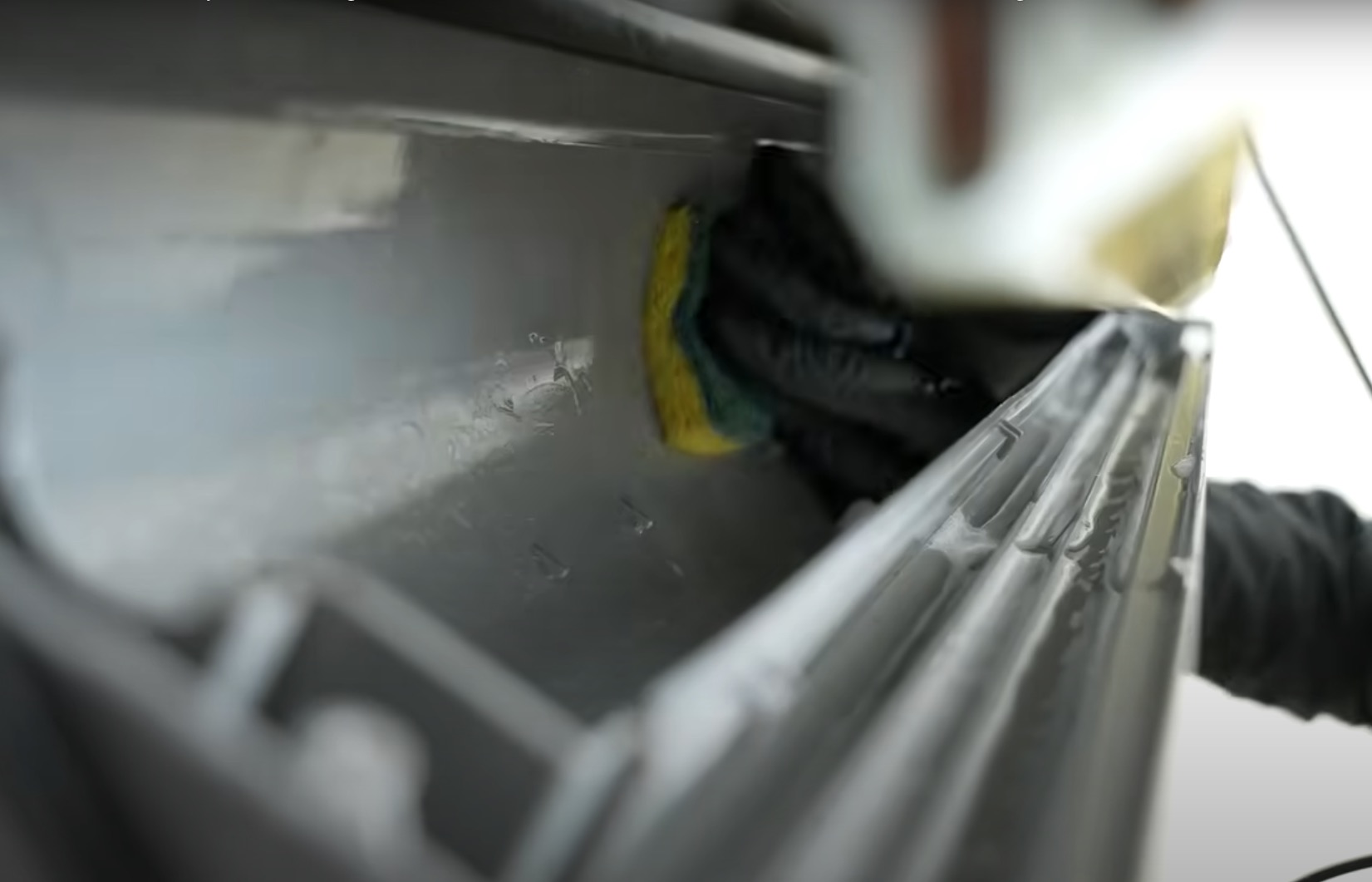
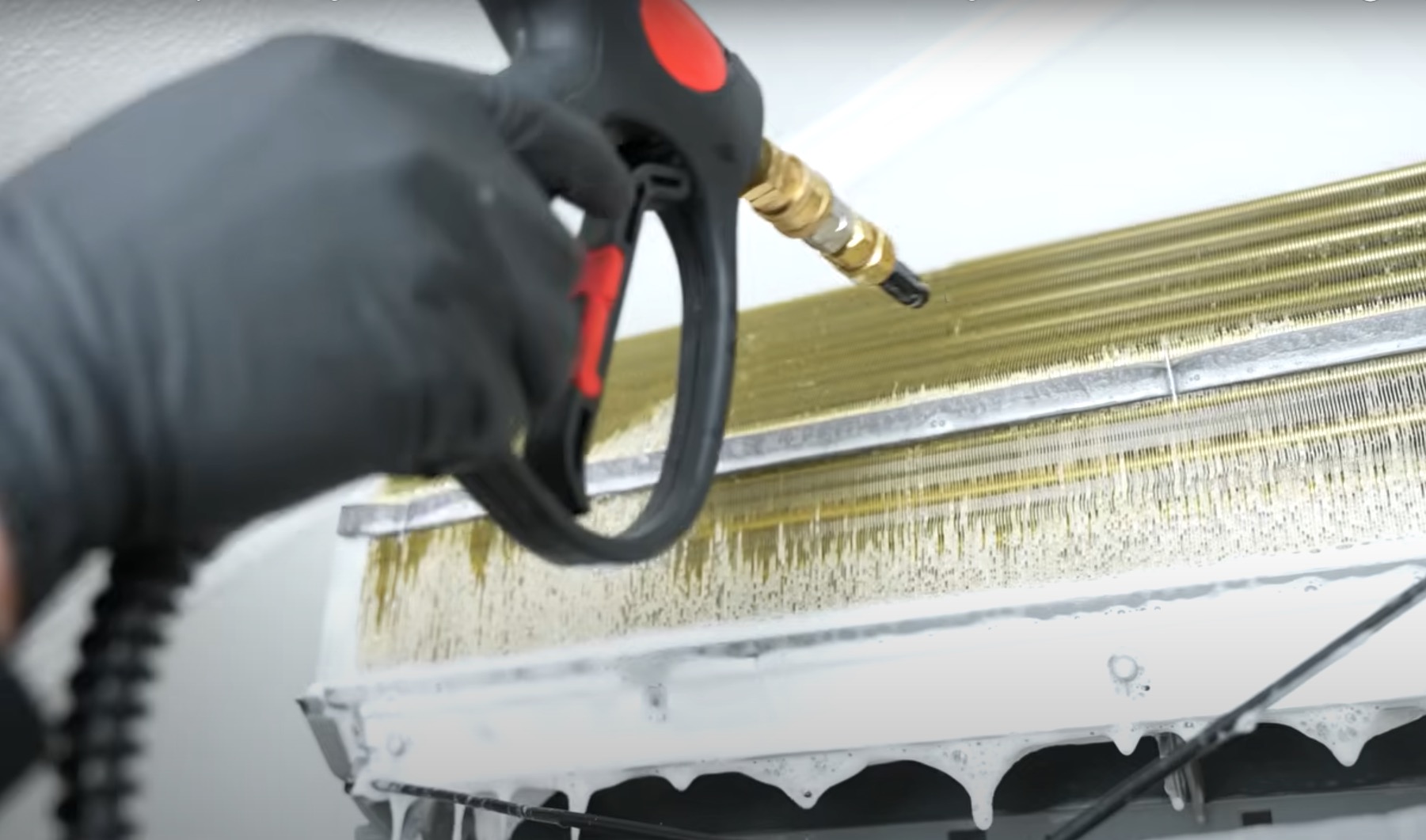
Figure 5 shows an HVAC contractor cleaning the blower wheel outside using a pressure washer and cleaning solution. Figure 6 shows an HVAC contractor cleaning the surfaces adjacent to the blower wheel that can only be reached and comprehensively cleaned with the blower wheel removed. Figure 7 shows an HVAC contractor cleaning the heat exchanger using a cleaning and disinfectant solution. The disassembly, cleaning, and reassembly process usually takes more than an hour; one to two hours is typical. Expect to pay $300 to $500 for such a cleaning. The visit will also include cleaning the outdoor unit and checking for refrigerant leaks. If your home has more than one ductless heat pump indoor unit, expect to pay more.
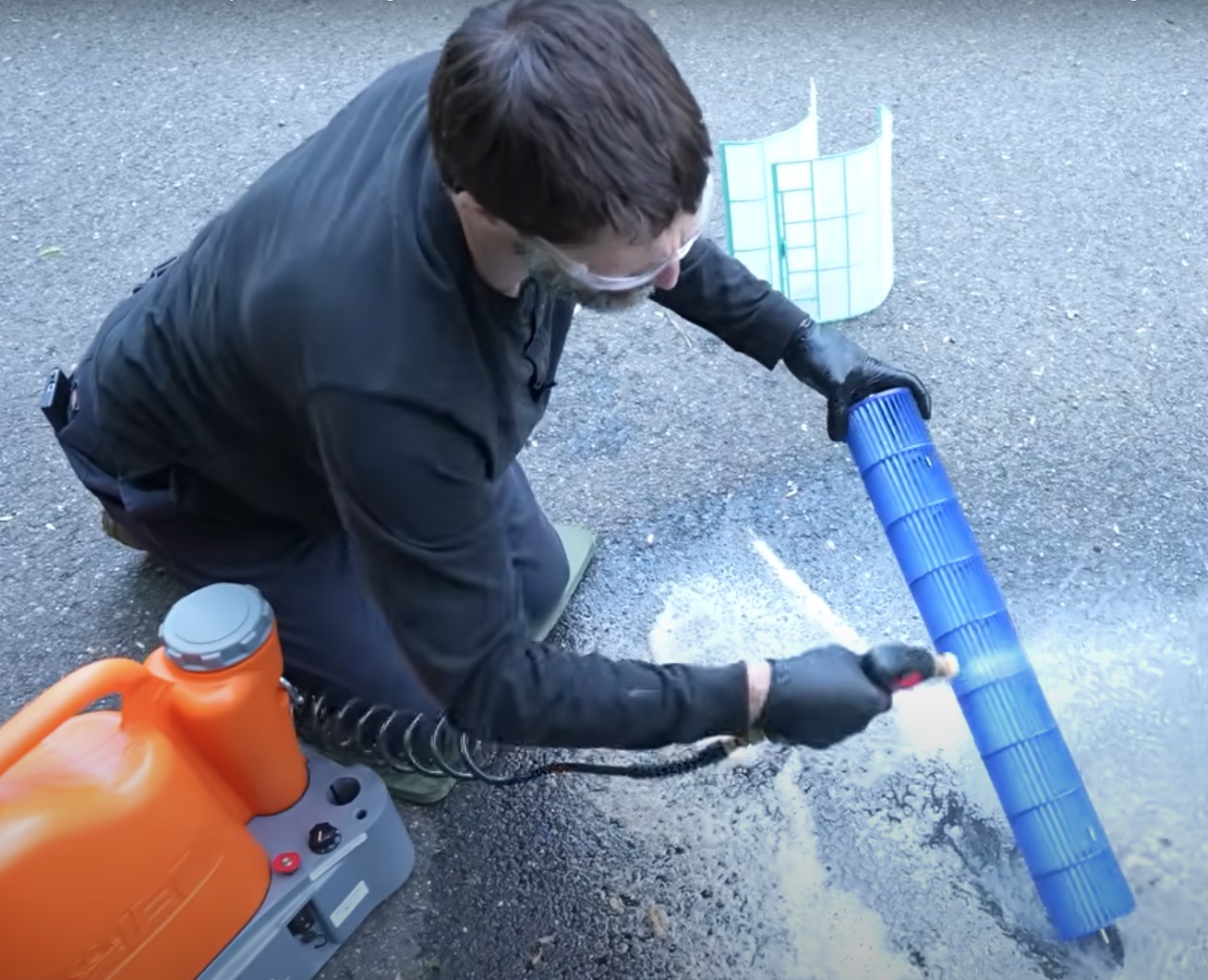
An HVAC contractor is deep cleaning the blower wheel of a minisplit heat pump outside using a pressure washer and cleaning solution
Source
Figure 5. An HVAC contractor is deep cleaning the blower wheel of a mini-split heat pump outside using a pressure washer and cleaning solution (Source: PNNL).
An HVAC contractor is deep cleaning the surfaces inside a minisplit heat pump that can only be reached when the blower wheel is removed
Source
Figure 6. An HVAC contractor is deep cleaning the surfaces inside a mini-split heat pump that can only be reached when the blower wheel is removed (Source: PNNL).
An HVAC contractor is cleaning the heat exchanger of a minisplit heat pump using a disinfectant solution
Source
Figure 7. An HVAC contractor is cleaning the heat exchanger of a mini-split heat pump using a disinfectant solution (Source: PNNL).

Additional Info

Last Updated

Disclaimer

This content is a work created with funding provided by the United States Department of Energy under Contract no DE-AC05-076RL01830 for the operation of Pacific Northwest National Laboratory. The information and guidance provided by Pacific Northwest National Laboratory (PNNL) in the content are intended solely for educational purposes only and do not constitute formal training or certification. It is provided with the explicit understanding that neither the United States Government nor the United States Department of Energy, nor the Contractor, nor any or their employees, nor any jurisdiction or organization that has cooperated in the development of these materials, makes any warranty, express or implied, or assumes any legal liability or responsibility for the accuracy, completeness, or usefulness or any information, apparatus, product, software, or process disclosed, or represents that its use would not infringe privately owned rights. Reference herein to any specific commercial product, process, or service by trade name, trademark, manufacturer, or otherwise does not constitute or imply its endorsement, recommendation, or favoring by the United States Government or any agency thereof, or Battelle Memorial Institute. The views and opinions of authors expressed herein do not necessarily state or reflect those of the United States Government or any agency thereof. Viewers assumes full responsibility for all actions that they may take from information provided in this content including ensuring the safety, code compliance, and proper functionality of any products they choose to install. Installation and use of such products should be performed in accordance with local regulations and manufacturer instructions.