Introduction
Look at the condensate drain line of your air conditioner, heat pump, or condensing furnace or boiler to make sure it is insulated.
Why
In jurisdictions in hot humid climates, the local building codes often require that the horizontal condensate line pipes that are located in unconditioned areas (like attics) should be insulated to prevent condensation from forming on the exterior of the drain pipe. The condensate line from an air conditioner can be quite cool. When hot humid attic air touches the cold pipe, water vapor can condense on the pipe. This water can drip onto surrounding surfaces like attic insulation, wood framing, and ceiling drywall, where it can encourage mold growth and where, over time, it can cause water damage to the materials. In cold climates, condensate lines should be insulated to prevent freezing of the pipes.
What You'll Need
- Lighting (headlamp, flashlight)
- Ladder to get into the attic if there is no pull-down attic ladder.
- Camera/phone to take pictures
- Pipe insulation (optional)
1. Find the air handler and the condensate drain.
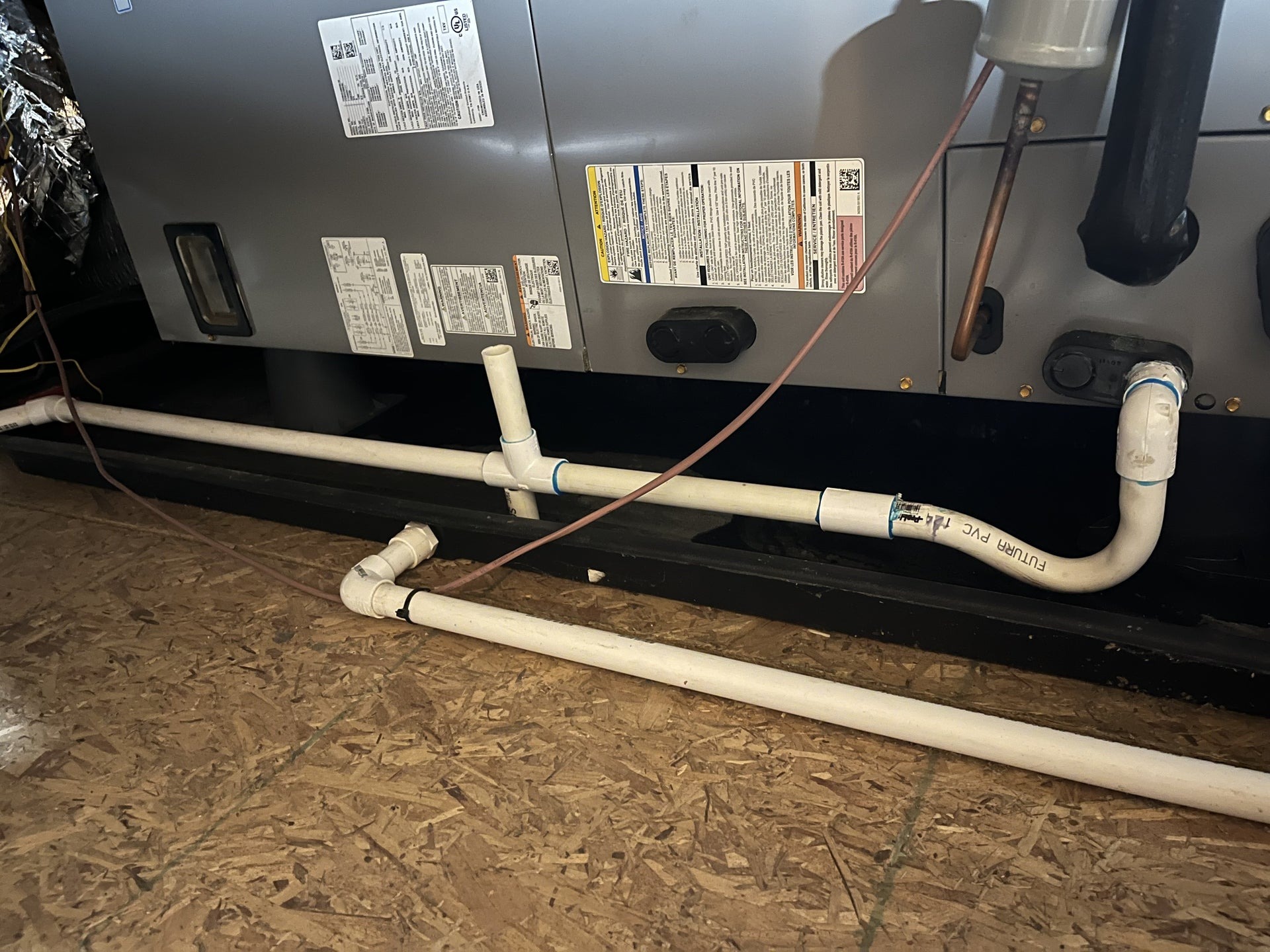
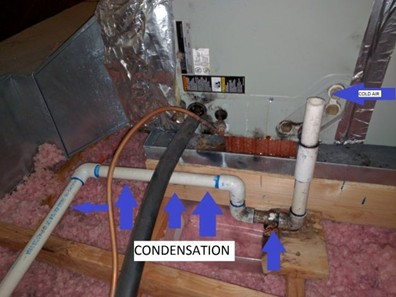
Your air handler (furnace and air conditioner, central heat pump, or condensing furnace or boiler) might be located in the attic, basement, garage, or a utility closet inside the home. The condensate line will be made of PVC or plastic and it should drain to the outside or to a house drain that goes to the sewer. Figure 1 shows an air conditioner in an attic. The condensate line is the pipe going from the air handler at right down and off the left side of the picture. Figure 2 shows another air conditioner located in an unconditioned attic with an uninsulated condensate line that is showing visible condensation on the horizontal pipe and signs of condensation like wet wood beneath the elbow.
Source
Source
2. Look for condensation.
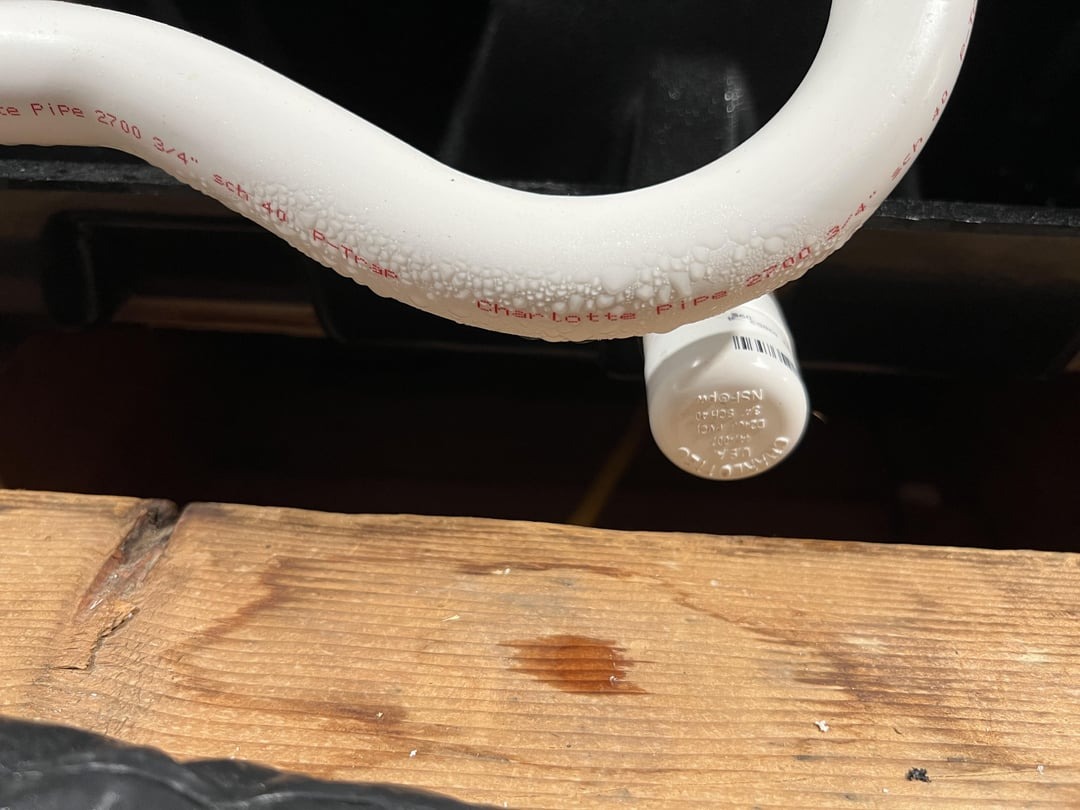
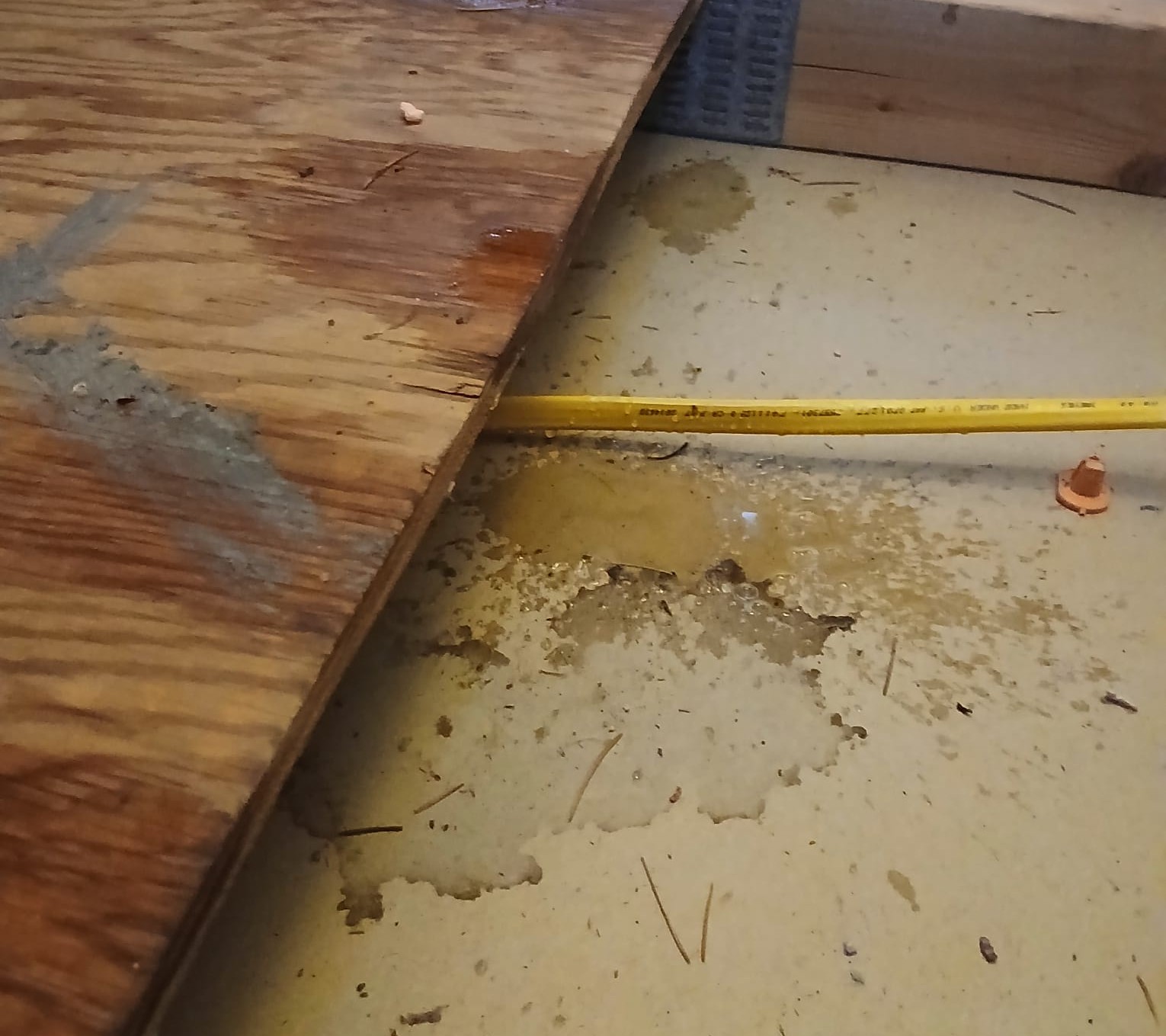
Look for active condensation (water droplets on pipes) and signs of past evidence of condensation (water stains on wood or floor) (Figure 3 and Figure 4).
Source
Source
3. Insulate the pipes.
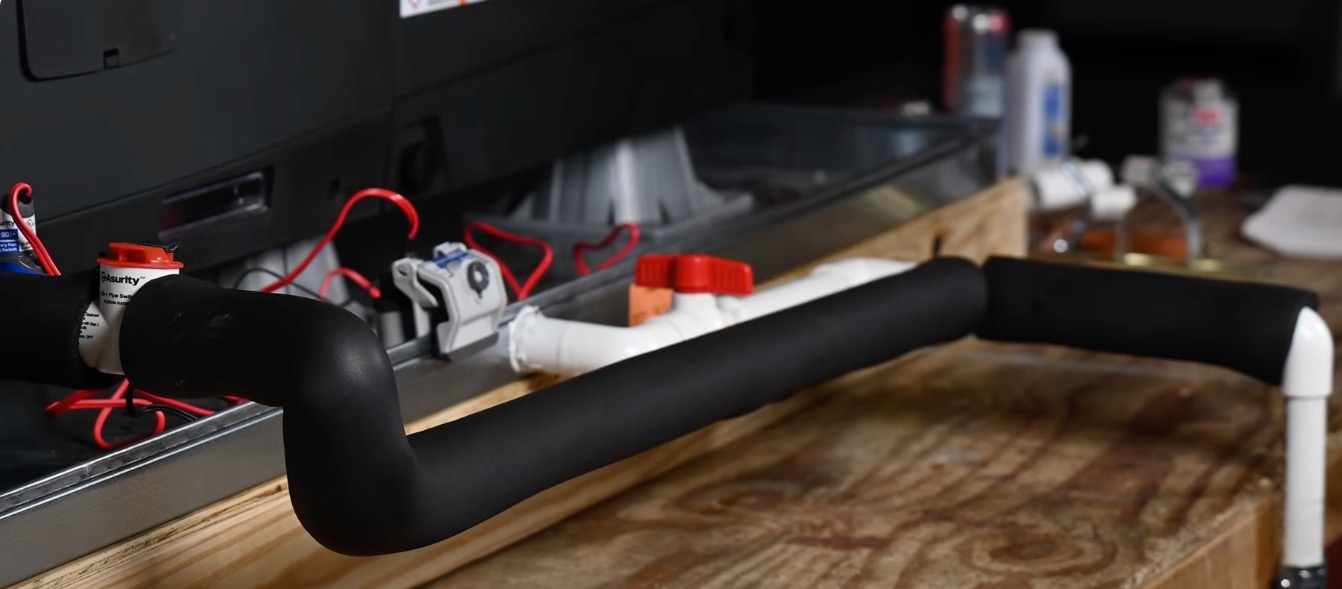
When you examine your equipment, if you find evidence of current or past condensation on the condensate line, then insulate the horizontal runs of the condensate line with pipe insulation as shown in Figure 5 or hire an HVAC contractor or handyman to insulate the pipes.