Introduction
Turning your water heater temperature down to 120°F can promote safety, save energy, and improve system efficiency.
Why
The U.S. Environmental Protection Agency recommends setting water heaters at 120°F to prevent scalding. Every 10-degree reduction also saves about 5% in energy consumption. By turning the temperature down on your water heater, you can promote safety, save energy, and it may help your water heater last longer by slowing down the build up of mineral deposits and corrosion.
What You'll Need
- Coffee mug or glass measuring pitcher
- Flathead screwdriver
- Meat Thermometer
- Water heater manual
1. Determine water heater setpoint.
Start by checking your water heater’s current temperature. This step can also help you check whether the temperature setting on your water heater matches the delivered temperature of your hot water. To find the current temperature of your hot water:
- Get a coffee mug or glass measuring pitcher and a meat thermometer and go to the faucet nearest to the water heater.
- Turn on the hot water tap only and run the water for about 3 minutes to ensure hot water is being pulled from the tank.
- Fill the mug with hot water from the tap.
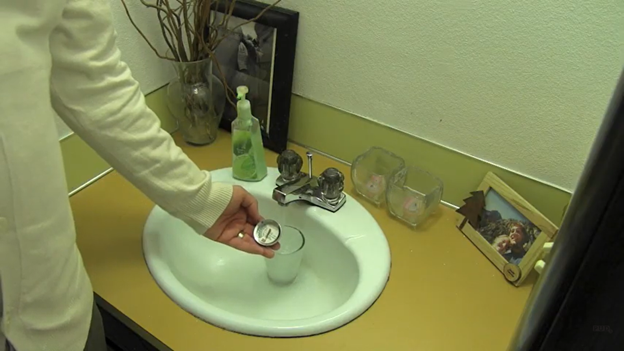
- Immediately place the meat thermometer in the mug and take the temperature reading (Figure 1). Use a meat thermometer, not the kind of thermometer you use to take your own temperature. Older style mercury fever thermometers can break if exposed to temperatures over 110°F.
Note the temperature. If it is well over 120°F, you can adjust it down to 120°F to reduce scalding risk, save energy, and increase the life of your equipment.
Source
Webpage describing methods to save energy at home, including turning down your water heater set point, scheduling your HVAC system, adding or fixing weatherstripping, and changing HVAC system filters, among other tips.
2. Turn off the breaker.
Find the water heater on your electrical panel and flip the breaker to off. If you have a gas water heater, this should not turn off the pilot light.
3. Adjust the temperature.
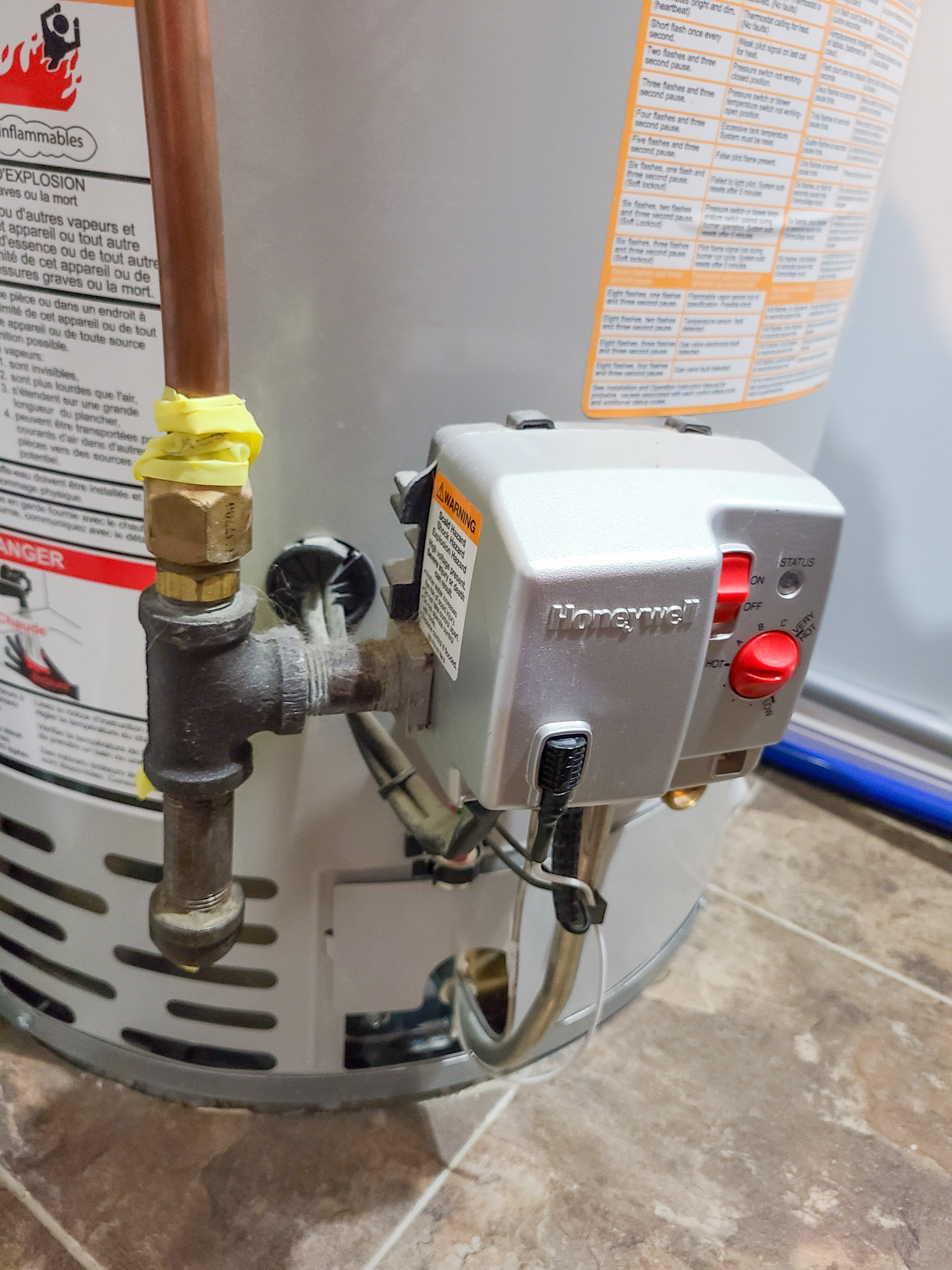
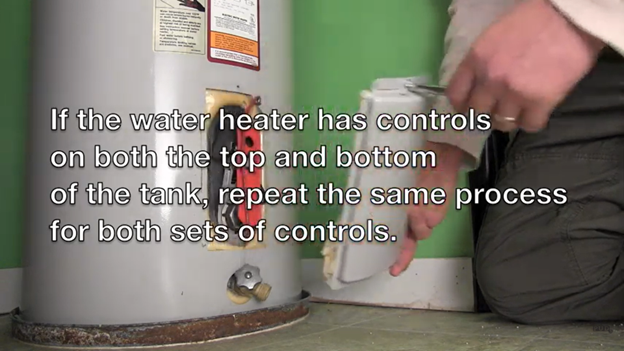
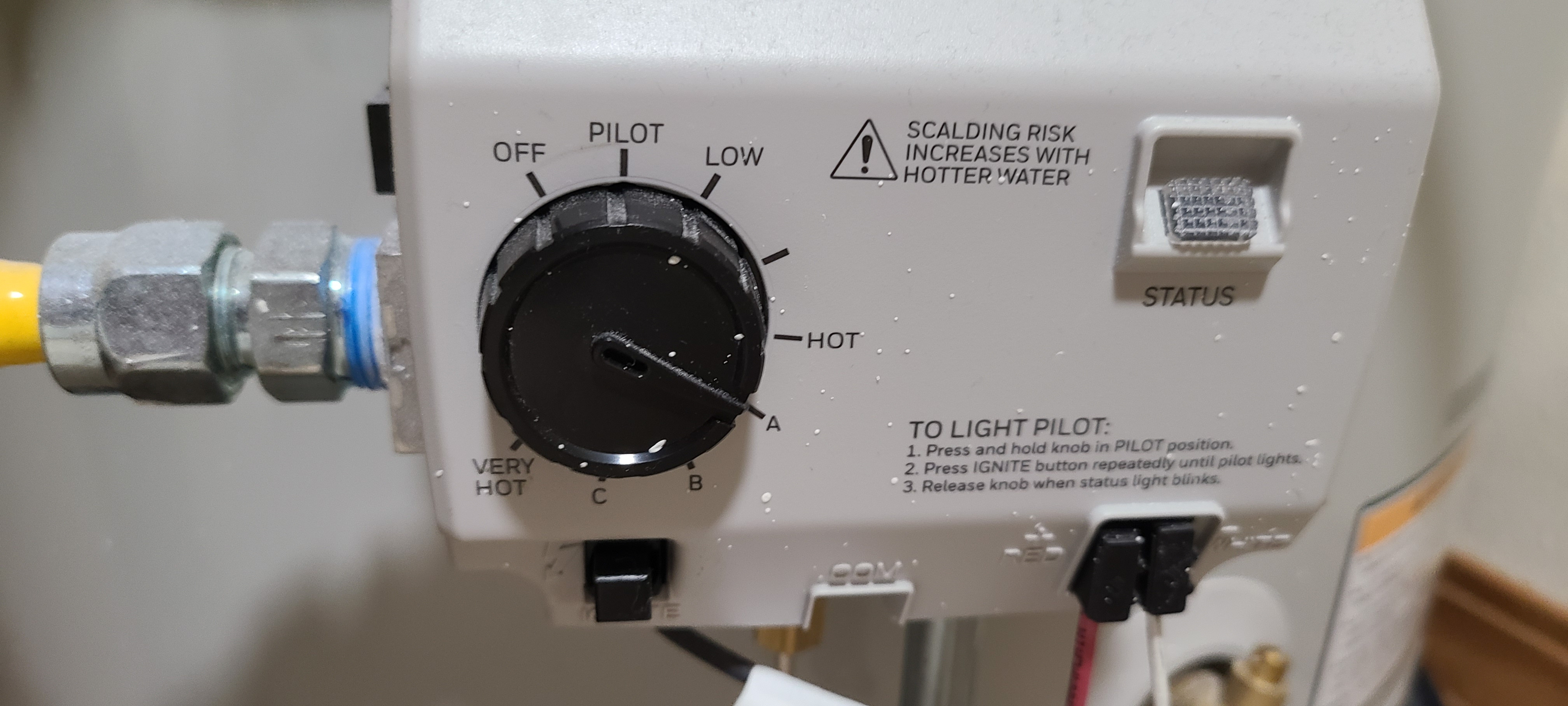
- Find the temperature adjustment on your water heater. The temperature controls may be on a controller box attached to the front of the water heater tank (Figure 2) or they may be behind a protective panel on the tank (Figure 3). If you don’t see them, consult your owners’ manual. If you no longer have the manual, pdfs of many appliance manuals can be found on line by searching your appliance brand and model number.
Source
Source
Webpage describing methods to save energy at home, including turning down your water heater set point, scheduling your HVAC system, adding or fixing weatherstripping, and changing HVAC system filters, among other tips.
- If the temperature controls are behind a panel, unscrew the panel. Typically these panels are held in place with one screw at the top. If there is more than one panel, open both access panels and look for temperature controls at both locations.
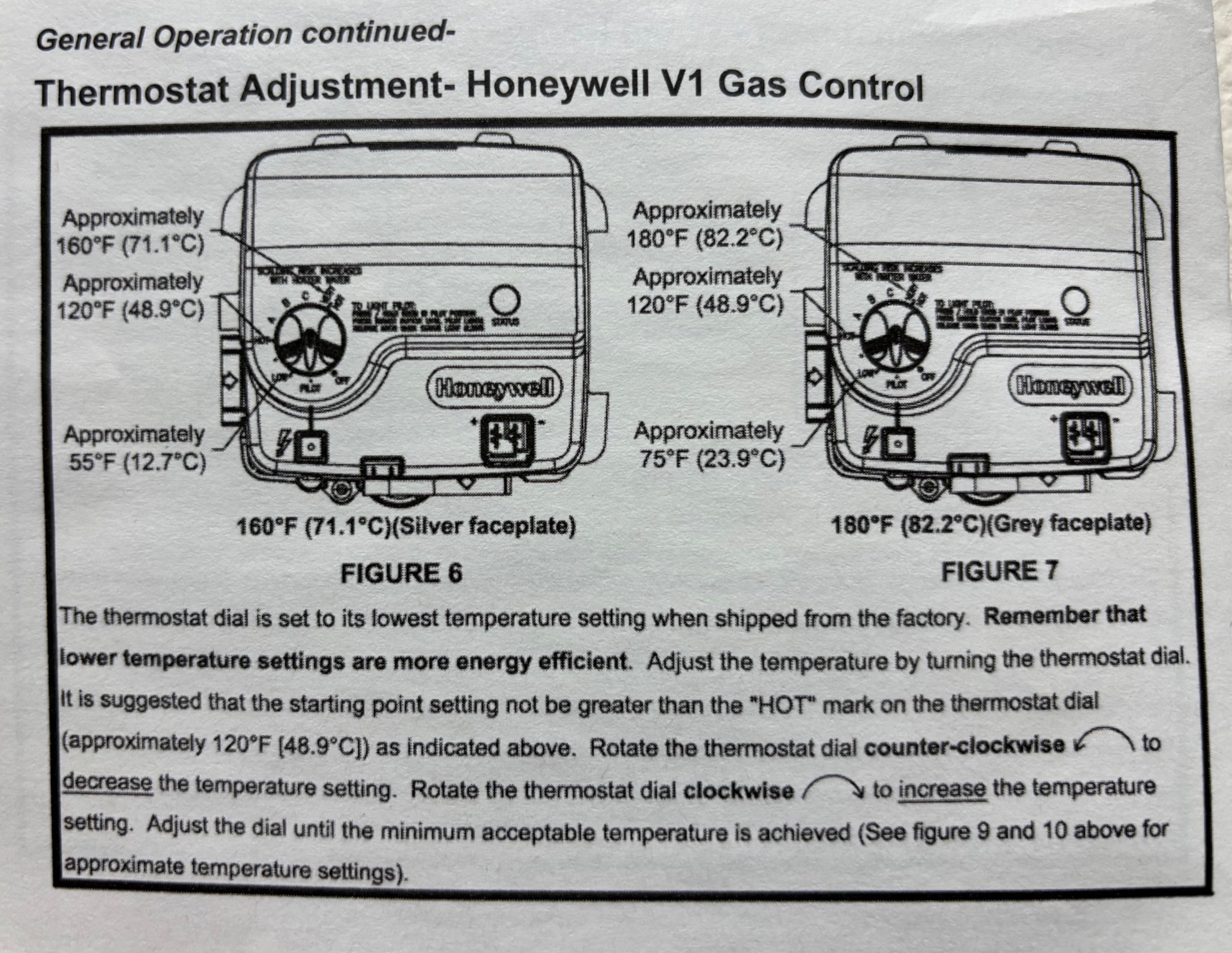
- Some water heater temperature controls show temperature numbers, some use letters or another designation. To determine what temperatures correspond to the letters, check your owner’s manual (Figure 4).
Source
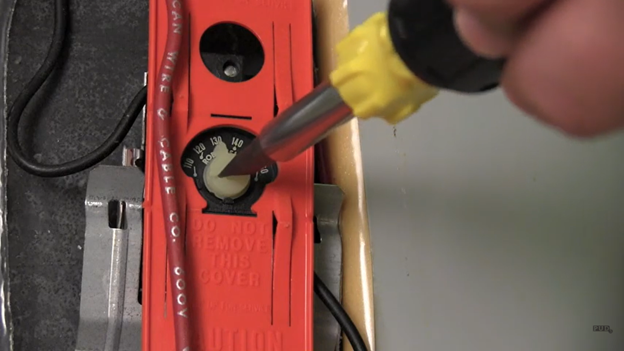
- Adjust the temperature to 120°F using a flathead screwdriver or by turning the knob by hand (Figures 5 and 6).
Source
Webpage describing methods to save energy at home, including turning down your water heater set point, scheduling your HVAC system, adding or fixing weatherstripping, and changing HVAC system filters, among other tips.
Source
4. Turn on the breaker.
Go back to your electric panel and flip the water heater breaker back to on.