Materials Cost: 1
Difficulty Level: 1

Introduction

Sealing seams and holes in the air handler or furnace cabinet of central forced-air HVAC systems prevents the loss of conditioned air and improves the performance of your HVAC equipment.

Why

Most homes are heated and cooled using central furnaces and air conditioners or heat pumps that deliver heated or cooled air to the home through a network of ducts. You’ve probably heard you should air seal your ducts to improve the system’s performance and reduce energy losses but it’s just as important to air seal seams and holes in your furnace cabinet and supply and return air plenums where air flow and air pressures are the strongest and air leaks can have the biggest impact on system performance.

What You'll Need

  • Mastic 
  • Fiberglass mesh tape
  • Paint brush, trowels, or plastic gloves
  • UL 181A or B metal tape
  • Sealing putty

1. Identify areas to seal.

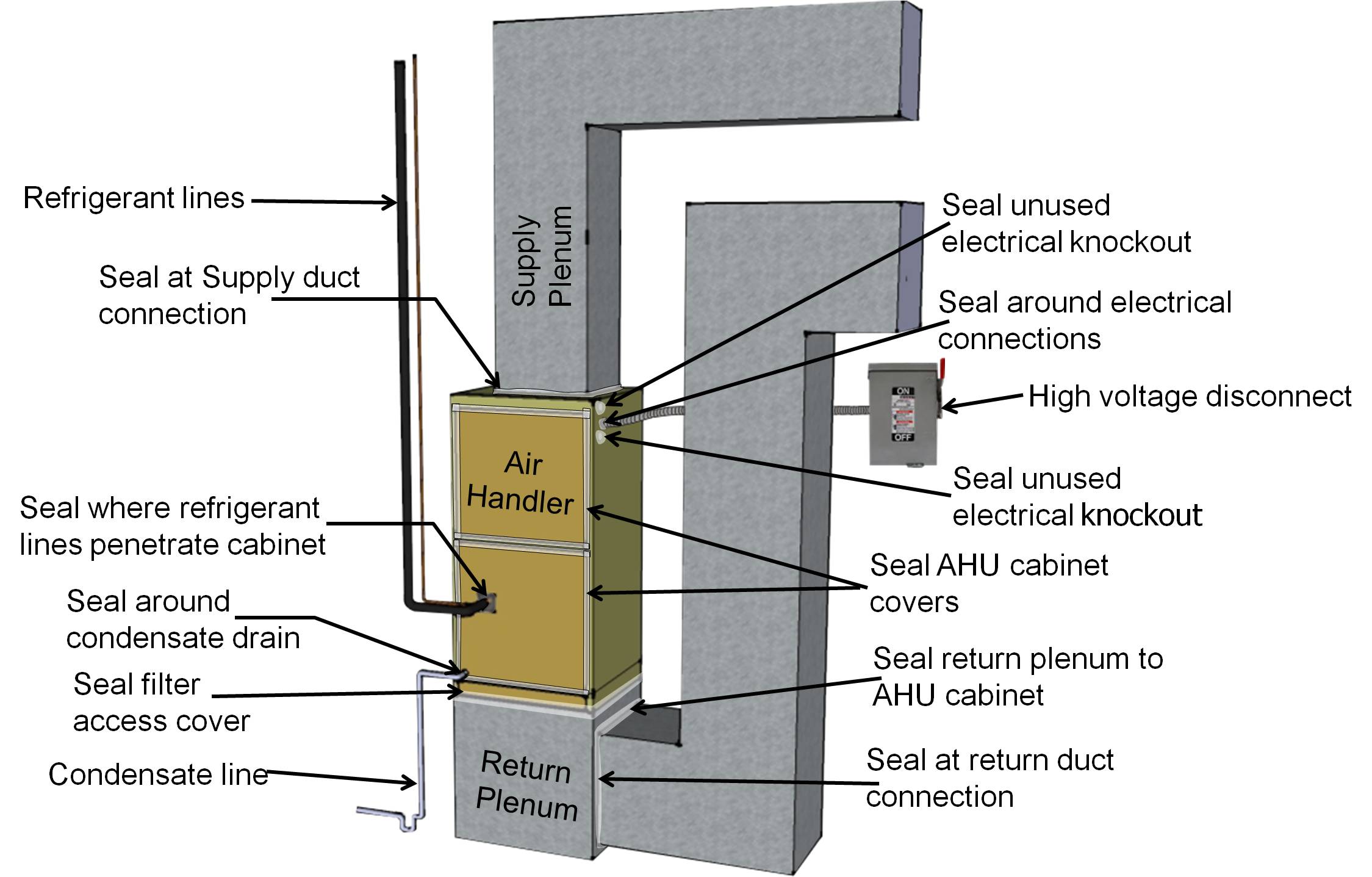
Figure 1 shows the parts of a high-efficiency gas furnace including many areas of the furnace cabinet and supply and return plenums that can be air sealed. Figure 2 shows the parts of a central heat pump air handler that can be air sealed.
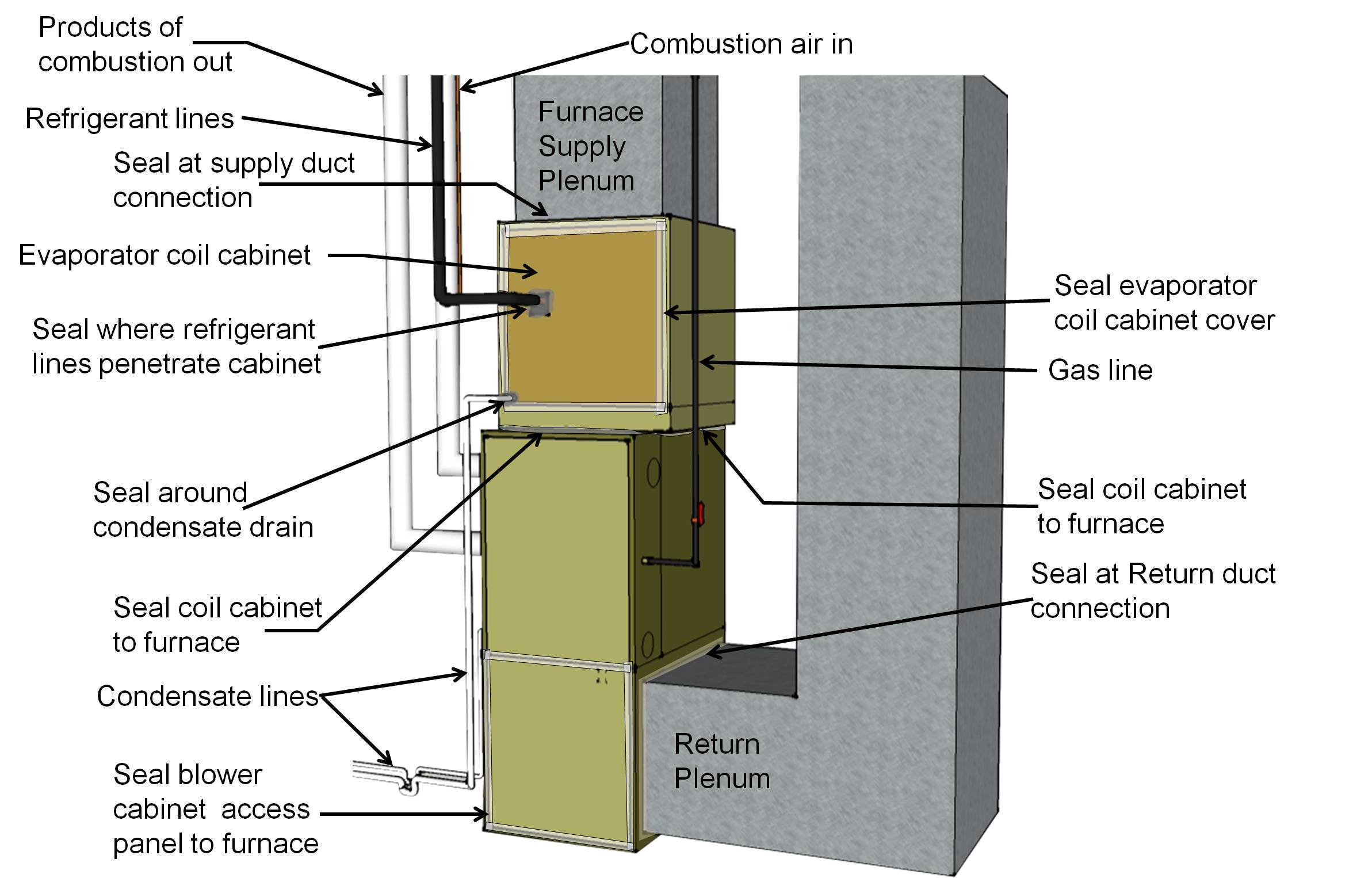
Air seal all holes and seams in the furnace cabinet with mastic, foil tape, or putty
Source
Figure 1. Many parts of this high-efficiency gas furnace can be sealed to prevent air leaks and improve the performance of the furnace (Source: Calcs Plus)
Air seal a heat pump or air conditioner air handler cabinet at all seams, holes, and junctions
Source
Figure 2. Air seal a heat pump or air conditioner air handler cabinet at all seams, holes, and junctions (Source: Calcs Plus).

2. Air seal seams.

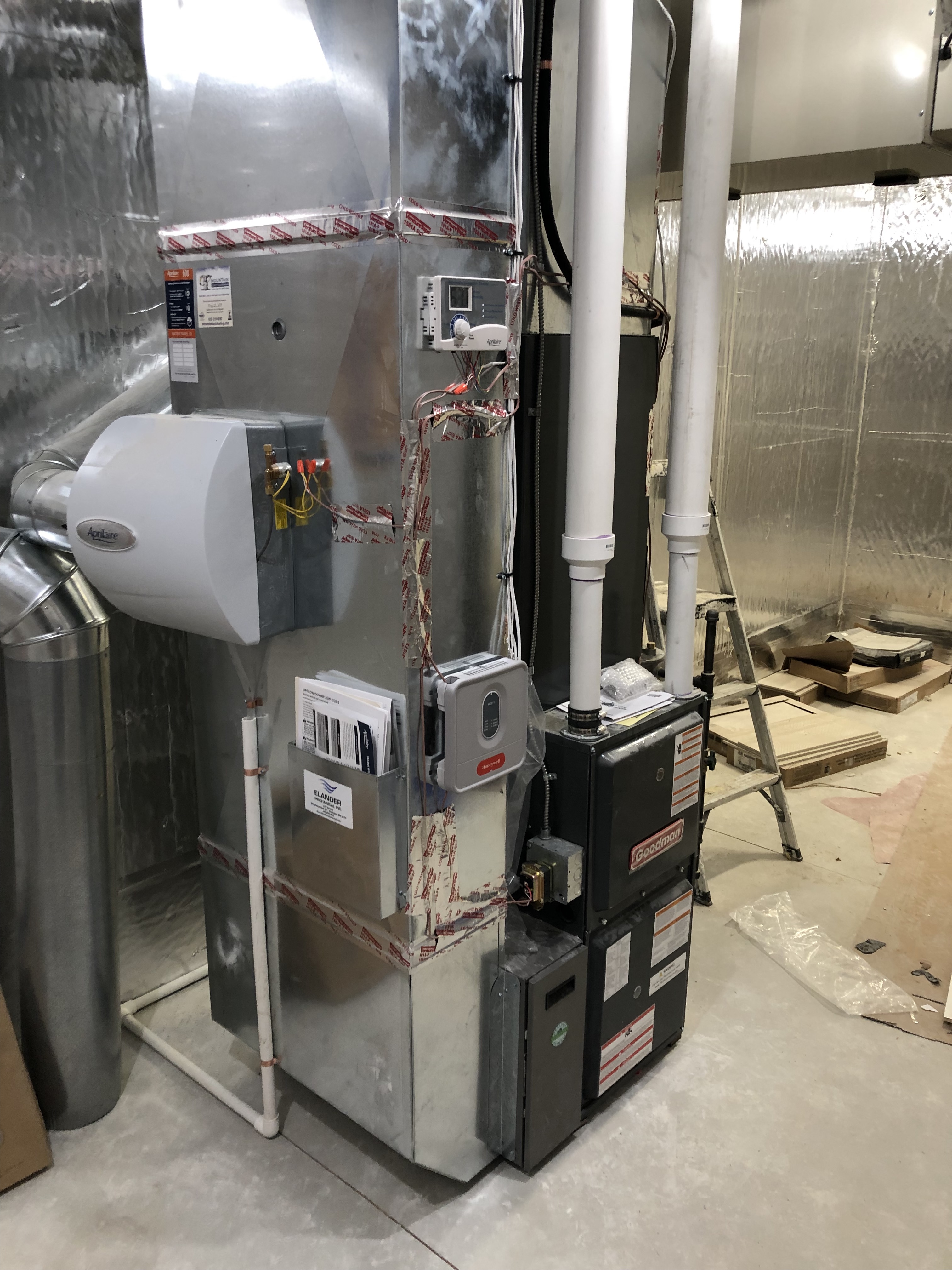
Use either mastic or an approved metal tape to air seal the seams in the cabinet. Mastic is a thick, paste-like sealant that is applied with a brush or trowel and dries to form a flexible, airtight barrier (Figure 3). For seams wider than 3/8 inch, use fiberglass mesh tape and cover with mastic, or use metal tape (Figure 4). Metal tapes should carry a designation such as Underwriters Laboratories (UL) 181. Ordinary duct tape is not recommended because it will dry out and fall off.

  • Seal the junction between the evaporator coil cabinet and the furnace cabinet. 
  • Seal the seams between the supply plenum and the evaporator coil cabinet. 
  • Seal all seams between the return plenum and the furnace cabinet.
  • Seal all fixed seams in the cabinet.
  • Seal filter box seams and cabinet door seams with duct tape or foil tape that is easy to cut so the filter slot or cabinet door can be easily accessed. 
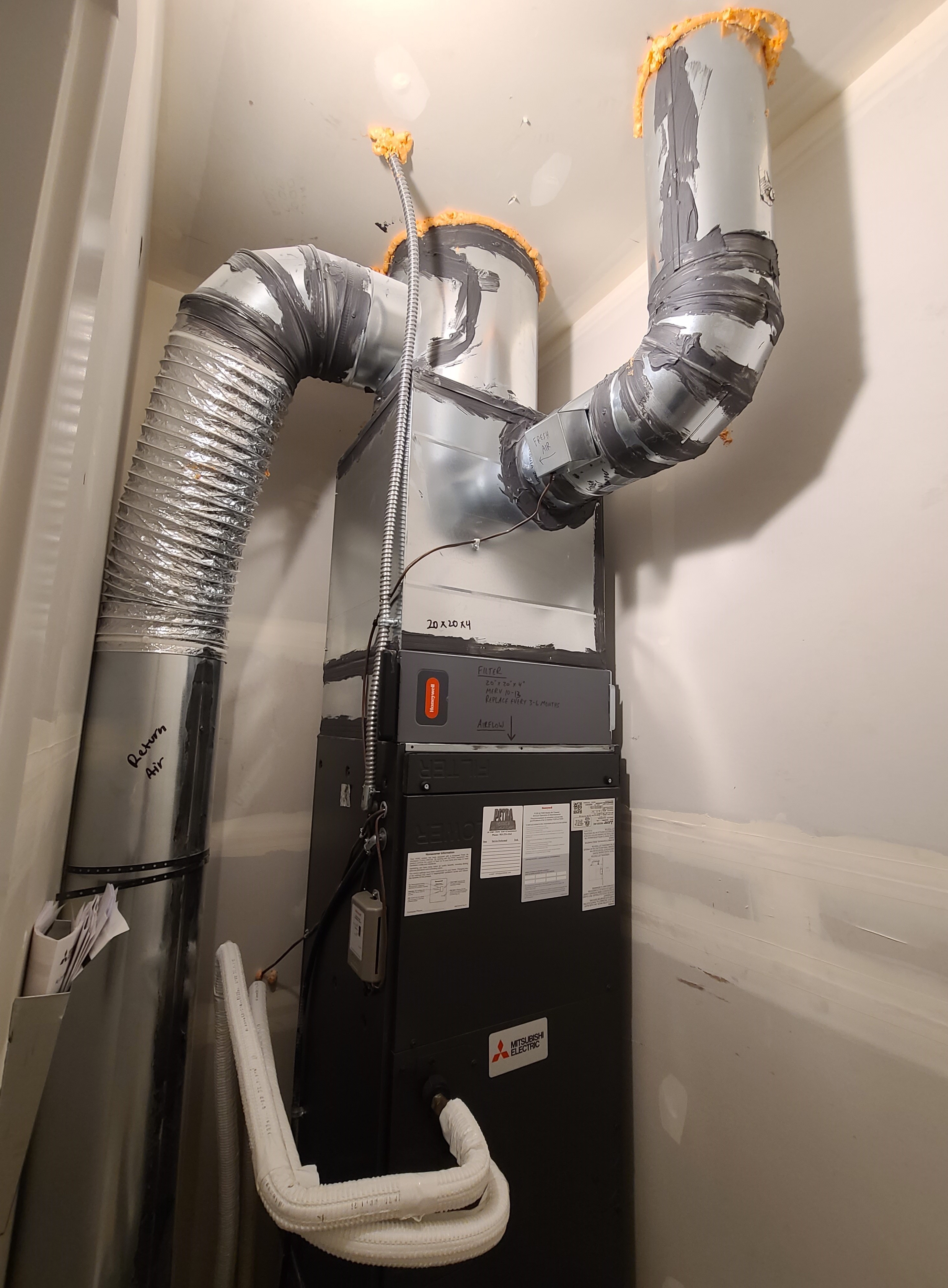
Right - Ducts and heat pump cabinet are properly sealed with mastic, high MERV filter is installed, and duct and refrigerant lines are air sealed at ceiling.
Source
Figure 3. The ducts and heat pump cabinet are properly sealed with mastic and the duct and refrigerant lines are air sealed at the ceiling (Source: PNNL).
Right – All of the cabinet seams in this HVAC air furnace are sealed with an approved metal tape.
Source
Figure 4. All of the cabinet seams in this HVAC air furnace are sealed with an approved metal tape (Source: Amaris Homes).

3. Seal conduit and wiring holes.

  • Seal around conduit and wiring where it comes through holes in the cabinet with sealing putty.
  • Seal over all unused conduit knockouts with UL-listed tape or mastic. 
Additional Info

Videos

Last Updated

Disclaimer

This content is a work created with funding provided by the United States Department of Energy under Contract no DE-AC05-076RL01830 for the operation of Pacific Northwest National Laboratory. The information and guidance provided by Pacific Northwest National Laboratory (PNNL) in the content are intended solely for educational purposes only and do not constitute formal training or certification. It is provided with the explicit understanding that neither the United States Government nor the United States Department of Energy, nor the Contractor, nor any or their employees, nor any jurisdiction or organization that has cooperated in the development of these materials, makes any warranty, express or implied, or assumes any legal liability or responsibility for the accuracy, completeness, or usefulness or any information, apparatus, product, software, or process disclosed, or represents that its use would not infringe privately owned rights. Reference herein to any specific commercial product, process, or service by trade name, trademark, manufacturer, or otherwise does not constitute or imply its endorsement, recommendation, or favoring by the United States Government or any agency thereof, or Battelle Memorial Institute. The views and opinions of authors expressed herein do not necessarily state or reflect those of the United States Government or any agency thereof. Viewers assumes full responsibility for all actions that they may take from information provided in this content including ensuring the safety, code compliance, and proper functionality of any products they choose to install. Installation and use of such products should be performed in accordance with local regulations and manufacturer instructions.