
Building Science-to-Sales Translator

Pressure Balancing Bedrooms = Comfort Balanced Rooms
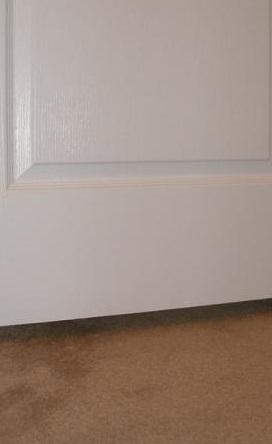
Image(s)

Technical Description

For homes with central “forced air” furnace and air conditioning systems, stale air needs a path to get back to the central air handler; usually that is through large centrally located return registers that are ducted to the return side of the air handler. When stale air can’t get back to the return registers from bedrooms or offices because the doors are closed, air pressure can build up in those rooms causing pressure imbalances that can result in drafts and temperature differences between rooms, strain on the HVAC equipment, and overpressurization of the rooms, which can force conditioned air into wall cavities where condensation can occur. Homes with comfort-balanced rooms are designed to eliminate these risks by installing individual ducted returns in each room or central ducted returns, or by installing jump ducts or transfer grilles in the rooms to provide a path for stale air to return to the air handler, which reduces the strain on the comfort equipment and allows for better air flow between rooms.

Comfort Balanced Rooms
Sales Message

Comfort balanced rooms ensure a continuous flow of heating and cooling even when bedroom doors are closed. What this means to you is that you will not have to compromise comfort for bedroom privacy. Wouldn’t you agree bedroom doors shouldn’t have to be kept open to maintain comfort?

Disclaimer

This content is a work created with funding provided by the United States Department of Energy under Contract no DE-AC05-076RL01830 for the operation of Pacific Northwest National Laboratory. The information and guidance provided by Pacific Northwest National Laboratory (PNNL) in the content are intended solely for educational purposes only and do not constitute formal training or certification. It is provided with the explicit understanding that neither the United States Government nor the United States Department of Energy, nor the Contractor, nor any or their employees, nor any jurisdiction or organization that has cooperated in the development of these materials, makes any warranty, express or implied, or assumes any legal liability or responsibility for the accuracy, completeness, or usefulness or any information, apparatus, product, software, or process disclosed, or represents that its use would not infringe privately owned rights. Reference herein to any specific commercial product, process, or service by trade name, trademark, manufacturer, or otherwise does not constitute or imply its endorsement, recommendation, or favoring by the United States Government or any agency thereof, or Battelle Memorial Institute. The views and opinions of authors expressed herein do not necessarily state or reflect those of the United States Government or any agency thereof. Viewers assumes full responsibility for all actions that they may take from information provided in this content including ensuring the safety, code compliance, and proper functionality of any products they choose to install. Installation and use of such products should be performed in accordance with local regulations and manufacturer instructions.