An official website of the United States government
Here's how you know
Official websites use .gov
A .gov website belongs to an official government organization in the United States.
Secure .gov websites use HTTPS
A lock (
) or https:// means you’ve safely connected to the .gov website. Share sensitive information only on official, secure websites.

Website providing an online directory of more than 3,600 residential ventilation products lisiting flowrates, sones, watts, and other performance metrics; all listed products have been tested by the Home Ventilating Institute.
Report describing the formation of icicles and ice dams along poorly ventilated roofs and how to mitigate ventilation issues with insulation and vents.
Research report anayzing the results of a large retrofit project, turining an old school into near zero energy consumption apartments in Greenfield MA.
Webinar from Bill Warren of BWES Building Science on how to use building science principles such as ventilation, airflow, pressure balances, and filtration to reduce exposure risk to COVID and other airborne diseases. Free EEBA login required.
Document describing recommended modeling rules, potential compliance credits, and eligibility criteria for residential night ventilation cooling systems for California’s Title 24 energy efficiency standards.
Report reviewing the design and the first four months of energy performance of a near zero energy project home in Callaway, Florida during the second half of 2008.
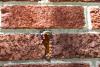
Video showing how the weep holes in a brick façade are sometimes filled by the homeowner or subsequent contractor who mistakenly thought the holes are the result of an installation error during the brick laying work. These holes are important to the drainage and ventilation of the wall, please don’t...
The exhaust from residential combustion appliances contains air pollutants and high levels of moisture that must be conveyed to the outdoors to maintain acceptable indoor quality.
Research report describing the development of standardized test methods for PM2.5 and CO2 sensors enabling reliable, low-cost indoor air quality monitoring and improvement.
Report reviewing the design of a net zero energy home in Gainesville, Florida and then focusing on the first six months of energy performance of the project home during the second half of 2008.
Test method that measures the capture efficiency of wall-mounted domestic range hoods under controlled conditions in a test chambers which available for preview and purchase at the link and was published in the year 2018.
The manual covers residential zoning issues - multiple, single-zone, and central multi-zone systems - and includes advice on working with homeowners to adapt the heating or cooling system design to meet modern home design features.