An official website of the United States government
Here's how you know
Official websites use .gov
A .gov website belongs to an official government organization in the United States.
Secure .gov websites use HTTPS
A lock (
) or https:// means you’ve safely connected to the .gov website. Share sensitive information only on official, secure websites.

A presentation describing the standards regarding who is responsible for what part of the design to ensure the roof truss is properly designed and braced.
Wall bracing calculator simplifying the design of residential structures that comply with 2009, 2012, 2015, 2018 or 2021 International Residential Code (IRC) wall bracing requirements.
Document containing recommendations on how to brace roofs and gable end walls based on lessons learned from analyzing the destruction from hurricane Andrew.
Report by the FEMA Mitigation Assessment Team on damages due to Hurricane Irma which struck Florida in September 2017, and recommendations for construction for future disaster resistance and preparedness.
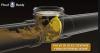
Short animation from A-Z Flood Protection Services showing how backwater valves act as an intermediary between a residence and the city sewer and how they can prevent residential flooding during a disaster.
Article defining structural design loads and ways to calculate them, including dead loads, live loads, soil lateral loads, wind loads, snow loads, earthquake loads, and other loads.
Video showing damage that can occur during high wind times from poor window and door installments that lead to a weak points in the home's envelope and how to fix these problems per FLASH Strong Homes guidelines.
Video interview explaining the benefits of installing insulated concrete forms for both energy efficiency and disaster resistance in either new or existing homes for under $10,000. Recommendations from FLASH Strong Homes.
Guide providing minimum design and construction requirements for storm shelters that provide a safe refuge from storms that produce high winds, hurricanes, and tornadoes.
Guide describing sound mitigation measures to lower building natural disaster vulnerability to assist local officials and community decision makers in coastal areas.
ICC-ES Evaluation Report reviewing proprietary steel shear wall panels developed by Simpson Strong-Tie Company to resist vertical and lateral loads in walls resulting from wind or earthquakes.
Checklist highlighting the requirement for metal structural connections and materials fasteners used to retrofit or construct FORTIFIED buildings less than 3,000 ft from saltwater to be suitably protected from corrosion.
Report summarizing the requirements for strenghtening and protecting the roof, openings in the house, and creating a continuous load path to strengthen walls and foundation per the IBHS Fortified Homes Hurricane Standard for Existing Homes.
Report assessing and scoring code enforcement and administration and contractor licensing in the 18 states most vulnerable to catastrophic hurricanes along the Atlantic Coast and the Gulf of Mexico.
Recovery Advisory document provide guidance related to the use and installation of opening protection systems to protect glazed openings (windows) from wind-borne debris during high-wind events.
FEMA Mitigation Assessment Team Report describing damages from Hurricane Michael in Florida in Oct. 2018 and recommendations for future hurricane preparedness.
FEMA mitigation assessment team report following Hurricane Charley in Florida including observations, recommendations, and technical guidance for retrofitting hurricane-damaged homes.
Article presenting the 2008 update on the 2006 details on when required hurricane mitigation retrofits are required and the cost cap on required hurricane mitigation retrofits.
Handbook to help property owners understand the rules, procedures, standards, and criteria that apply to the environmental resource permit (ERP) program under Part IV of Chapter 373 of the Florida Statutes.
Case study describing Alachua County, Florida’s, green infrastructure strategy for land use development that incorporates rain gardens, ponds, swales, and native vegetation to manage stormwater.
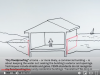
Video describing how wet floodproofing helps prevent flood damage by using four different design strategies; elevate, float, wet floodproof, and dry floodproof. Recommendations from the National Building Museum.
Video showing how to protect your home against both earthquakes and high winds and how similar design strategies can work for both events per FLASH Strong Homes guidelines.
Video showing how to protect your home via Huber ZIP System Roof Sealing and Tape from moisture problems arising from high wind or hurricane damage per FLASH Strong Homes guidelines.
Report summarizing the requirements for strenghtening and protecting the roof, openings in the house, and creating a continuous load path to strengthen walls and foundation per the IBHS Fortified Homes Hurricane Standard for New Homes.
Checklist providing information on how and when to install solid sheathing over spaced deck boards on homes located in areas that use the FORTIFIED Home™–High Wind standards.