An official website of the United States government
Here's how you know
Official websites use .gov
A .gov website belongs to an official government organization in the United States.
Secure .gov websites use HTTPS
A lock (
) or https:// means you’ve safely connected to the .gov website. Share sensitive information only on official, secure websites.

Report describing the REDi™ Rating System, which is a framework for implementing “resilience-based earthquake design,” a holistic “beyond-code” design, planning and assessment approach for achieving earthquake resilience.
The RERH specifications and checklists take a builder and a project design team through the steps of assessing a home’s solar resource potential and defining the minimum structural and system components needed to support a solar energy system.
ASTM standard test method for testing the surface burning response of different building materials which was published in the year 2023 and is available for preview and purchase at the reference link.
Checklist highlighting the requirement for metal structural connections and materials fasteners used to retrofit or construct FORTIFIED buildings less than 3,000 ft from saltwater to be suitably protected from corrosion.
Report summarizing the requirements for strenghtening and protecting the roof, openings in the house, and creating a continuous load path to strengthen walls and foundation per the IBHS Fortified Homes Hurricane Standard for Existing Homes.
Report providing a selected compilation of seismic rehabilitation techniques and guidance on which techniques are commonly used to mitigate specific seismic deficiencies in various model building types.
Report assessing and scoring code enforcement and administration and contractor licensing in the 18 states most vulnerable to catastrophic hurricanes along the Atlantic Coast and the Gulf of Mexico.
Technical fact sheet describing ways to construct asphalt shingle roofs to be more resistant to high winds and hurricanes; also published in FEMA P-499 “Home Builder’s Guide to Coastal Construction: Technical Fact Sheet Series.”
Recovery Advisory document provide guidance related to the use and installation of opening protection systems to protect glazed openings (windows) from wind-borne debris during high-wind events.
FEMA Mitigation Assessment Team Report describing damages from Hurricane Michael in Florida in Oct. 2018 and recommendations for future hurricane preparedness.
FEMA mitigation assessment team report following Hurricane Charley in Florida including observations, recommendations, and technical guidance for retrofitting hurricane-damaged homes.
Article presenting the 2008 update on the 2006 details on when required hurricane mitigation retrofits are required and the cost cap on required hurricane mitigation retrofits.
Case study describing Alachua County, Florida’s, green infrastructure strategy for land use development that incorporates rain gardens, ponds, swales, and native vegetation to manage stormwater.
A quick guide from the California Division of the State Architect (DSA) explaining the three types of gas shutoff devices to stop the flow of natural gas into buildings in the event of an earthquake or rupture of the gas line.
A guide that summarizes building materials and design considerations for increasing wildfire-resistivity of homes in areas that are prone to wildfires.
Report focuseing on dynamic window and opaque envelope technologies for GEBs, including electrochromic glazing, automated attachments, and thermal storage.
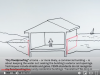
Video describing how wet floodproofing helps prevent flood damage by using four different design strategies; elevate, float, wet floodproof, and dry floodproof. Recommendations from the National Building Museum.
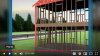
Video showing how to protect your home against both earthquakes and high winds and how similar design strategies can work for both events per FLASH Strong Homes guidelines.
Video showing how to protect your home via Huber ZIP System Roof Sealing and Tape from moisture problems arising from high wind or hurricane damage per FLASH Strong Homes guidelines.
Report summarizing the requirements for strenghtening and protecting the roof, openings in the house, and creating a continuous load path to strengthen walls and foundation per the IBHS Fortified Homes Hurricane Standard for New Homes.
A list of exterior building products and materials approved for use in wildland urban interface zoned homes. These products are non-combustible or ignition-resistant.