An official website of the United States government
Here's how you know
Official websites use .gov
A .gov website belongs to an official government organization in the United States.
Secure .gov websites use HTTPS
A lock (
) or https:// means you’ve safely connected to the .gov website. Share sensitive information only on official, secure websites.
Checklist providing information about the specific requirements of FORTIFIED Roof™ design and construction standard for re-roofing specific for high wind and hail resistance.
2015 edition of code for commercial buildings that brings together all structural, plumbing, mechanical, fuel gas, energy and electrical provisions for all buildings except detached one- and two-family residences and townhouses up to three stories.
Report describing the experience gained from AIA’s Disaster Assistance Program with first-hand accounts of disaster response and recovery, case studies and other best practices, including approaches to designing buildings to be more adaptable to uncertainty.
Report summarizing the requirements to strenghthen new homes against property damage caused by high wind occurrences per the IBHS Fortified Homes High Wind Standard for New Homes.
Guide describing the requirements by FORTIFIED Home™ for improving the home's resistance in severe thunderstorms, straight-line wind events, and high winds at the outer edges of tornadoes.
Fact sheet describing the report FEMA P-804 Wind Retrofit Guide for Residential Buildings (2010) with a link to this report and gives an overview of FEMA funds for wind retrofit projects.
Report informing building stakeholders about the risks a snow event poses to their buildings, preventative measures to take before the snow season, and actions that should be taken before, during, and after a snow event.
Wall bracing calculator simplifying the design of residential structures that comply with 2009, 2012, 2015, 2018 or 2021 International Residential Code (IRC) wall bracing requirements.
Document containing recommendations on how to brace roofs and gable end walls based on lessons learned from analyzing the destruction from hurricane Andrew.
Report by the FEMA Mitigation Assessment Team on damages due to Hurricane Irma which struck Florida in September 2017, and recommendations for construction for future disaster resistance and preparedness.
Field manual describing measures to reduce potential hazards and damages caused by and to nonstructural components of a building such as HVAC, appliances, lighting, windows, and furniture during an earthquake.
ASTM standard test method for surface burning response of different building materials which was published in the year 2022 and is available for preview and purchase at the reference link.
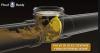
Short animation from A-Z Flood Protection Services showing how backwater valves act as an intermediary between a residence and the city sewer and how they can prevent residential flooding during a disaster.
2009 edition of code establishing regulations involving life and property safety from fires and explosion hazards, including emergency planning, fire department access and water supply, automatic sprinkler systems, fire alarms, and hazardous materials planning and storage.
2012 edition of code establishing regulations involving life and property safety from fires and explosion hazards, including emergency planning, fire department access and water supply, automatic sprinkler systems, fire alarms, and hazardous materials planning and storage.
2015 edition of code establishing regulations involving life and property safety from fires and explosion hazards, including emergency planning, fire department access and water supply, automatic sprinkler systems, fire alarms, and hazardous materials planning and storage.
2018 edition of code establishing regulations involving life and property safety from fires and explosion hazards, including emergency planning, fire department access and water supply, automatic sprinkler systems, fire alarms, and hazardous materials planning and storage.
Article describing excess flow valves installed on gas lines to shut-off natural gas flow to a home in the event that a gas line is severed due to an earthquake, natural disaster, earthquake, etc.
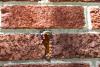
Video showing how the weep holes in a brick façade are sometimes filled by the homeowner or subsequent contractor who mistakenly thought the holes are the result of an installation error during the brick laying work. These holes are important to the drainage and ventilation of the wall, please don’t...
An article illustrating common errors found in fiber cement siding installations. Many of these errors and poor flashing examples apply to siding materials beyond fiber cement siding.
A presentation about the need for rainscreens including the damage water and moisture ingress into a home’s siding and framing can cause, and ways to design a resilient wall that drains and ventilates well.
Fact sheet describing research conducted by the Insurance Institute for Business & Home Safety into how burning embers can ignite softwood decks like redwood and cedar and how to minimize the likelihood these decks will be ignited by embers.
Article defining structural design loads and ways to calculate them, including dead loads, live loads, soil lateral loads, wind loads, snow loads, earthquake loads, and other loads.