Materials Cost: FREE
Difficulty Level: 1

Introduction

Flush your water heater tank to improve performance and longevity.

Why

Sediment can collect in your water heater tank over time, potentially causing mineral deposits on the heating element, reducing its effectiveness in transferring heat to the water.

What You'll Need

  • Garden hose
  • Flat head screwdriver (depending on water heater valve type)
  • Rags

1. Consult your water heater manual.

If you have access to the owner’s manual for your water heater, follow the instructions given there for flushing your water heater. If the instructions are unclear or incomplete, refer to the steps below.


2. Turn off the water heater, shut off the power or shut off the gas.

If the water heater turns on when it is empty or partially empty, it can be quickly damaged. Consult your user’s manual for the recommended way to shut off your water heater. Below are typical options.

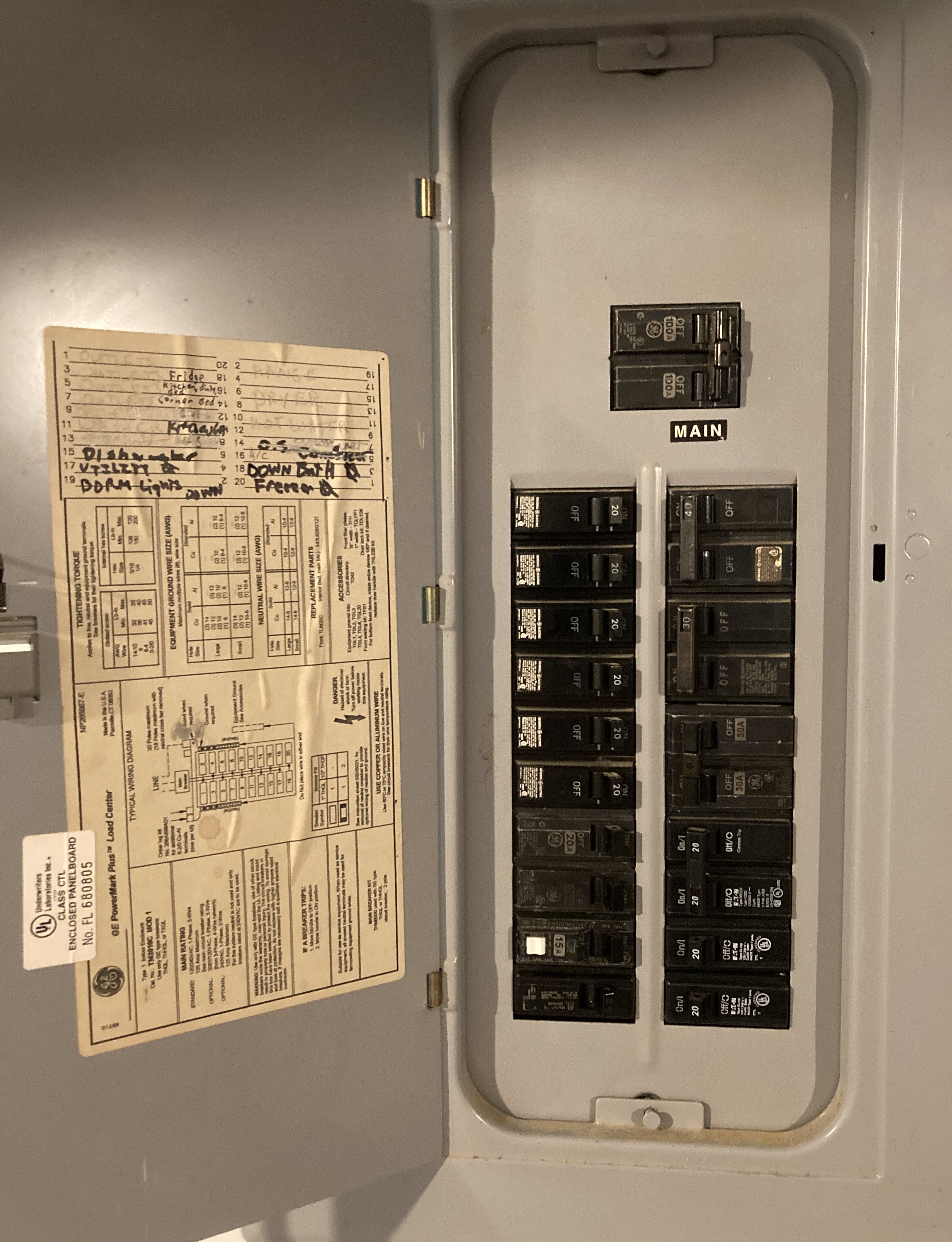
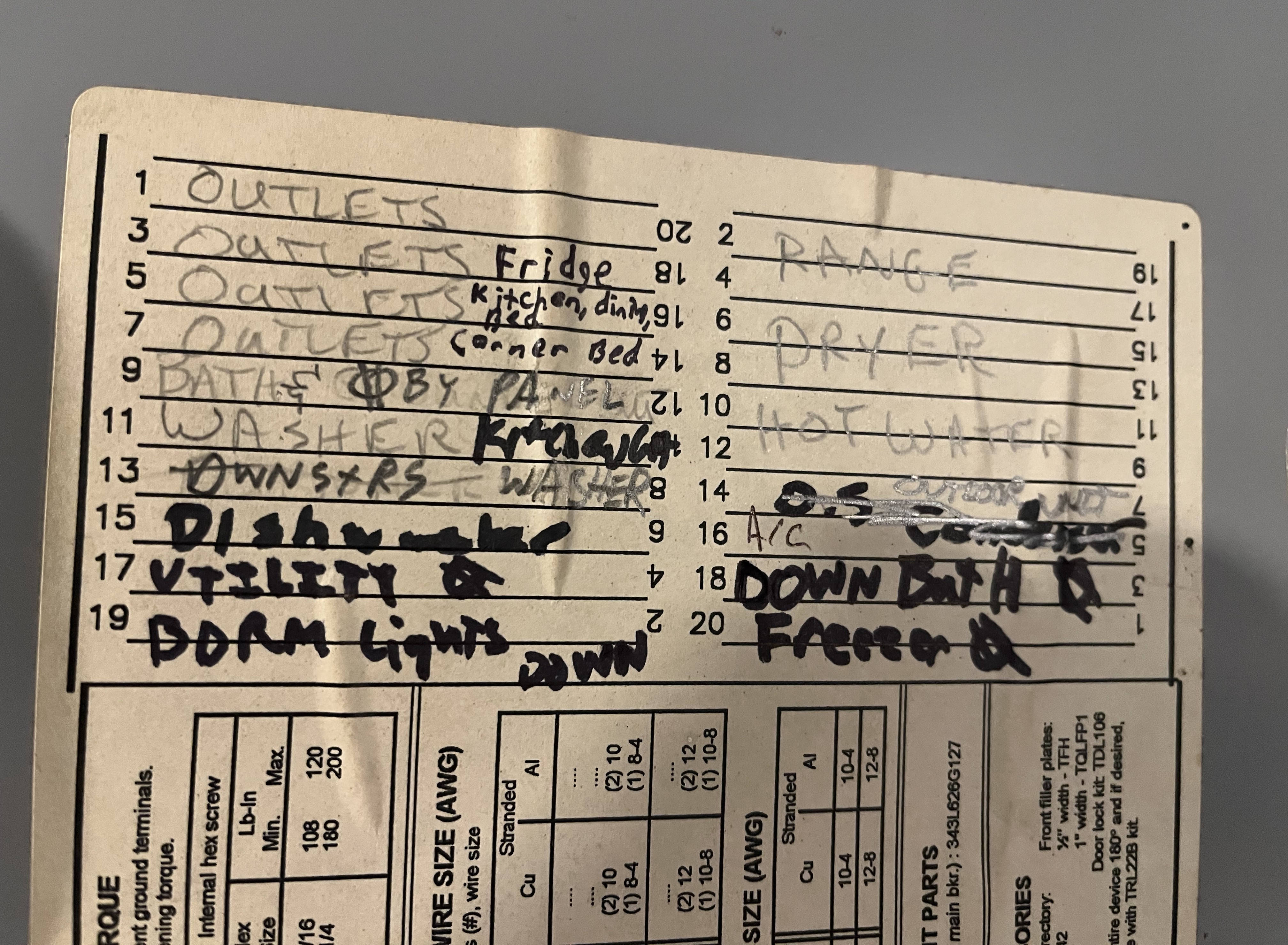
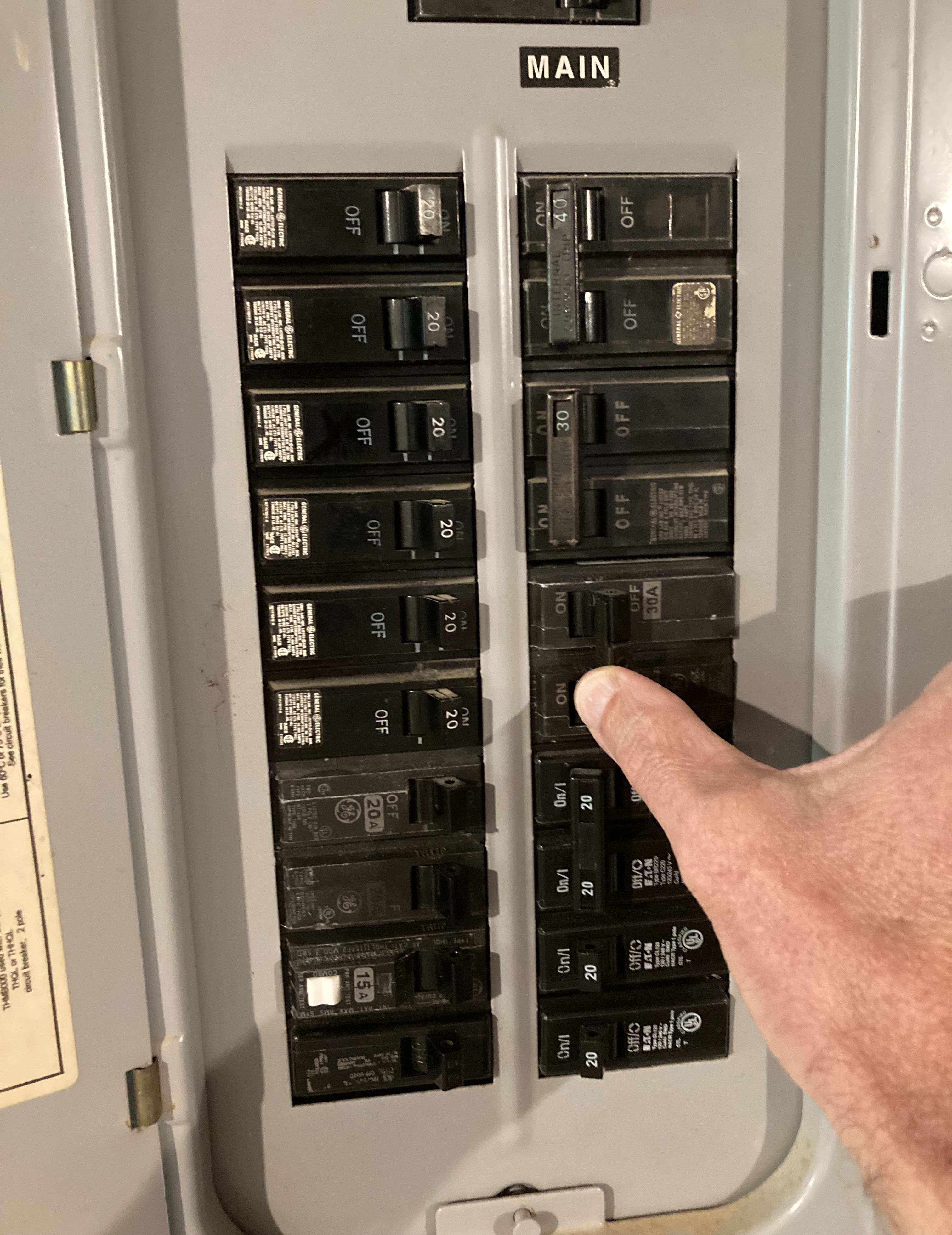
Electric water heaters: For an electric water heater, if your water heater plugs into the wall, simply unplug it. If it has a switch, control panel, or screen that has an “off” setting, you can turn it off there. A sure option is to flip the water heater breakers to “off” at the electrical panel. Most water heaters will take up two spaces on the list because they utilize two breakers (the breakers are usually connected by one switch). See Figures 1, 2, 3, and 4. 
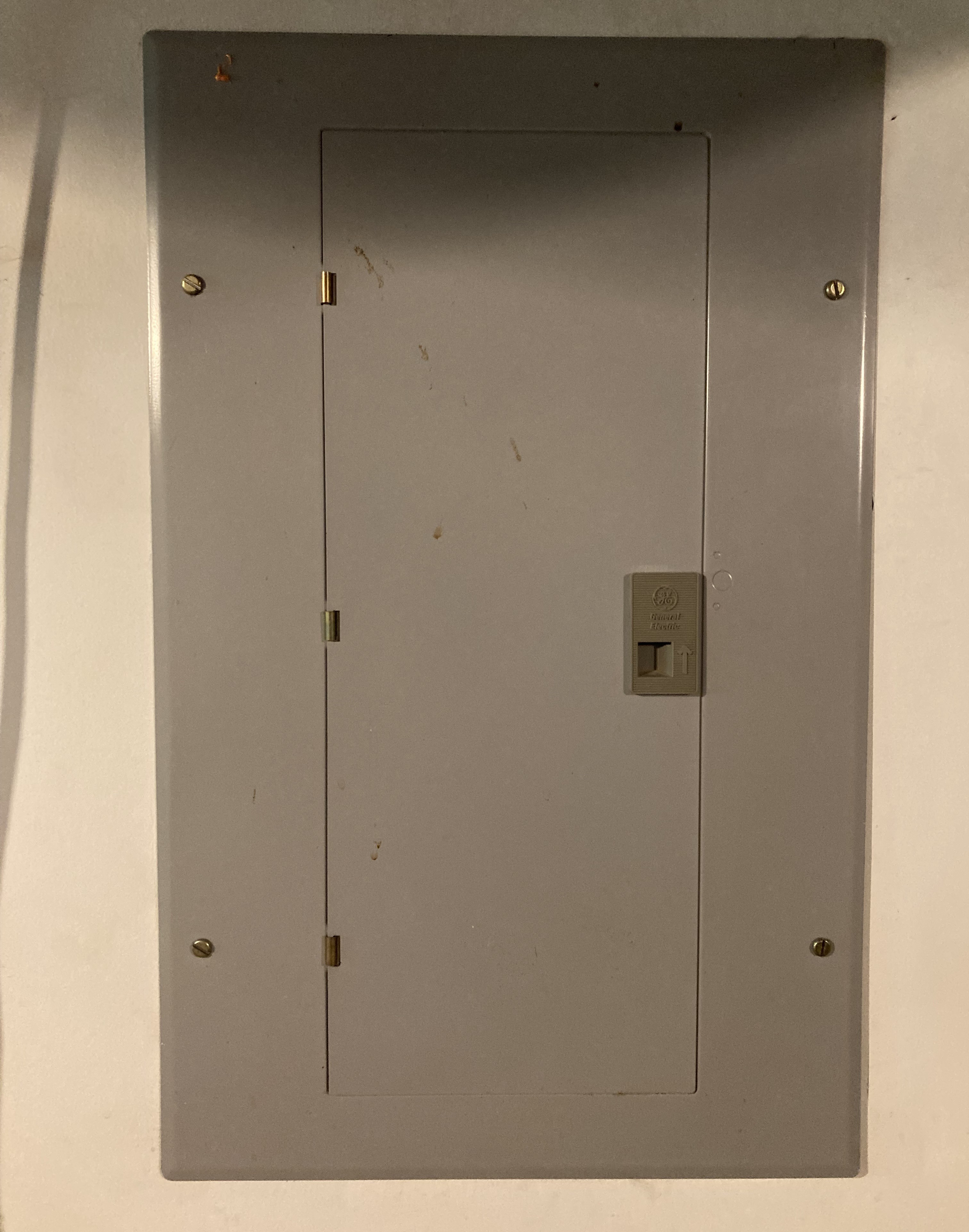
Identify your electrical panel.
Source
Figure 1. Identify your electrical panel (Source: PNNL).
On your electrical panel each breaker should be labeled or there should be a list on the inside of the door indicating what part of the house each breaker serves.
Source
Figure 2. On your electrical panel each breaker should be labeled or there should be a list on the inside of the door indicating what part of the house each breaker serves (Source: PNNL).
Most water heaters utilize two breakers on the electric panel and the two breakers are usually connected by one switch.
Source
Figure 3. Most water heaters utilize two breakers on the electric panel and the two breakers are usually connected by one switch (Source: PNNL).
Flip the breakers for the water heater to the “off” position before flushing the water heater tank.
Source
Figure 4. Flip the breakers for the water heater to the “off” position before flushing the water heater tank (Source: PNNL).

Gas water heaters: For gas water heaters, consult the user’s manual and follow the manufacturer’s instructions. The manual may recommend shutting off the water heater’s gas valve, or it may recommend setting the valve to a different setting such as “pilot”.


3. Close the water heater inlet valve.

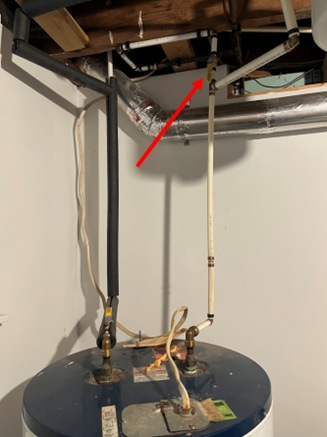
Your water heater has an inlet pipe (cold water entering the water heater) and an outlet pipe (hot water leaving the water heater). Determine which pipe is which and close the valve on the cold-water inlet pipe (Figures 5, 6, 7, and 8).

There are several ways to determine which pipe is which. Two reliable methods are:

  1. Look for labeling on the water heater at the pipe connections.
  2. Run a hot water fixture for 30 seconds or more and feel both pipes. The cold water inlet pipe  will be cold, the other hot.

Other indicators to notice, if one of the pipes is insulated, that will be the hot water line (Figure 5). The valve for the cold water line may be located up higher on the pipe than the valve for the hot water line. If there is an expansion tank, the cold water line will have a short pipe that feeds it doesn’t go to any fixtures in the house. It is common for the cold-water inlet shut-off valve to be located upstream of the expansion tank (Figure 7).

If there is no valve on the cold-water inlet pipe, turn off the water supply to the entire house.
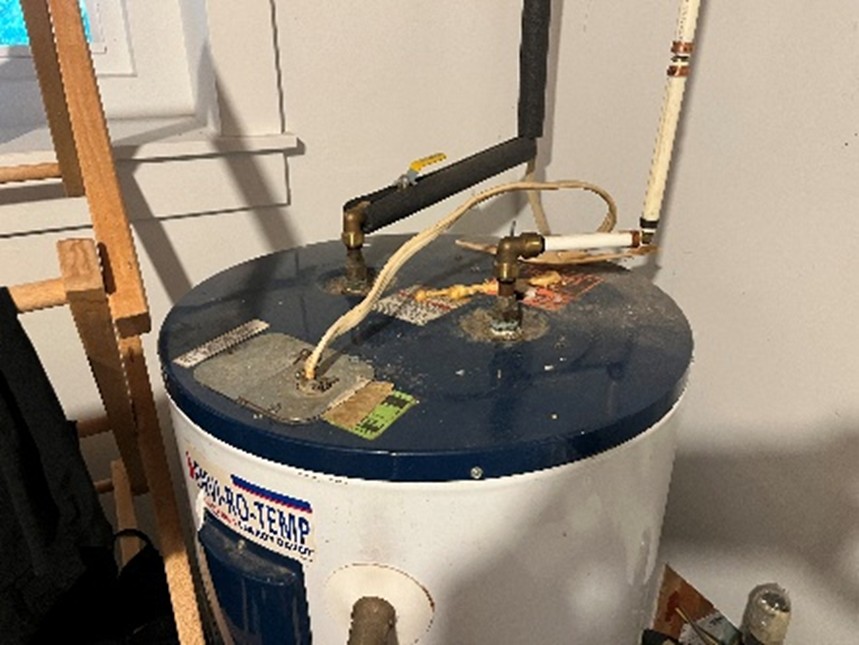
The inlet and outlet water pipe connections are located on top of this electric water heater; note that the hot water line (on the left) has been insulated.
Source
Figure 5. The inlet and outlet water pipe connections are located on top of this electric water heater; note that the hot water line (on the left) has been insulated (Source: PNNL).
The valve for the cold-water inlet pipe is a lever-style valve located up high; if there's an expansion tank, it is connected to the cold water line and the valve is typically upstream of the expansion tank (connected here by white horizontal pipe).
Source
Figure 6. The valve for the cold-water inlet pipe is a lever-style valve located up high; if there's an expansion tank, it is connected to the cold water line and the valve is typically upstream of the expansion tank (connected here by white horizontal pipe) (Source: PNNL).
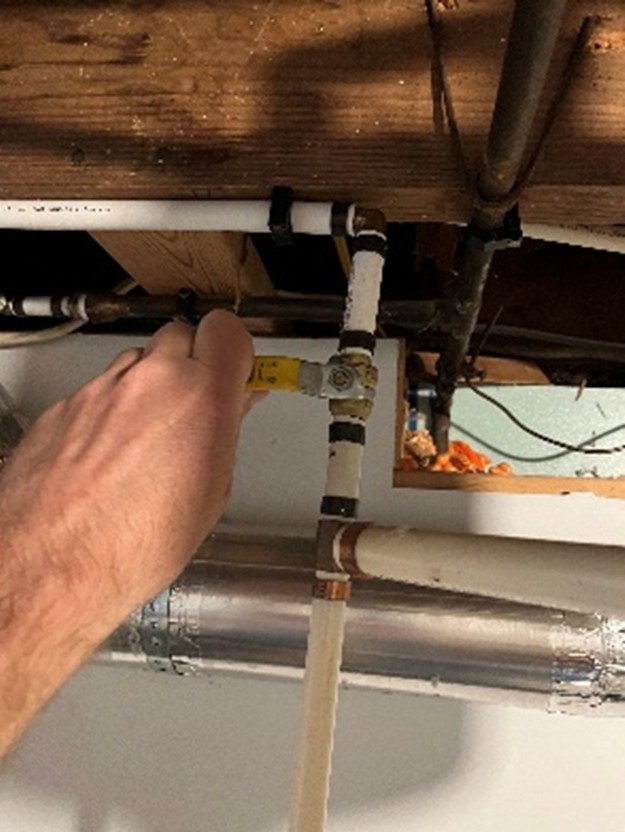
To close the valve on the cold water inlet, turn it so the lever is perpendicular to the pipe.
Source
Figure 7. To close the valve on the cold water inlet, turn it so the lever is perpendicular to the pipe (Source: PNNL).
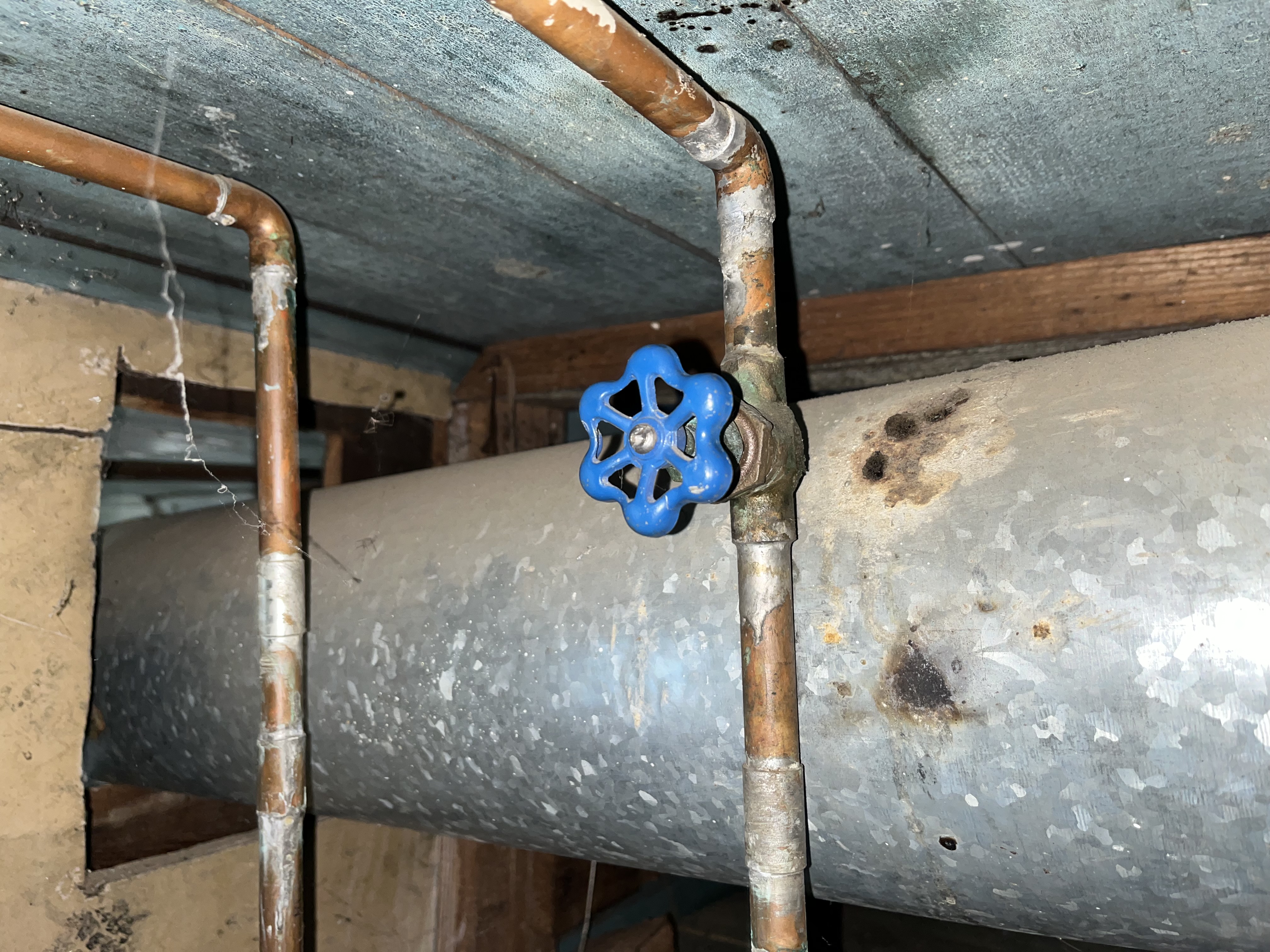
This cold-water inlet valve has a wheel-style handle. It is closed by turning the wheel clockwise.
Source
Figure 8. This cold-water inlet valve has a wheel-style handle. It is closed by turning the wheel clockwise (Source: PNNL).

4. Turn on a hot water fixture.

Identify a fixture that can be turned on in a hot water-only position, like in Figure 9 (ideally one that is higher than the water heater). If the water has been shut off, them when the fixture is turned on, it should only run for a short while before water stops flowing. When you start to drain the water heater, air will be pulled in through this fixture to replace the water that drains from the tank. You will likely be able to hear the air being pulled through the fixture.
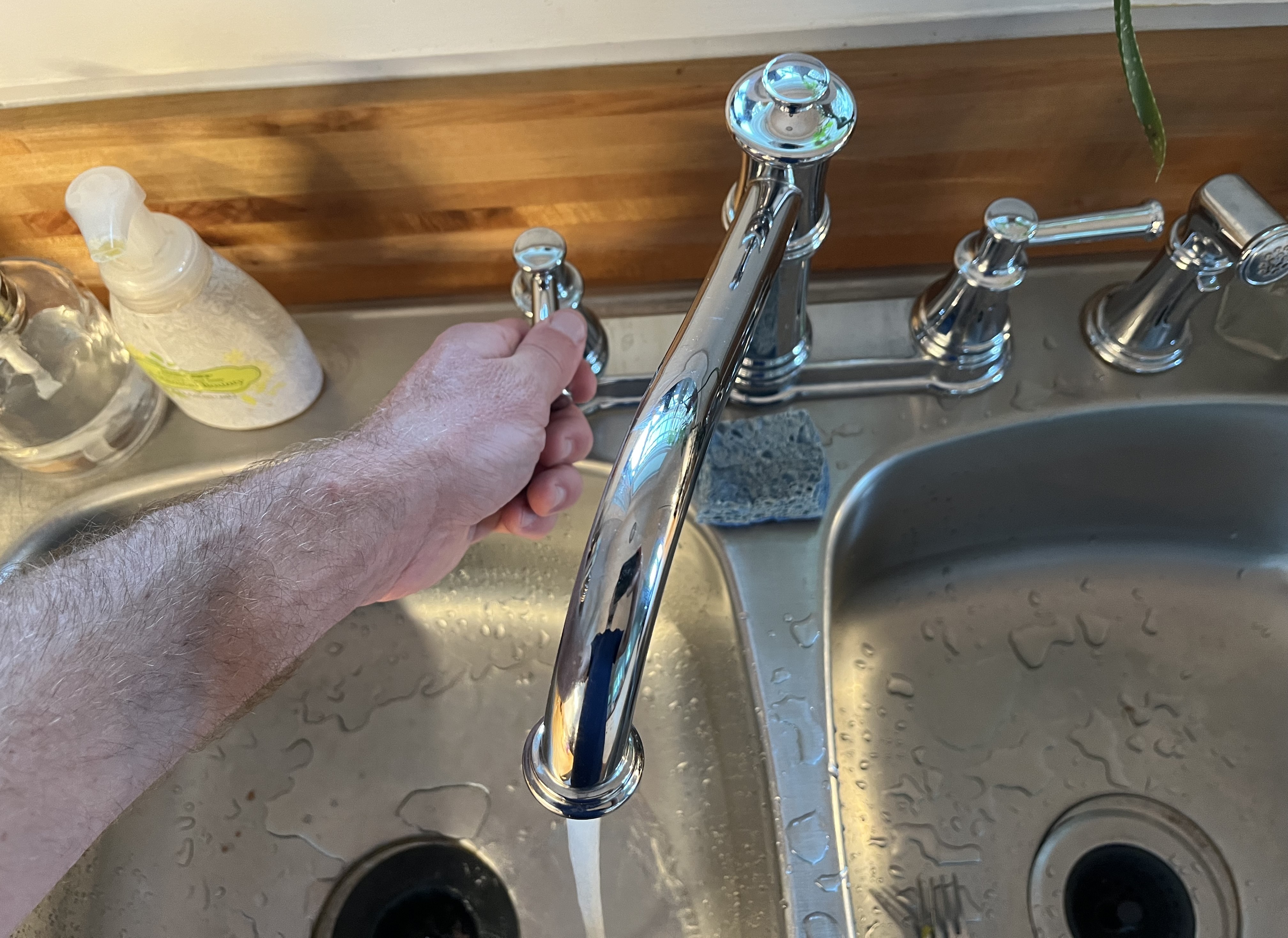
Turn a fixture on in the hot-water-only position prior to draining the water heater tank.
Source
Figure 9. Turn a fixture on in the hot-water-only position prior to draining the water heater tank (Source: PNNL).

5. Attach a hose to the water heater drain valve.

Water

 heaters typically have a drain valve located near the bottom of the tank (Figure 10). The valve usually has a standard threaded hose spigot where a garden hose can be attached (Figure 11). Attach a hose and run it outside or to a drain that is lower than the water heater that can handle water with sediment, like a floor drain. Whether outside or inside, the hose must discharge to a location that is lower than the bottom of the tank.
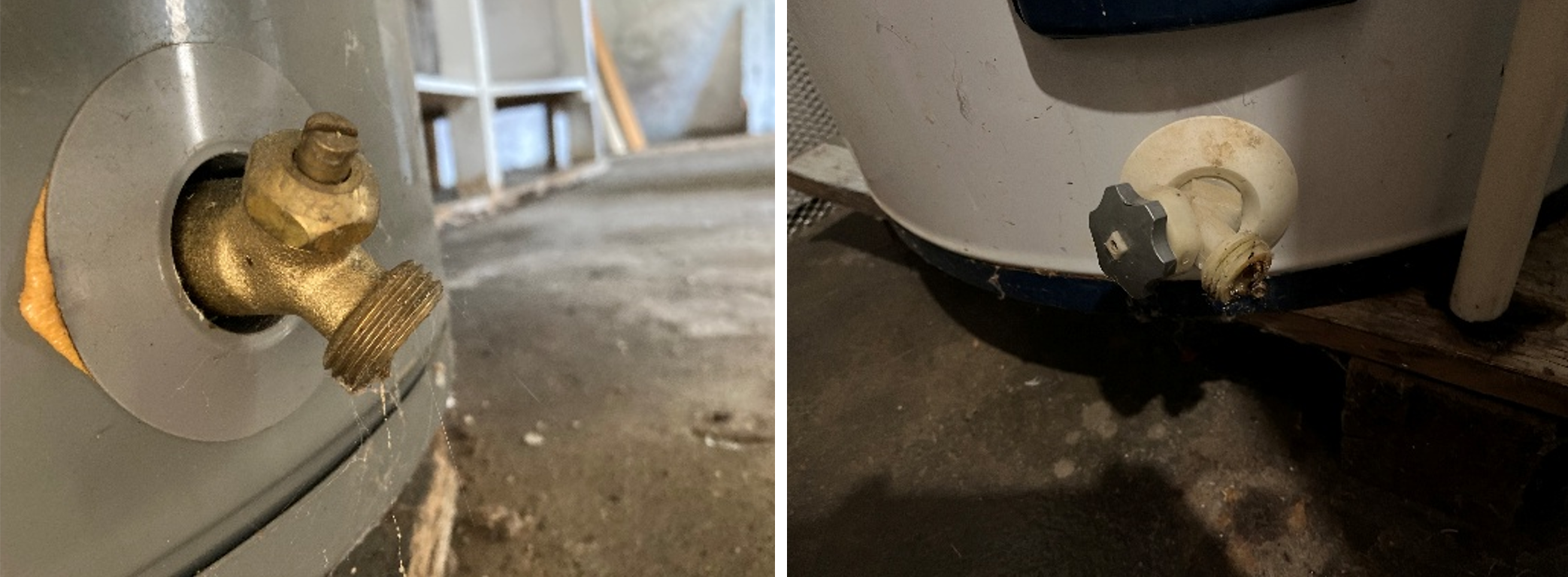
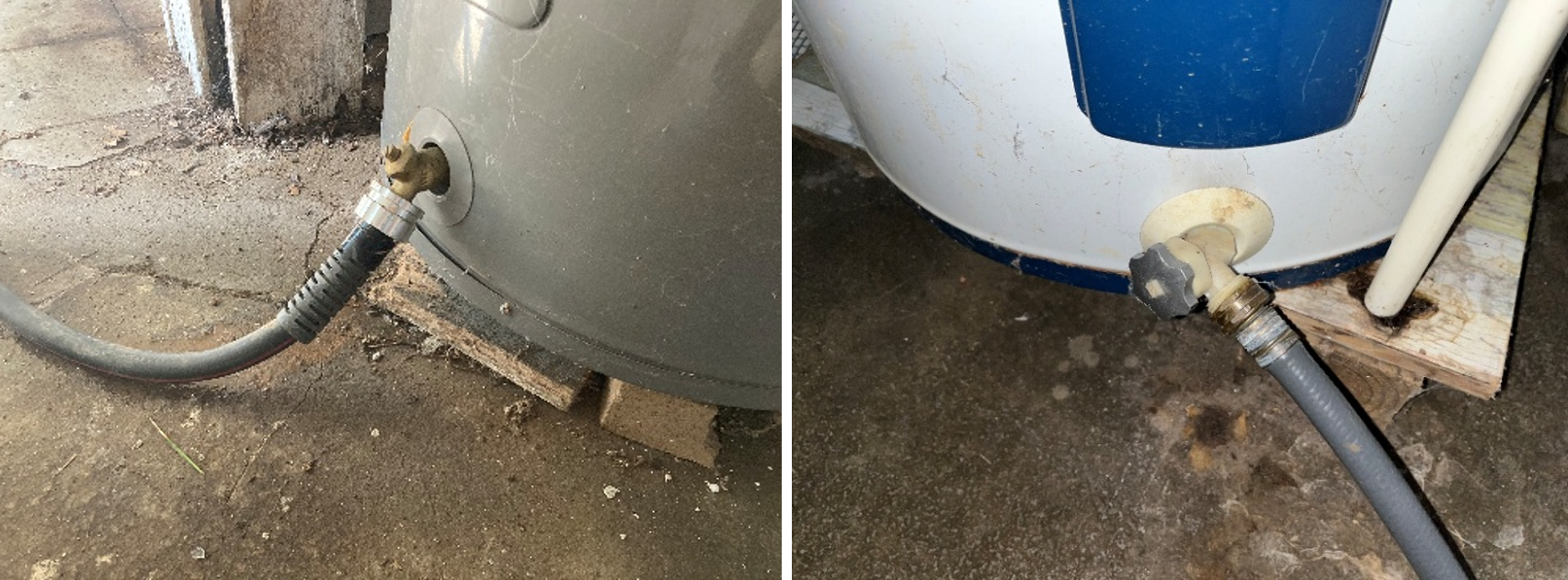
The drain valves on these water heaters are located near the bottom of the tanks.
Source
Figure 10. The drain valves on these water heaters are located near the bottom of the tanks (Source: PNNL).
A standard garden hose is connected to the drain valve to drain the water heater tank.
Source
Figure 11. A standard garden hose is connected to the drain valve to drain the water heater tank (Source: PNNL).

6. Open the drain valve.

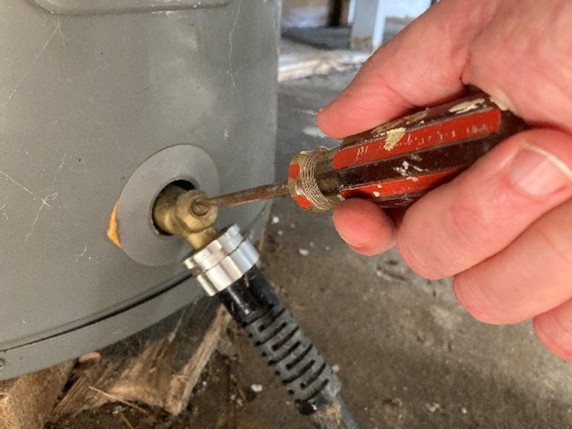
Some valves operate by hand (Figure 12), others require a screwdriver (Figure 13). In either case, turning in the counterclockwise direction will open the valve (“lefty loosie”). Open the drain valve to allow water to flow out of the tank (Figure 14). Remember that the water coming out of the tank will be hot.
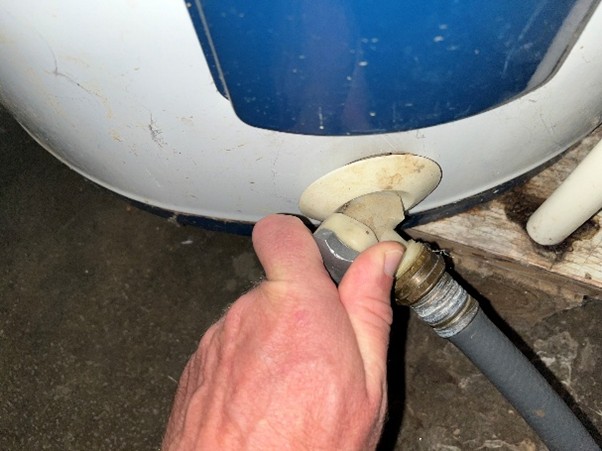
This water heater drain valve is operated by hand.
Source
Figure 12. This water heater drain valve is operated by hand (Source: PNNL).
This water heater drain valve is operated using a flat-head screwdriver.
Source
Figure 13. This water heater drain valve is operated using a flat-head screwdriver (Source: PNNL).
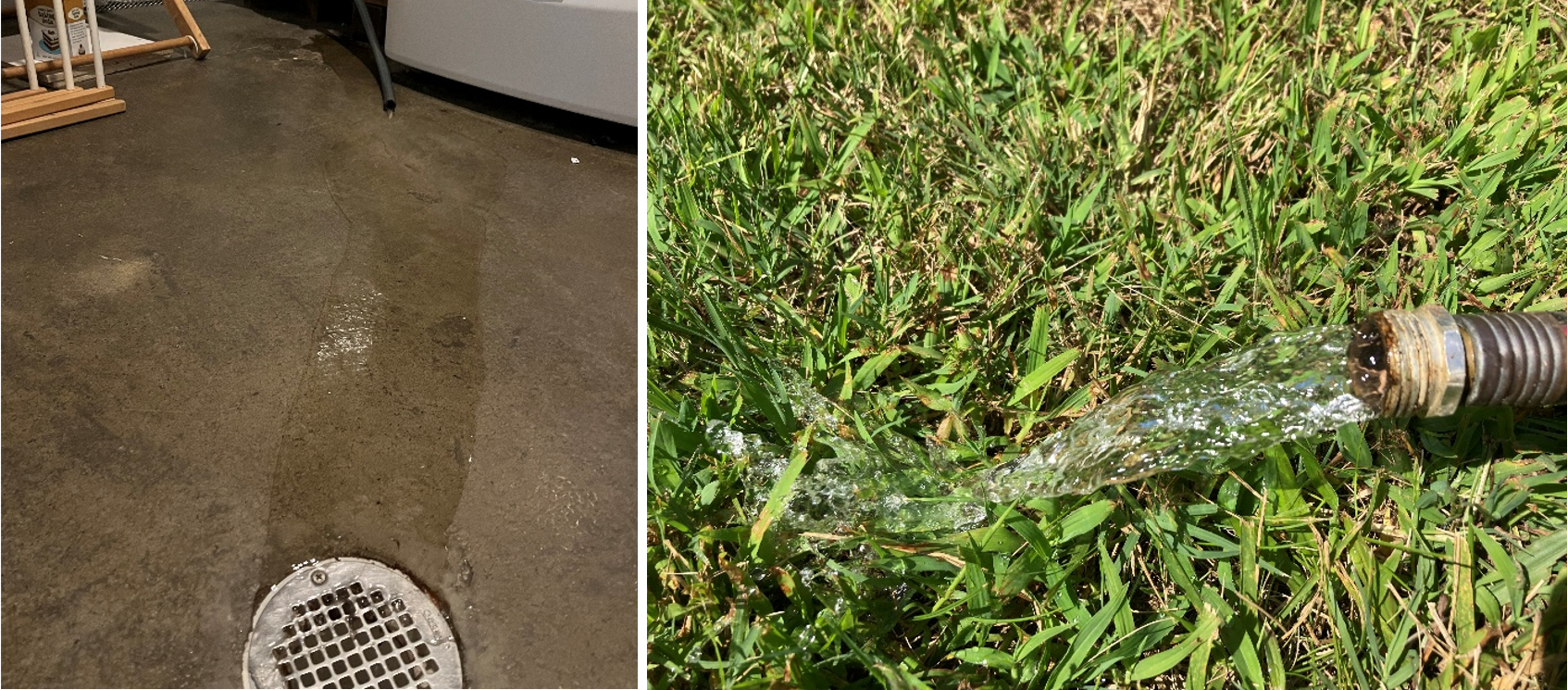
The water heater tank can drain to a floor drain (left) or the yard or curb drain (right).
Source
Figure 14. The water heater tank can drain to a floor drain (left) or the yard or curb drain (right) (Source: PNNL).

7. Open the water heater inlet valve to stir up sediment.

After the tank has been draining for 20 minutes or more (or has stopped draining), slowly open the cold-water inlet valve for about 10 seconds to stir up any sediment remaining in the tank. This can be done periodically throughout the draining process. 


8. Once drained, close or turn off the hot water fixture(s).

To reduce the chance of cloudy water getting into your pipes and to increase the pressure of the water going through the drain valve, close or turn off the hot water fixtures before flushing the tank. 


9. Flush the tank.

With the drain valve still open, slowly open the cold-water inlet valve and continue to drain the tank until the water runs clear. Any clogging can often be loosened simply by operating the drain valve open and closed a few times.


10. Perform a final flush and drain.

With the cold-water inlet and drain valve still open, turn on the hot water fixture. After a few minutes, turn off the cold-water inlet and allow the tank to drain completely.


11. Open water heater inlet valve.

With the drain valve still open and hot water fixture still on, slowly open the cold-water inlet valve again. The drain valve is open to allow any remaining sediment that is stirred up by the final opening of the water inlet valve to escape. 


12. Close drain valve and allow the tank to fill up.

Close the drain valve after a minute or so to allow the tank to fill up. The hot water fixture will sputter as air from the tank is now being pushed out through the fixture.


13. Once flow through the hot water fixture is smooth, turn off the hot water fixture.

After a while, water will begin to come out of the hot water fixture. Once the flow is smooth, the tank should be full and you can turn off the fixture. Note, the water coming out of the hot water fixture will be cold at this time.


14. Turn on electricity or gas.

With the tank full, you may turn the water heater back on. If you have a gas water heater, be sure to follow the manufacturer’s instructions to avoid accidentally turning off the pilot light, which could allow gas to leak into your home.


15. Disconnect the drain hose.

Keep the discharge end of the hose pointed to the floor drain or outside. Unscrew the tank end of the hose from the tank and raise it up to drain any residual water out of the hose to the drain or outside. You may want to have some rags or an old towel nearby to catch drips as you unscrew the hose from the tank. 


16. Wait for several hours before doing laundry.

The water in the water heater tank may still be cloudy. It is best to avoid doing the laundry for several hours. Note that it may also take several hours for the water in the tank to heat up.


Additional Info

Last Updated

Disclaimer

This content is a work created with funding provided by the United States Department of Energy under Contract no DE-AC05-076RL01830 for the operation of Pacific Northwest National Laboratory. The information and guidance provided by Pacific Northwest National Laboratory (PNNL) in the content are intended solely for educational purposes only and do not constitute formal training or certification. It is provided with the explicit understanding that neither the United States Government nor the United States Department of Energy, nor the Contractor, nor any or their employees, nor any jurisdiction or organization that has cooperated in the development of these materials, makes any warranty, express or implied, or assumes any legal liability or responsibility for the accuracy, completeness, or usefulness or any information, apparatus, product, software, or process disclosed, or represents that its use would not infringe privately owned rights. Reference herein to any specific commercial product, process, or service by trade name, trademark, manufacturer, or otherwise does not constitute or imply its endorsement, recommendation, or favoring by the United States Government or any agency thereof, or Battelle Memorial Institute. The views and opinions of authors expressed herein do not necessarily state or reflect those of the United States Government or any agency thereof. Viewers assumes full responsibility for all actions that they may take from information provided in this content including ensuring the safety, code compliance, and proper functionality of any products they choose to install. Installation and use of such products should be performed in accordance with local regulations and manufacturer instructions.