



Introduction
Cleaning window weep holes helps to ensure proper window drainage, preventing water damage in the wall.
Why
Many windows contain weep holes, small openings which allow water to drain from the window frame. These small openings provide a pathway for water that gets into the window frame or tracks to drain to the outside, protecting the walls of your home from water damage. If weep holes are clogged or accidentally caulked, trapped water can accumulate within the frame and eventually damage the framing, sheathing, insulation, and other building materials.
What You'll Need
- Flathead screwdriver or small pliers
- Drain brush, pipe cleaner, or straw brush
- Wire hook or crochet hook
- Hose or other water source
- Compressed air (optional)
1. Locate weep holes.
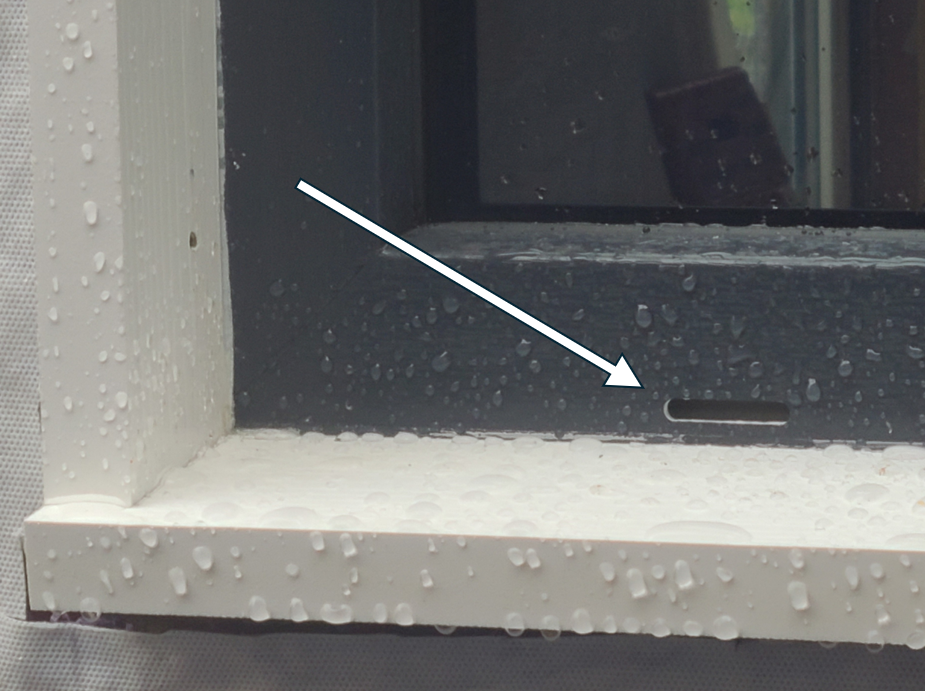
Exterior weep holes: The weep holes are small, flat holes or slots located on the exterior at the bottom of the window frame (Figure 1). If no weep holes are visible, take a closer look to see if there are weep holes but they have been covered with caulk.
Source
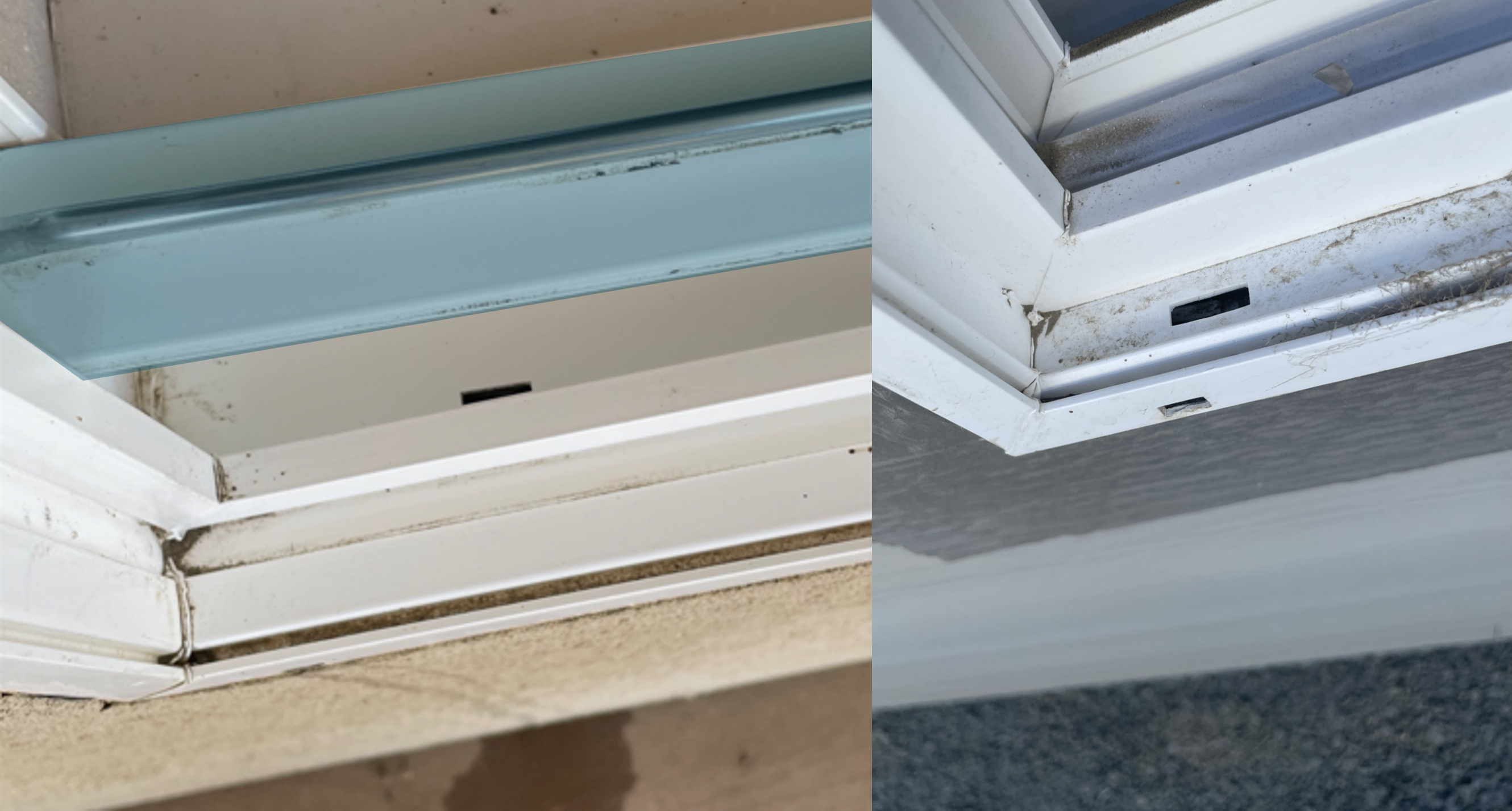
Interior weep holes: Open your window. Look at the window tracks to find another small hole, the interior weep hole. Figure 2 shows two common locations for an interior weep hole: beneath the window track (left) or visible in the window frame (right). If you cannot see the interior weep hole, it may be located beneath the window track (left). In the case that the interior weep hole is located beneath the window track, removing the window track allows you to access and clean this inside hole. If you do not want to remove your window track, you can clean the weep hole from the outside only.
Source
2. Check for blockage.
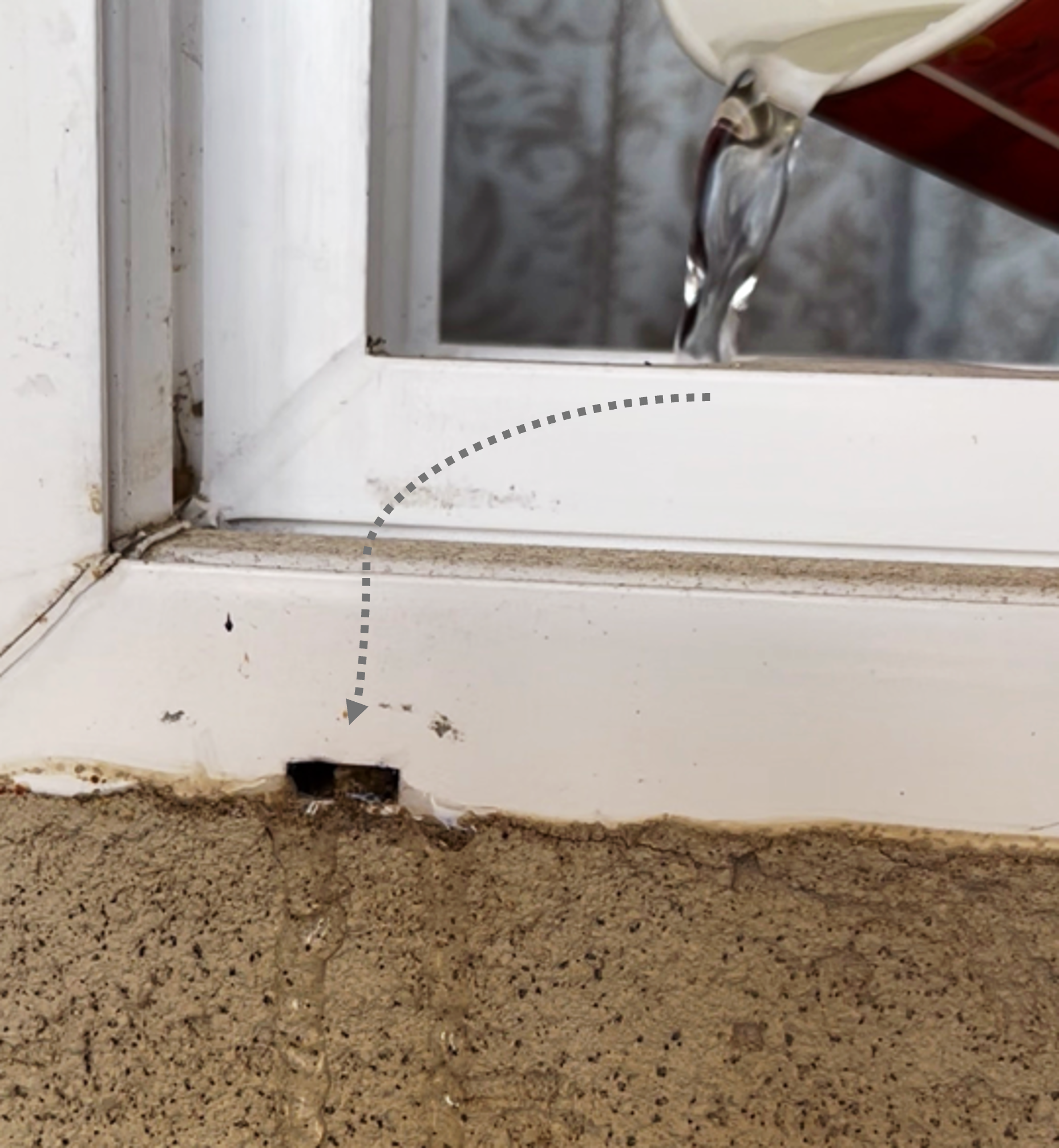
To determine if the weep hole is clogged, either spray misted water at the exterior window surface or pour a glass of water into the interior weep hole or into the window tracks (Figure 3). Some of the water should exit through the weep hole. If water does not exit the weep hole, or if visible debris is present in the weep hole, cleaning is necessary.
Source
If the weep holes have been covered with caulk, use a putty knife, utility knife, or flathead screwdriver to remove the caulk, then clean out the weep holes as described below. Solvents that can help remove silicone caulk include mineral spirits, vinegar, isopropyl alcohol, or specialized silicone caulk removers. Acetone may work but can damage surfaces. WD-40 can help soften the caulk for easier removal, but any WD-40 must then be removed from surfaces that will be refinished.
3. Remove debris.
Using a flathead screwdriver, crochet hook, or another tool capable of inserting into the weep hole, gently dislodge material in the opening of the weep hole. Try to avoid pushing debris further into the hole.
4. Clean interior channel.
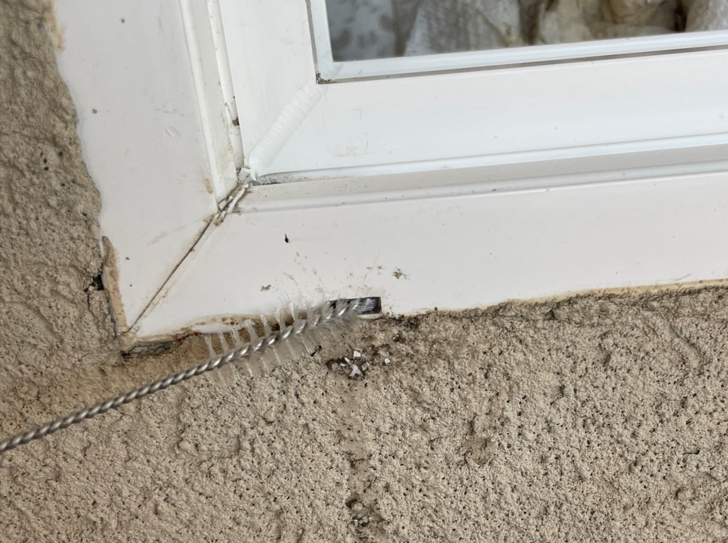
Gently push a pipe cleaner or small drain brush into the weep hole, pulling out debris as you encounter it. Often, a straw brush or wire hook will fit into the hole, allowing access to the water channel (Figure 4). If you can access the interior weep holes, repeat the brushing process from the interior hole. Compressed air can also be used to push out debris by placing the nozzle of the compressed air can in the interior weep hole and blowing out.
Source
5. Recheck for blockage.
Retest by pouring water into the track or misting the exterior window glass to see if the weep holes are functioning correctly. If water is still failing to drain, consider cleaning the window tracks or using a different tool to clean the weep holes.