



Introduction
To ensure both food safety and energy efficiency, the refrigerator and freezer temperatures should be checked regularly using a refrigerator thermometer.
Why
A refrigerator or freezer that is too cold uses excessive energy. A refrigerator or freezer that is not cold enough will result in food spoiling prematurely. Many refrigerators contain temperature controls but lack a thermometer to confirm that the settings are correct. Use a refrigerator thermometer to check the temperatures and adjust to achieve the optimal temperatures for food safety and energy efficiency. To reduce the risk of bacterial growth in foods, refrigerator temperatures should be kept below 40°F (4°C). To ensure food quality, freezer temperatures should be kept at 0°F (-18°C) or lower. It’s a good idea to keep a refrigerator thermometer in both your refrigerator and freezer to continually verify temperatures.
What You'll Need
- 1 or more refrigerator thermometers
1. Place thermometer in refrigerator.
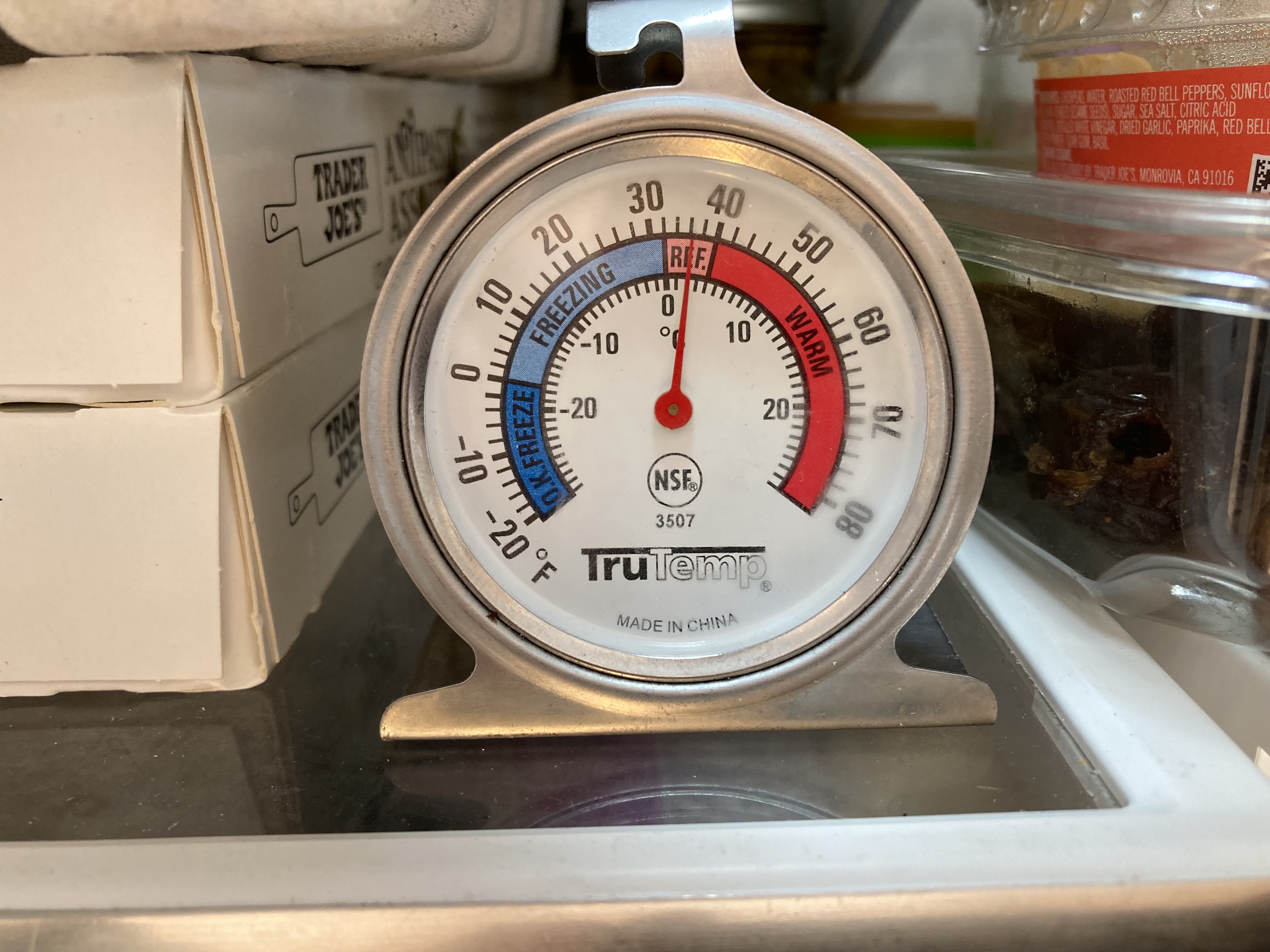
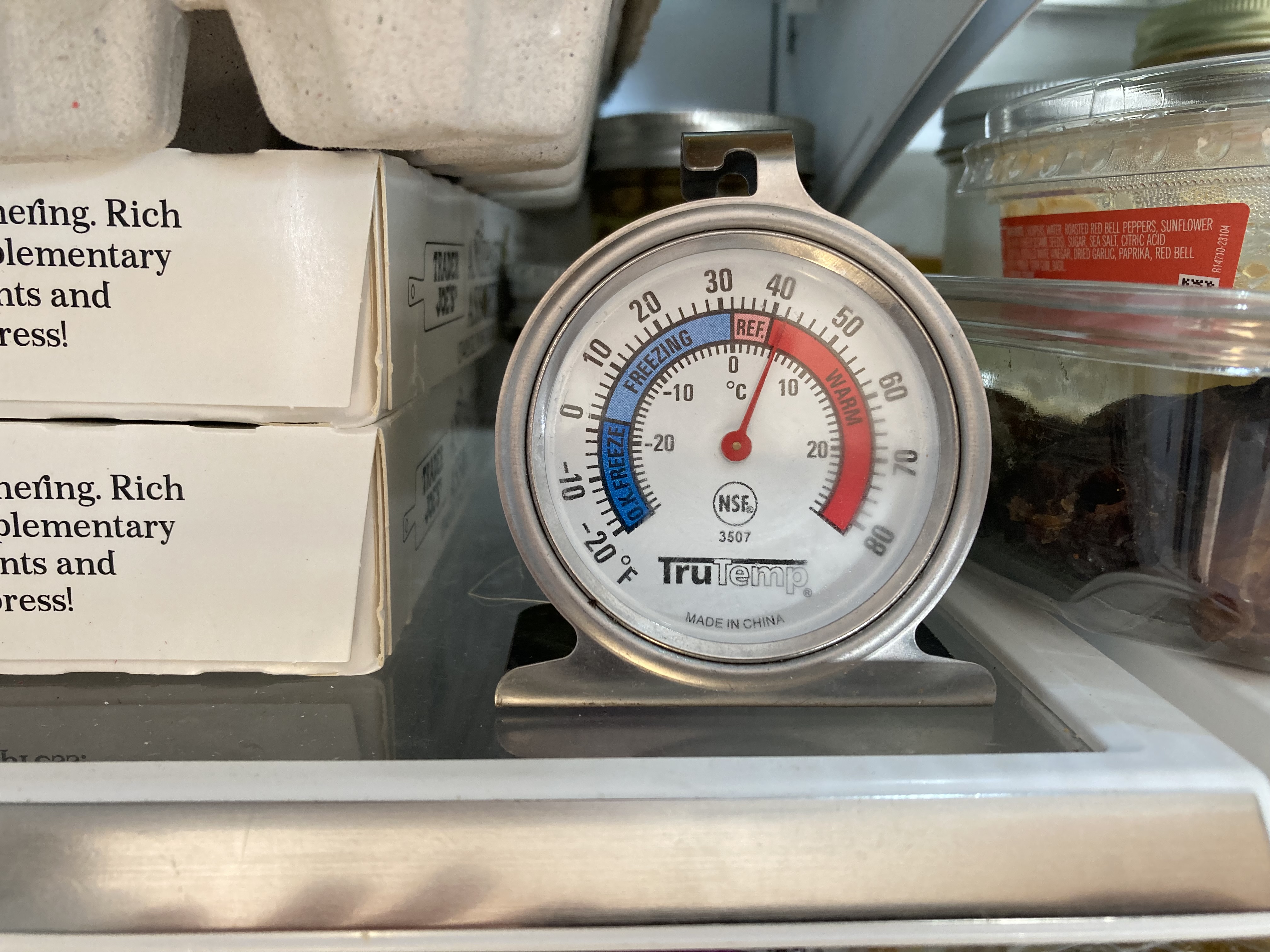
Purchase a refrigerator thermometer. They are available at most hardware stores. (See an example in Figure 1.) You may want to purchase two thermometers, one for the refrigerator and one for the freezer. If you have a second refrigerator in a garage or basement, installing refrigerator thermometers can be even more important in these refrigerators as they are not likely to be checked as often and they are also likely to be exposed to bigger temperature swings.
Place the thermometer in the refrigerator and allow it to sit for 5 to 8 hours. Most models are designed to sit on a shelf or be hung from a wire rack. For an accurate reading, avoid frequently opening the doors and place the thermometer in a spacious area. Some sources recommend placing the thermometer in a glass of water to get the most accurate reading. Place a second thermometer in the freezer or repeat the test later with the thermometer in the freezer compartment (Figure 2).
Source
Source
2. Check temperature.
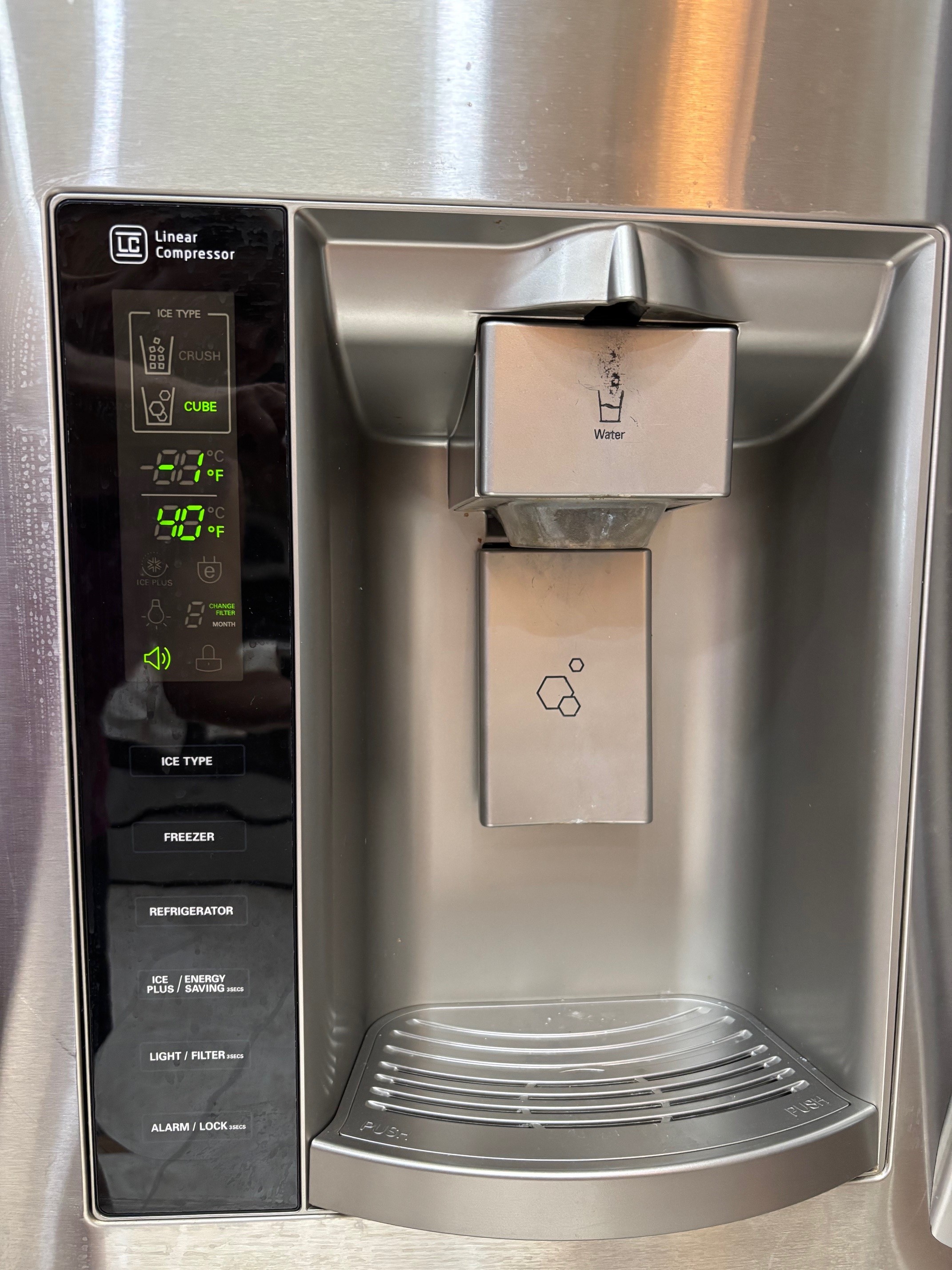
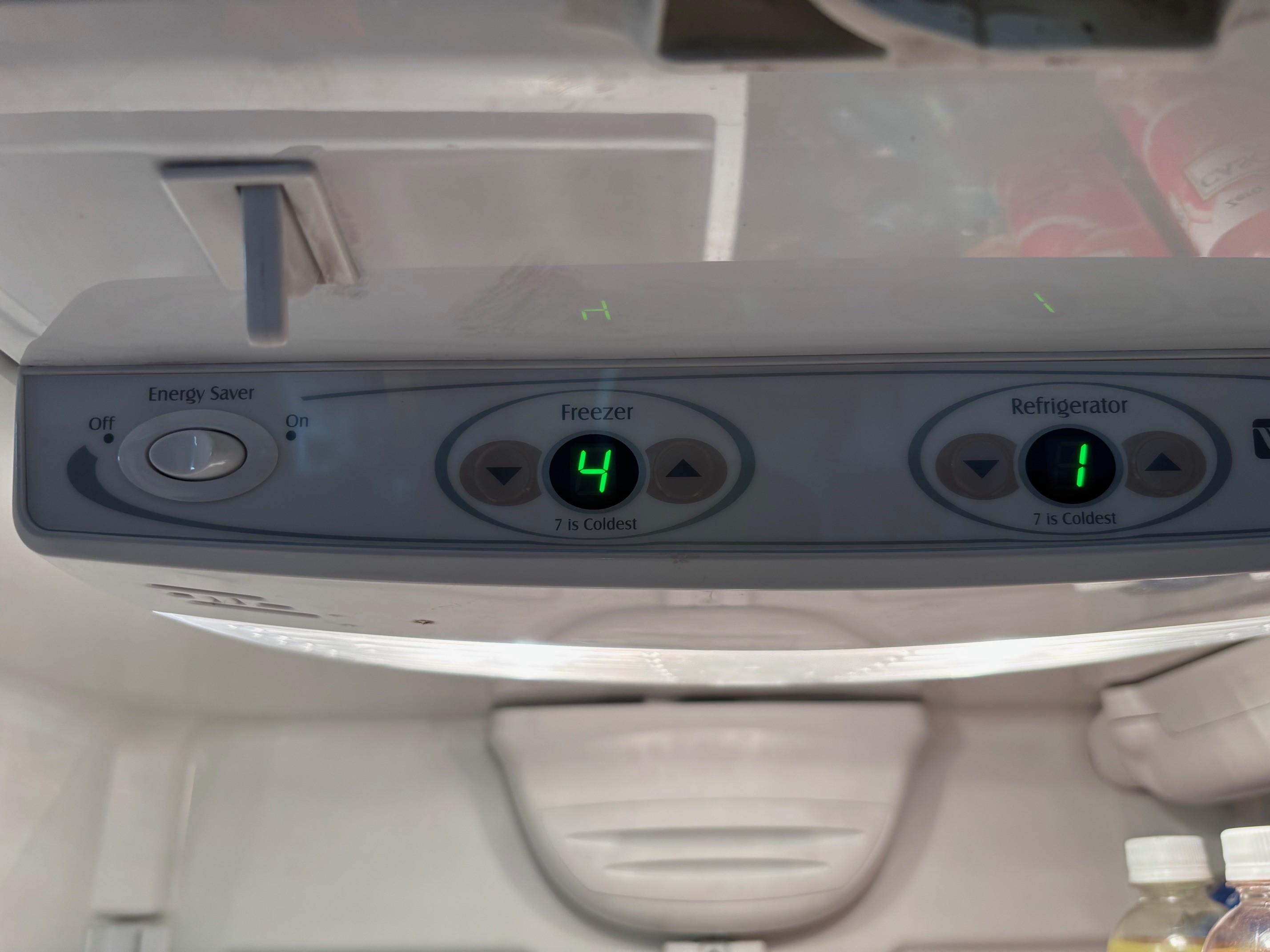
Check the temperatures in both the refrigerator and the freezer. In the refrigerator, the temperature should be between 35 and 40°F (2-4°C). In the freezer, the temperature should be below 0°F (-18°C). Some refrigerator models show temperature settings, some show number settings (Figures 3 and 4).
Source
Source
3. Adjust settings.
If the temperature readings indicate that your refrigerator or freezer compartment is too warm or too cold, write down the temperature readings, adjust the settings up or down as needed, and recheck the temperature of the refrigerator or freezer compartment after 12 hours. If the appliance fails to achieve the recommended temperature range after 12 hours try the following trouble shooting steps.
4. Troubleshooting Temperature Issues
If your refrigerator isn’t holding temperature, check for these common issues.
1. Power source switched off or unplugged. Is the light coming on inside the refrigerator when you open the door? If not, make sure the refrigerator didn’t accidentally get unplugged. If it’s still plugged in, check to see if the breaker got tripped to “off” at the electric panel.
2. Blocked vent. Packing food items around the vents can block the vents and prevent cool air from circulating properly, which can cause the temperature to get too warm. Blocking the vents can also cause food in the refrigerator to freeze. Rearrange the contents and move items that may be blocking the vents. Less commonly, your freezer vent may be frosted over. Check your owners’ manual or search by your model number for guidance on how to locate and defrost the freezer vent.
3. Dirty condenser coils. The condenser coils, which are located on the bottom or back of your fridge, can get covered with dust, debris, or pet hair. Blocked coils can make it more difficult for the heat from your refrigerator to be released and may make the compressor work harder than it needs to. Try cleaning the coils. See the DIY guide Clean Refrigerator Condenser Coils.
4. Dirty or faulty gaskets. The soft, flexible seal that runs along the inside edge of your refrigerator door can become dirty or worn over time, which may prevent it from sealing your fridge properly. Clean the gasket and door frame with a sponge and warm, soapy water. If the gasket is warped, torn, or loose, it should be replaced.
5. Not enough space around the refrigerator. Most refrigerators need at least a half-inch of space on the sides and one inch in the back in order to dissipate the heat released as part of the refrigerant cycle cooling process. Check that you have at least that much clearance around your refrigerator.
7. Improperly leveled. If your refrigerator is even a little bit off kilter, it can cause issues that could lead to temperature fluctuations. To troubleshoot the problem, get a level and place it on top of the refrigerator, checking the leveling from both side to side and front to back. If the balance is off, check the owner’s manual for guidance on how to adjust the leveling on your refrigerator model.
8. Call a repair service. If these steps don’t fix the temperature, you may have a more significant issue like a broken or stuck condenser fan, a malfunctioning compressor, or a faulty circuit board. It may be time to call a repair service.
5. If the Power Goes Out.
Installing thermometers in your refrigerator and freezer can help you determine if either compartment is reaching unsafe temperatures during a power outage. Here are some additional guidelines from the U.S. Department of Agriculture.
Refrigerator:
- Four hours is the general guideline for keeping food safe in a refrigerator without power.
- Keep the refrigerator door closed as much as possible to maintain the cold temperature.
- Discard any perishable foods, like meat, poultry, fish, eggs, milk, and leftovers, that have been left in a refrigerator over 2 hours at compartment temperatures above 40°F (4°C).
- Adding dry ice or block ice can help refrigerators and freezers maintain safe temperatures during a power outage.
Freezer:
- A full freezer can keep food frozen for up to 48 hours if the door remains closed.
- A half-full freezer will keep food frozen for about 24 hours if the power goes out and the door remains closed.
- Food can be safely refrozen if it still contains ice crystals or the food temperature reads 40°F (4°C) or below.
- If you are unsure about the safety of the food, it's best to err on the side of caution and discard it.