Scope

Advanced framing details include using the minimum amount of wall studs permitted by code.

Construct framed walls using advanced framing details like using the minimum amount of wall studs permitted by code to reduce thermal bridging and allow more space for insulation.

  • Specify 24-inch on-center for 2x6 wall framing rather than 16-inch on-center 2x4 wall framing.
  • Design for wall lengths and heights, window and door sizes, etc., on a 2-foot grid, wherever possible to reduce framing members in walls and to reduce lumber and materials waste. 

See the Compliance Tab for links to related codes and standards and voluntary federal energy-efficiency program requirements.

Description

Adding more studs than necessary wastes lumber and reduces the wall’s thermal resistance because the lumber blocks cavity space that could be filled with insulation and because each stud represents a thermal bridge that can transfer heat between the interior and exterior of the building. Wood-framed houses have traditionally been built with 2x4 studs spaced 16-inches on-center. Research has shown exterior framed walls can be adequately supported by 2x6 studs spaced 24-inches on-center. This wider spacing reduces the number of studs in the wall, thus reducing thermal resistance and increase the amount of space available for insulation. Building walls of 2x6s 24-inch on-center has long been permitted in building codes in most jurisdictions, and is particularly appropriate for colder climates (IECC Climate Zones 5-8) where higher wall R-values are required (Baczek, Yost, and Finegan 2002; DOE 2002; Lstiburek 2010). In some jurisdictions, particularly in hurricane zones, 16-inch on-center is the maximum stud spacing allowed; check with local code officials.

This 2x6, 24-inch on-center stud spacing is one of many components of advanced wall framing that reduce costs and provide materials and energy savings. Techniques for installing 24-inch on-center exterior and interior wall framing and single top plates are described below. Other techniques are described in other resource guides: see Insulated Corners, which explains how to construct corners with 2 studs instead of 3 studs to permit more insulation, Insulated Headers for tips on how and when to build open and insulated headers over windows and doors, Minimal Framing at Doors/Windows for efficient framing around doors and windows, and Insulated Interior/Exterior Wall Intersections for ways to reduce framing and add insulation where interior walls intersect exterior walls.

In one study employing several advanced framing techniques, such as 2x6 24-inch on-center wall framing, 24-inch on-center floor joist and rafter spacing, 2x4 24-inch on-center interior framing, 2-stud corners, open and insulated headers, reduced studs around windows and doors, and single top plates, all of the measures combined contributed to energy savings of 13% over standard framing but this single measure alone  - switching from 2x4 16-inch on-center to 2x6 24-inch on-center framing– accounted for energy savings of 11% (Lstiburek and Grin 2010). The energy savings is accounted for by two factors – the thicker wall enables wall insulation to be upgraded from R-13 to R-19 and less studs mean less thermal bridging.

Building scientists suggest that builders should consider the “whole-wall” R-value as opposed to the center-of-cavity or rated R-value of the insulation. In one study, a 2x4 16-inch on-center wall was insulated with batts labeled R-13, but researchers calculated the actual whole-wall insulation value of the wall at R-9.4 (or 72% of R-13) when the thermal conductivity of the framing, windows, and doors are taken into account. In the same simulation, researchers found that the calculated whole-wall R value of a 2x6 24-inch on-center wall insulated with R-19 batts, was R-15.2, or 80% of R-19 (Baczek, Yost, and Finegan 2002). While both walls had a lower whole-wall R-value than rated R-value, the 2x6, 24-inch on-center wall with R-19 performed closer to its rated R-value because the wall had less thermal bridging.

Stud spacing can also affect cost savings. In one study of a 2,910-square foot home, switching from 2x4 16-inch on-center framing to 2x6 24-inch on-center framing reduced board feet of lumber by 1,634 feet and cut costs by $171. When other advanced framing measures were added, like switching to single top plates, 24-inch spacing of interior walls, and open headers, lumber costs were reduced $1,117 (Baczek, Yost, and Finegan 2002).

Framing on a two-foot also saves money by reducing material waste. Most sheet goods (plywood, OSB, foam insulation) come in 4x8-foot sheets. When the entire home is designed on a 2-foot grid from roof rafters to wall framing to floor joists, sheet good and lumber waste are greatly reduced. Reducing the number of studs in the walls by one-third also reduces labor costs in terms of the time it takes to handle, cut, install, drill through, and attach to studs. Based on numerous field experiments, Building Science Corporation estimates savings of up to $1,000 per home in materials and labor are possible for production builders who use a combination of advanced framing techniques (Lstiburek and Grin 2010).

Advanced framing techniques should be specified in the framer’s contract. Detailed framing elevations should be prepared after confirming that these advanced framing techniques are permitted by code in the local jurisdiction. There is a cost associated with redrawing existing floor plans or providing framing details for new plans, but the cost per home is minimal if the plan will be used several times. Also, cost savings will be realized because the details will help gain building official approval, improve accuracy for materials purchasing, clarify instructions for the lead framer, assist in training subs, and greatly improve the chances that the specified measure will actually be implemented (Baczek, Yost, and Finegan 2002).
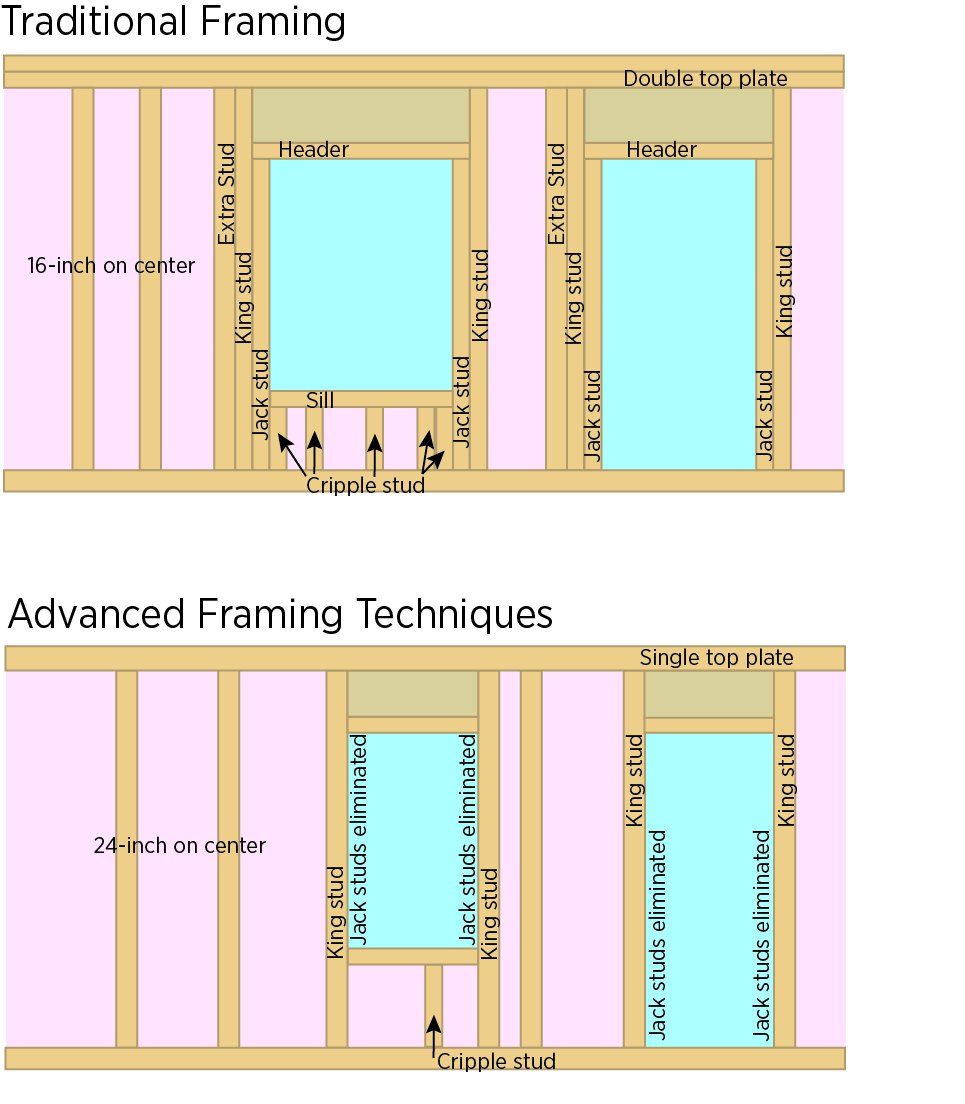
Traditional and advanced framing of windows and doors
Source
Figure 1. Traditional framing of stud-framed walls with 2x4 studs spaced 16-inches on-center uses more wood than necessary and limits the amount of insulation that can be installed. Advanced framing uses as 2x6 24-inch on-center wall framing, single top plates, and no more studs than are structurally needed, providing a dimensionally thicker wall with more space for insulation (Source: Courtesy of PNNL). 
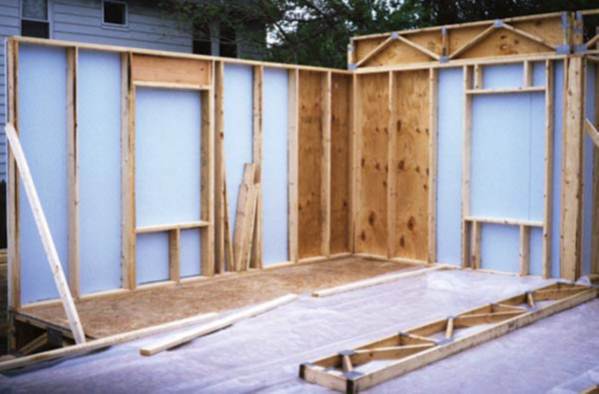
This house is being built with advanced framing techniques including 2x6 24-inch on-center wall framing
Source
Figure 2. This house is being built with advanced framing techniques including 2x6 24-inch on-center wall framing, single top plates, open headers over windows on non-load-bearing walls, and minimal studs around windows (Source: Building Science Corporation 2010). 

How to Construct Walls with Fewer Studs

  1. Design homes on a two-foot grid with 2x6 studs spaced 24-inches on-center. Align rafters, wall studs, and floor joists so that the load is transferred and adequately supported to allow installation of single top plates. Align windows and doors with this two-foot stud spacing to reduce the number of extra king studs needed. [See Minimal Framing at Doors/Windows.]
  2. Specify single top plates in framing elevations. For an 8-foot wall, don’t purchase standard precut 92.5-inch studs, purchase 8-foot (96-inch) studs and cut them to 94 inches (Lstiburek 2010).
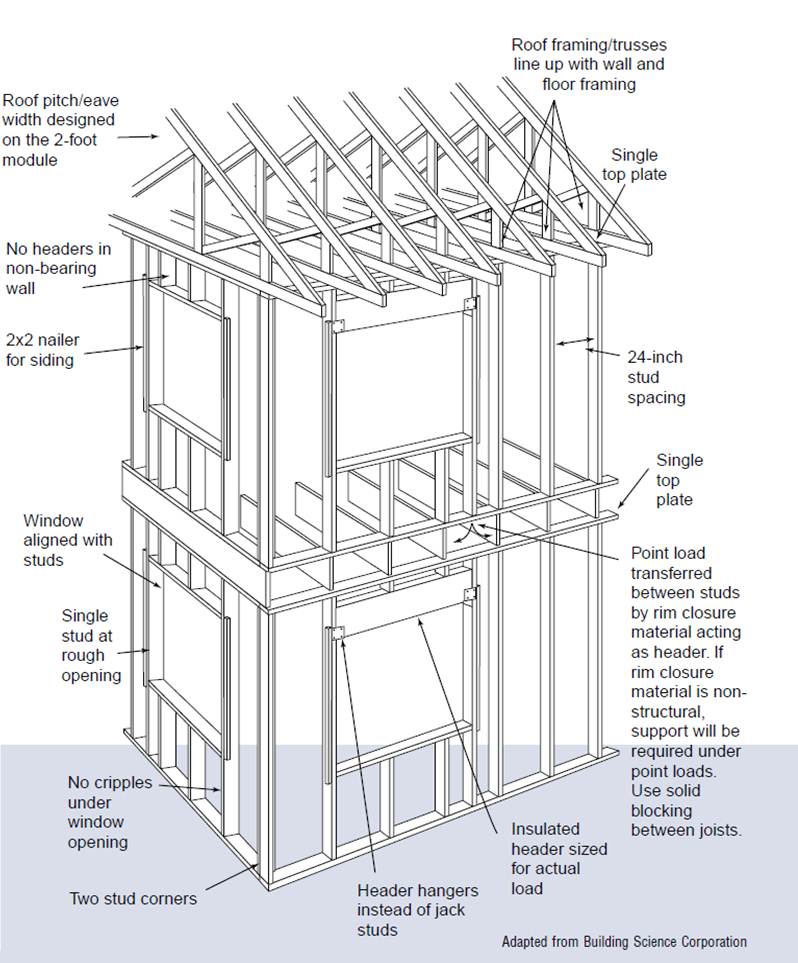
Advanced framing details throughout house limit use of lumber and makes space for bonus insulation.
Source
Author(s)
Southface Energy Institute,
et al.
Organization(s)
NAHB,
SEI,
ORNL,
NREL
Description

Fact sheet describing advanced wall framing.

Figure 3. Advanced framing details throughout the house minimize the use of lumber (Source: Advanced Wall Framing 2002). 

     3. Connect top-plates using either a metal plate or a wood splice.
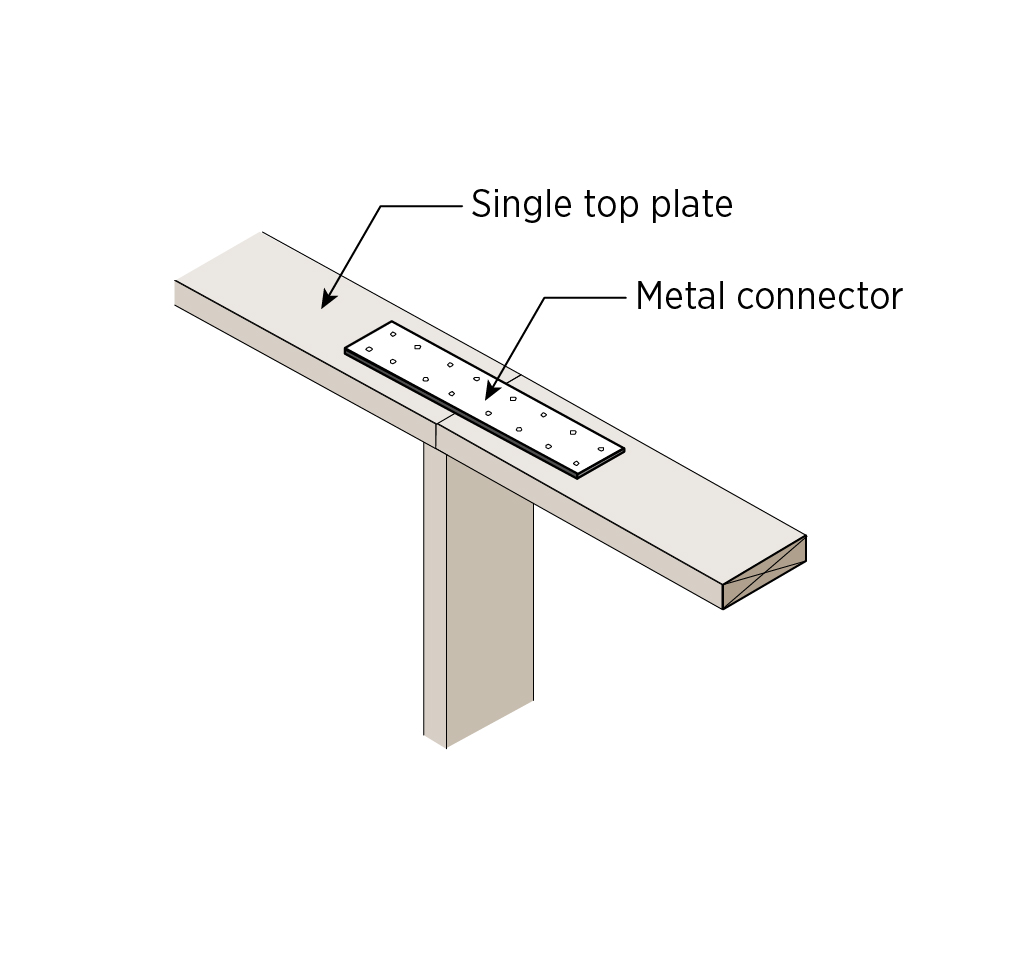
 

A metal plate is used to connect top plates to one another
Source
Author(s)
Lstiburek Joseph W
Organization(s)
Building Science Corporation,
BSC
Description

Report describing advanced framing techniques, including discussion of cost and energy savings.

Figure 4. Single top plates can be connected with a metal plate (Source: Building Science Corporation 2012). 
Wood blocking is used as a splice to connect top plates together
Source
Author(s)
Lstiburek Joseph W
Organization(s)
Building Science Corporation,
BSC
Description

Report describing advanced framing techniques, including discussion of cost and energy savings.

Figure 5. Single top plates can be connected with a splice. Wood blocking is used as a splice to connect the top plates together. The 'middle' stud is cut shorter to accommodate the wood splice (Source: Building Science Corporation 2010). 

     4. For interior walls, specify 2x4 studs placed 24-inch on-center with single headers. Non-structural connectors can be installed for non-load-bearing interior walls.

Interior non-load bearing walls are 2x4 studs spaced 24-inchon- center, can have non-structural connectors
Source
Author(s)
Lstiburek Joseph W
Organization(s)
Building Science Corporation,
BSC
Description

Report describing advanced framing techniques, including discussion of cost and energy savings.

Figure 6. Interior walls are made of 2x4 studs spaced 24-inch on center. If they are non-load bearing, they can have non-structural connectors (Source: Building Science Corporation 2010). 

Ensuring Success

Advanced framing details should be specified in the construction plans (i.e., framing elevations should be provided) and reviewed with framers. The construction supervisor should ensure that framing crews are knowledgeable of or trained in advanced framing techniques. The framing should be visually inspected by the site supervisor before electrical, plumbing, HVAC, and drywall are installed.

Region

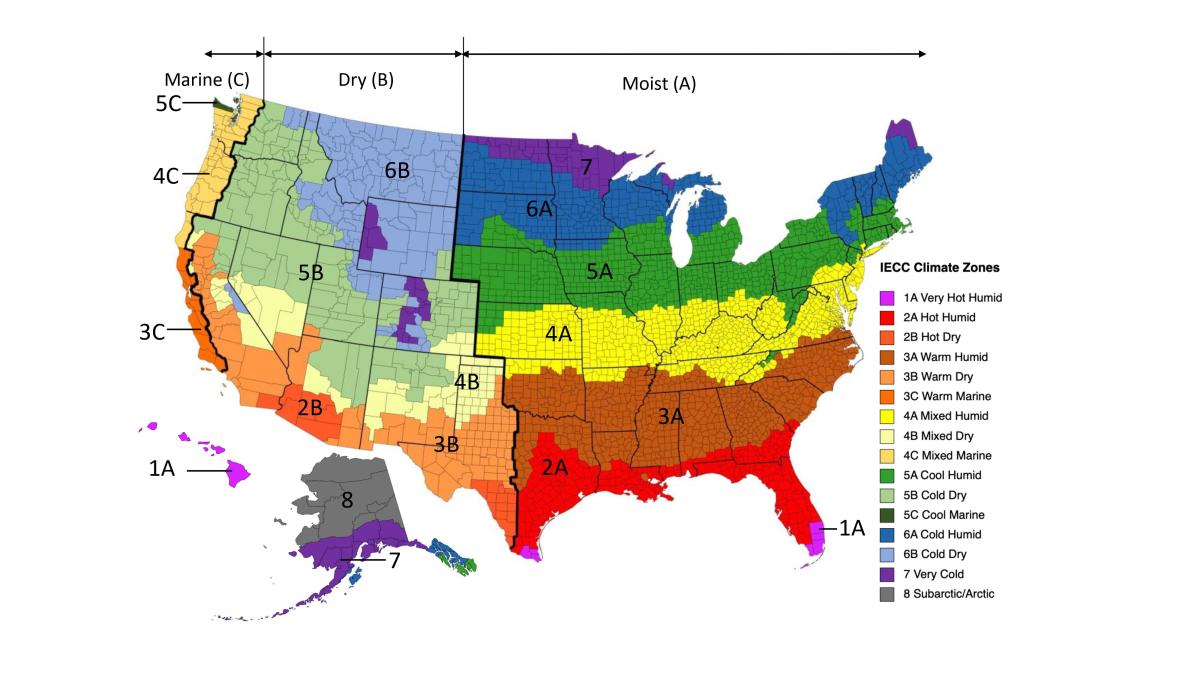
The map in Figure 1 shows the climate zones for states that have adopted energy codes equivalent to the International Energy Conservation Code (IECC) 2009, 12, 15, and 18. The map in Figure 2 shows the climate zones for states that have adopted energy codes equivalent to the IECC 2021. Climate zone-specific requirements specified in the IECC are shown in the Compliance Tab of this guide. 
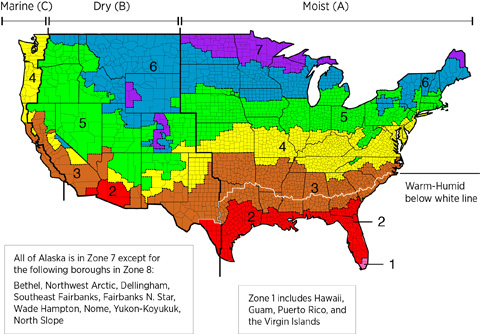
Climate Zone Map from IECC 2009, 12, 15, and 18.
Figure 1. Climate Zone Map from IECC 2009, 12, 15, and 18. (Source: 2012 IECC)


Climate Zone Map from IECC 2021.
Figure 2. Climate Zone Map from IECC 2021. (Source: 2021 IECC)


Training

Right and Wrong Images

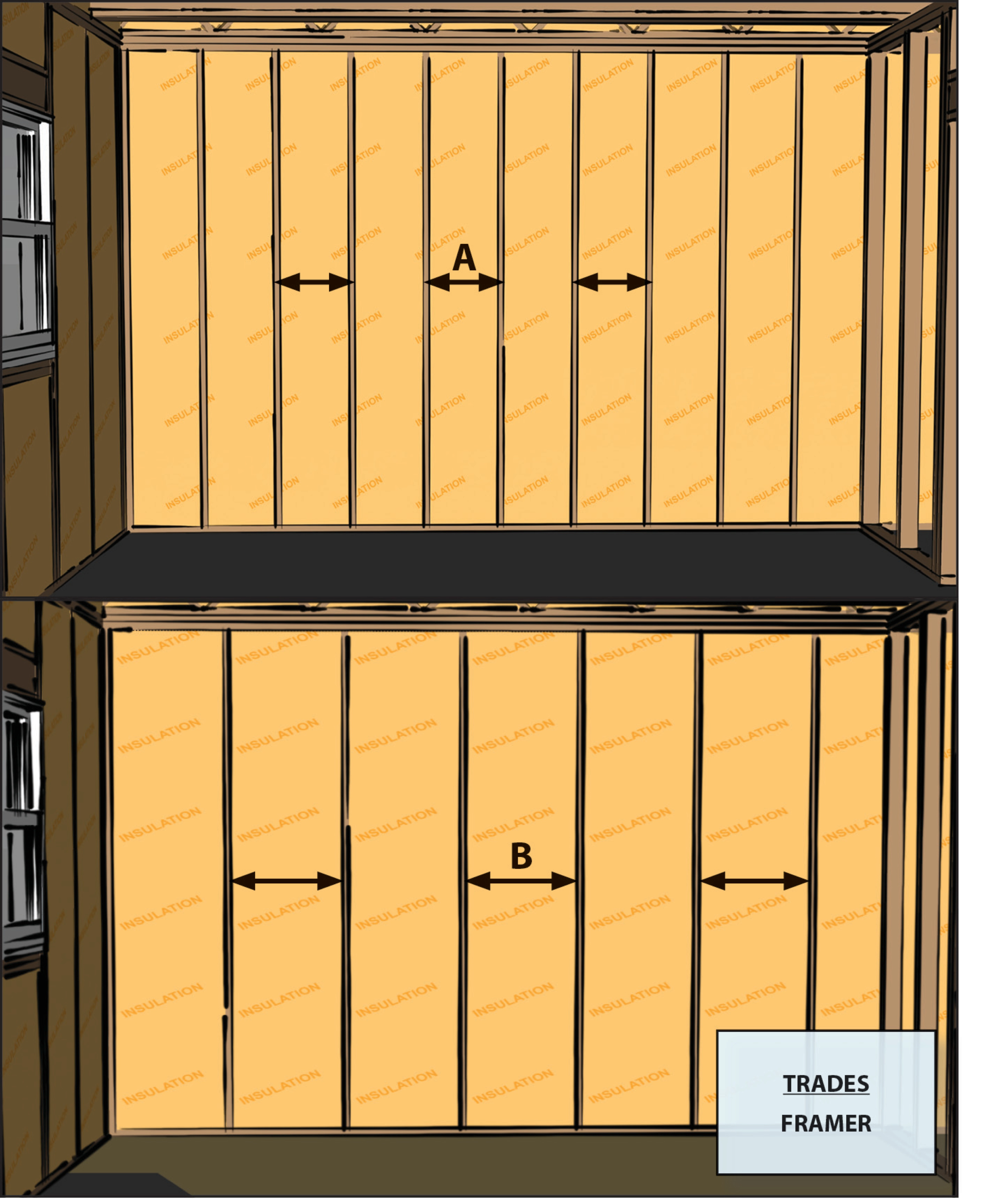
Wrong – Excessive framing and improper spacing of studs
Source
Author(s)
U.S. Environmental Protection Agency,
ENERGY STAR
Organization(s)
EPA
Description

Guide describing details that serve as a visual reference for each of the line items in the Thermal Enclosure System Rater Checklist.
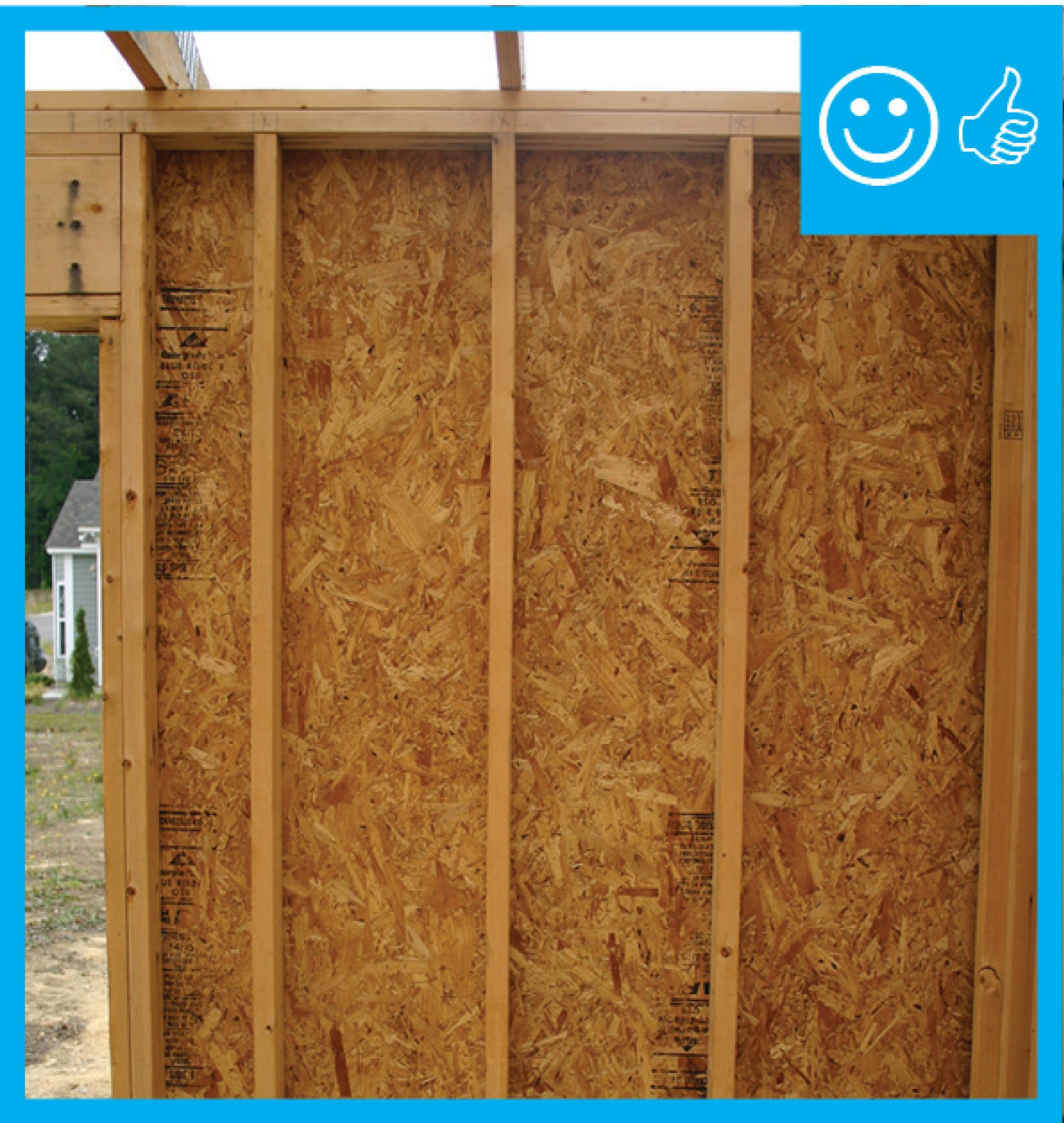
Right – Proper spacing of 2x4 studs
Source
Author(s)
U.S. Environmental Protection Agency,
ENERGY STAR
Organization(s)
EPA
Description

Guide describing details that serve as a visual reference for each of the line items in the Thermal Enclosure System Rater Checklist.

Right – Proper spacing of 2x6 studs
Source
Author(s)
U.S. Environmental Protection Agency,
ENERGY STAR
Organization(s)
EPA
Description

Guide describing details that serve as a visual reference for each of the line items in the Thermal Enclosure System Rater Checklist.

Right – Staggered 2x4s are placed every 12 inches on 2x6 plates, providing a nailing surface on each side of the wall every 24 inches.
Source
Right – This three studs in this corner are positioned to allow insulation against more of the exterior wall than standard three-stud corners.
Source
Wrong - The wall studs are too short and do not securely attach to the top plate.
Source
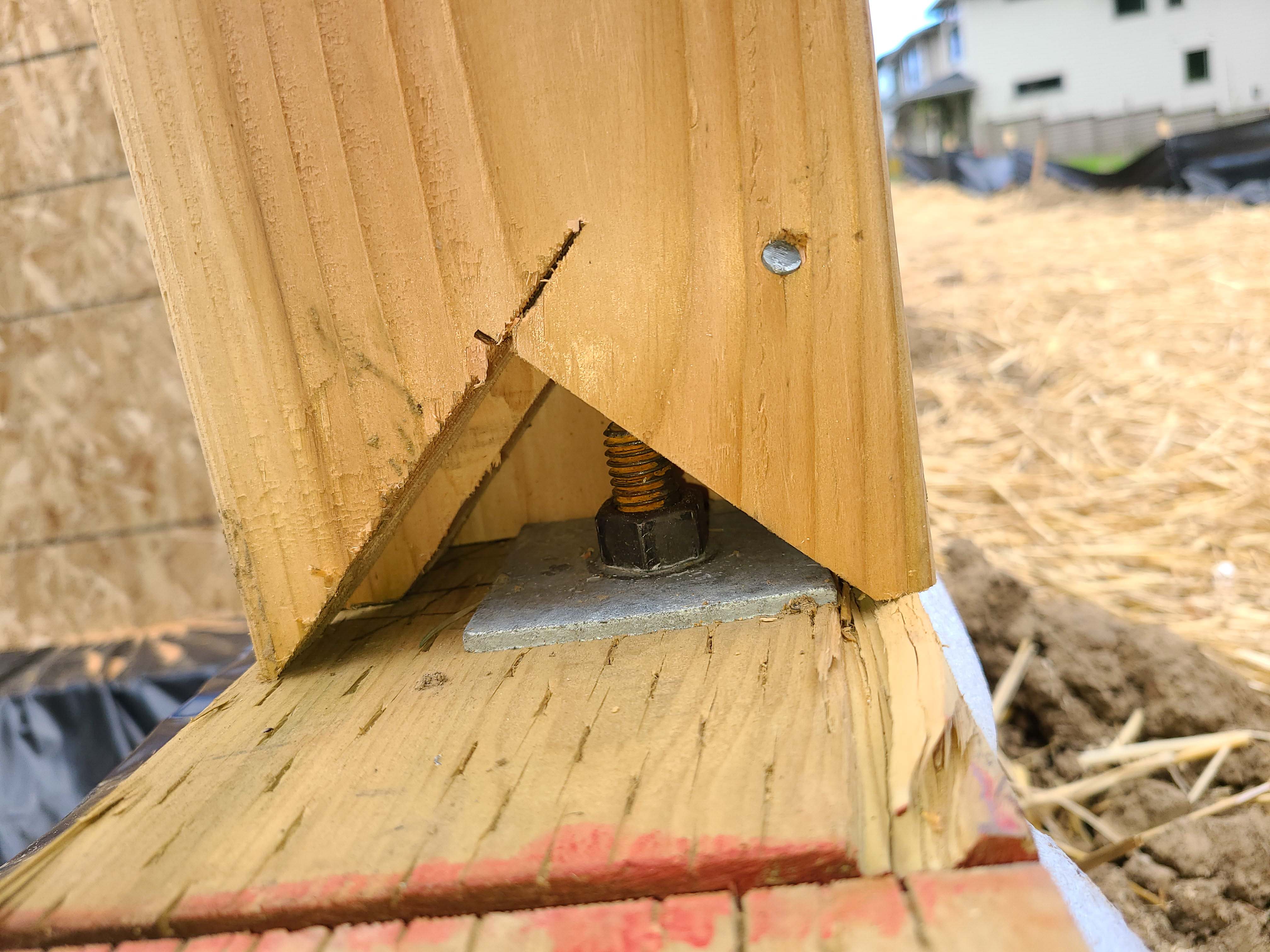
Wrong - The wall stud should not be cut to fit around foundation anchor bolt; the stud should be repositioned.
Source
Wrong - Wall studs were poorly positioned; should not be cut to fit over a foundation anchor bolt.
Source

Videos

Publication Date
·
Author(s)
Risinger
·
Organization(s)
Build with Matt Risinger
Description
Video describing traditional 2x4 16 inch on center framing versus advanced framing with 2x6 stud walls at 24 inch on center, insulated corners and headers, wall stud-ceiling joist alignment, etc. providing a strong wall with more room for insulation.

CAD Files

2 foot plan layout with wall elevation
Download: DWG PDF
Conceptual 3D advanced framing drawing
Download: DWG PDF
Conceptual 2 foot module house drawing
Download: DWG PDF

More Info

References and Resources

Publication Date
·
Author(s)
U.S. Environmental Protection Agency,
ENERGY STAR
·
Organization(s)
EPA
Description
Guide describing details that serve as a visual reference for each of the line items in the Thermal Enclosure System Rater Checklist.
Publication Date
·
Author(s)
Lstiburek Joseph W
·
Organization(s)
Building Science Corporation,
BSC
Description
Report describing advanced framing techniques, including discussion of cost and energy savings.
Publication Date
·
Author(s)
Southface Energy Institute,
et al.
·
Organization(s)
NAHB,
SEI,
ORNL,
NREL
Description
Fact sheet describing advanced wall framing.
Publication Date
·
Author(s)
APA - The Engineered Wood Association
·
Organization(s)
American Plywood Association,
APA
Description
Guide describing advanced framing, a system of construction framing techniques designed to optimize material usage and increase energy efficiency.
Publication Date
·
Author(s)
ENERGY STAR
·
Organization(s)
ENERGY STAR
Description
Website showing compliance timelines for various versions of the ENERGY STAR Single-Family New Home program requirements with links to national program requirements documents and checklists.

*For non-dated media, such as websites, the date listed is the date accessed.

Contributors to this Guide

The following authors and organizations contributed to the content in this Guide.

Sales

Building Science-to-Sales Translator

Reduced Wall Framing = High-Efficiency Wall Framing
Image(s)

Technical Description

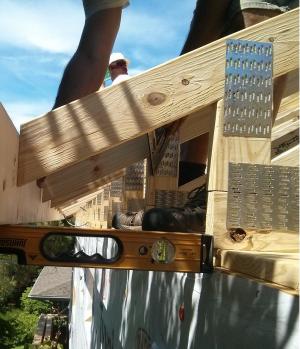
Traditional wall framing uses more lumber than is necessary and limits a builder’s ability to insulate walls. Wood and other framing materials are not good insulators. Heat can move through them from one side of the wall to the other. High-efficiency advanced framing uses techniques like thicker studs spaced further apart, two studs rather than three or more studs in corners, aligning windows and doors on a two-foot grid, and other steps to reduce the amount of lumber in the walls, while allowing more room for insulation. 

High-Efficiency Wall Framing
Sales Message

High-efficiency wall framing reduces the heat loss and gain though structural framing. What this means to you is less wasted energy along with enhanced comfort and quiet. Knowing there is one opportunity during construction to lock in quality construction, wouldn’t you agree advanced thermal protection is a great investment?

Last Updated

Questions? Comments? Contact our webmaster.

Disclaimer

This content is a work created with funding provided by the United States Department of Energy under Contract no DE-AC05-076RL01830 for the operation of Pacific Northwest National Laboratory. The information and guidance provided by Pacific Northwest National Laboratory (PNNL) in the content are intended solely for educational purposes only and do not constitute formal training or certification. It is provided with the explicit understanding that neither the United States Government nor the United States Department of Energy, nor the Contractor, nor any or their employees, nor any jurisdiction or organization that has cooperated in the development of these materials, makes any warranty, express or implied, or assumes any legal liability or responsibility for the accuracy, completeness, or usefulness or any information, apparatus, product, software, or process disclosed, or represents that its use would not infringe privately owned rights. Reference herein to any specific commercial product, process, or service by trade name, trademark, manufacturer, or otherwise does not constitute or imply its endorsement, recommendation, or favoring by the United States Government or any agency thereof, or Battelle Memorial Institute. The views and opinions of authors expressed herein do not necessarily state or reflect those of the United States Government or any agency thereof. Viewers assumes full responsibility for all actions that they may take from information provided in this content including ensuring the safety, code compliance, and proper functionality of any products they choose to install. Installation and use of such products should be performed in accordance with local regulations and manufacturer instructions.