
Scope
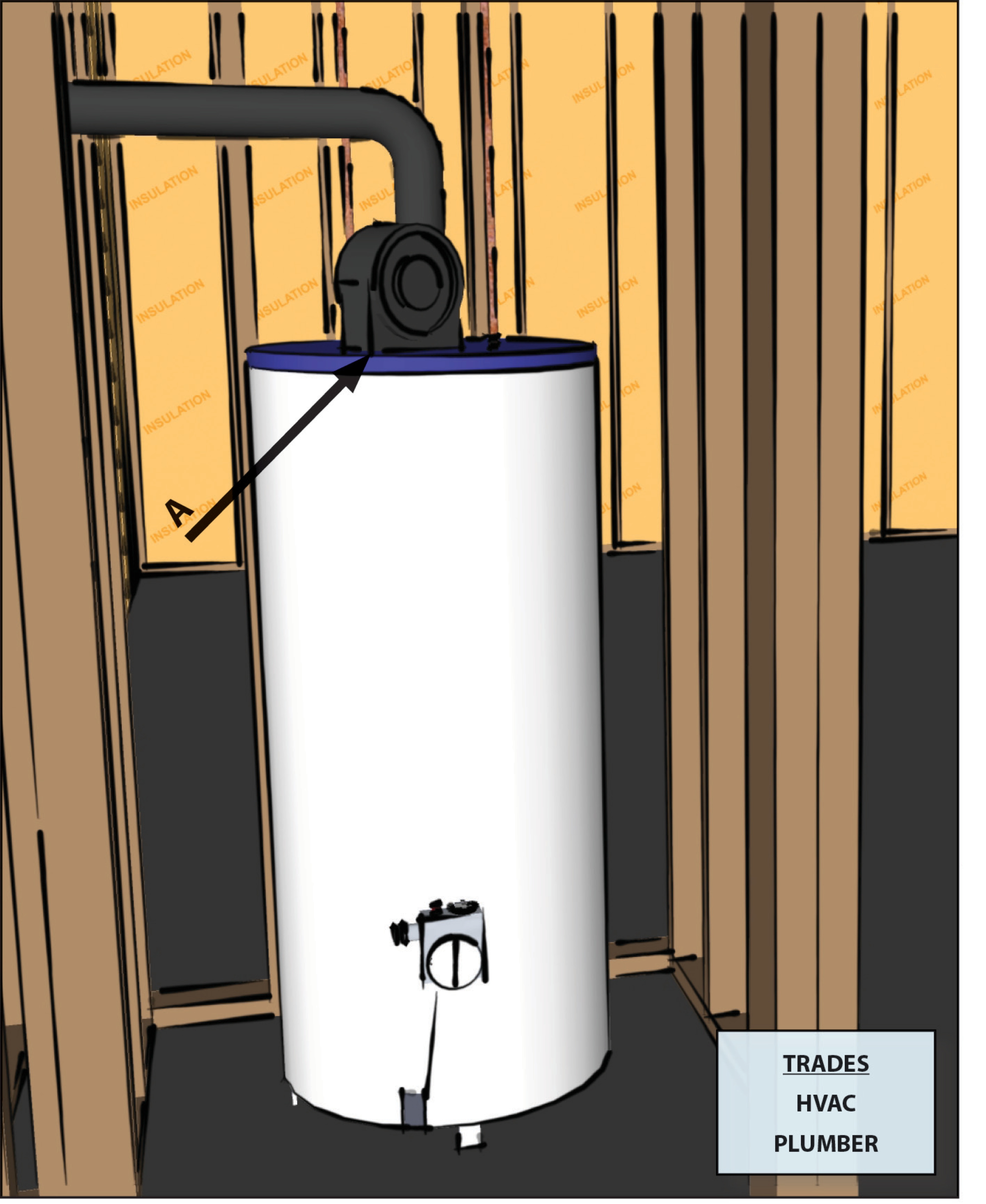
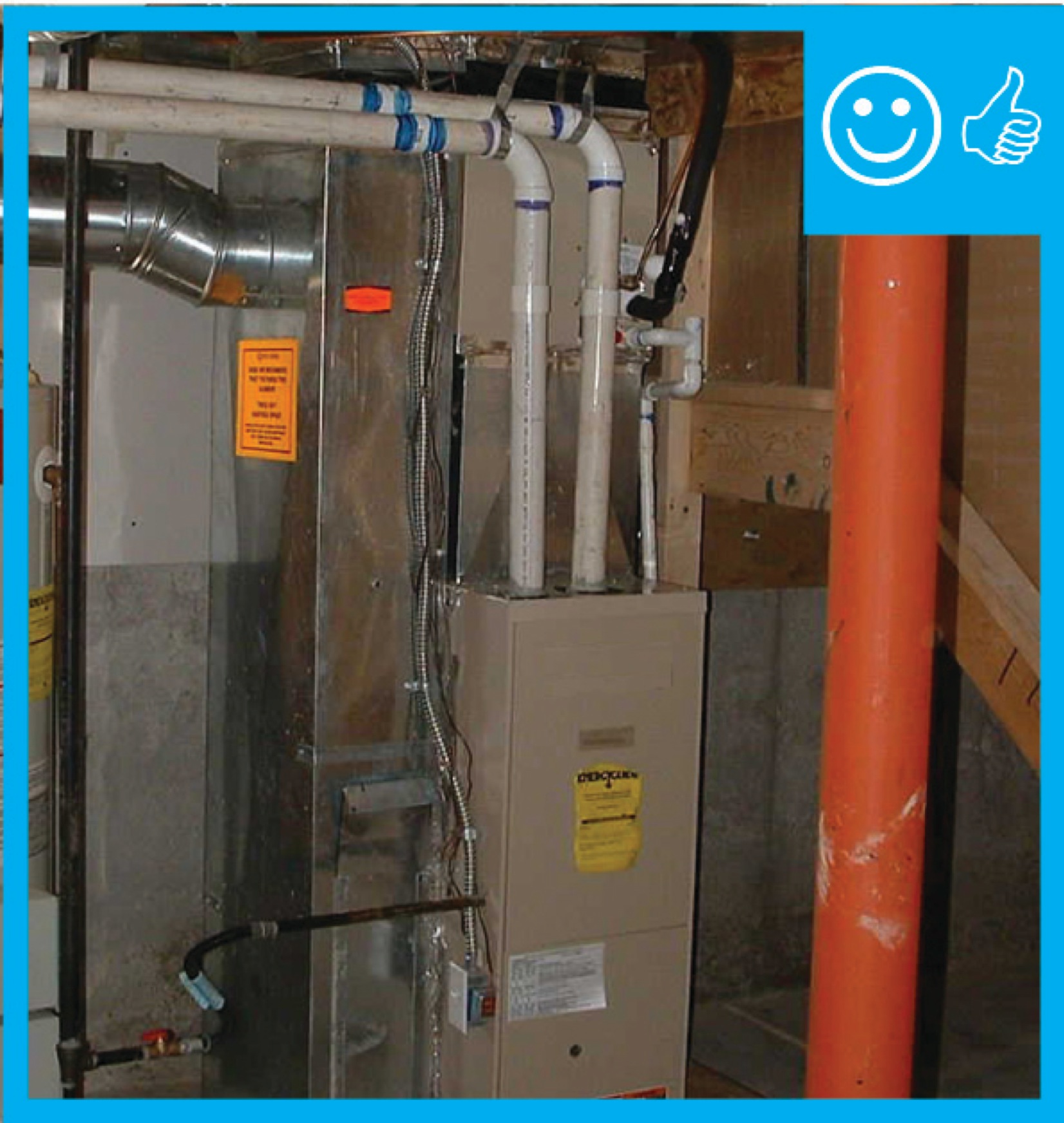
When specifying and installing combustion heating equipment, choose the highest efficiency equipment the project will allow. Select models that are direct vented meaning they are equipped with a pipe to bring combustion air directly from outside to the combustion chamber and they have a second sealed vent pipe to carry exhaust gases directly to the outside from the appliance.
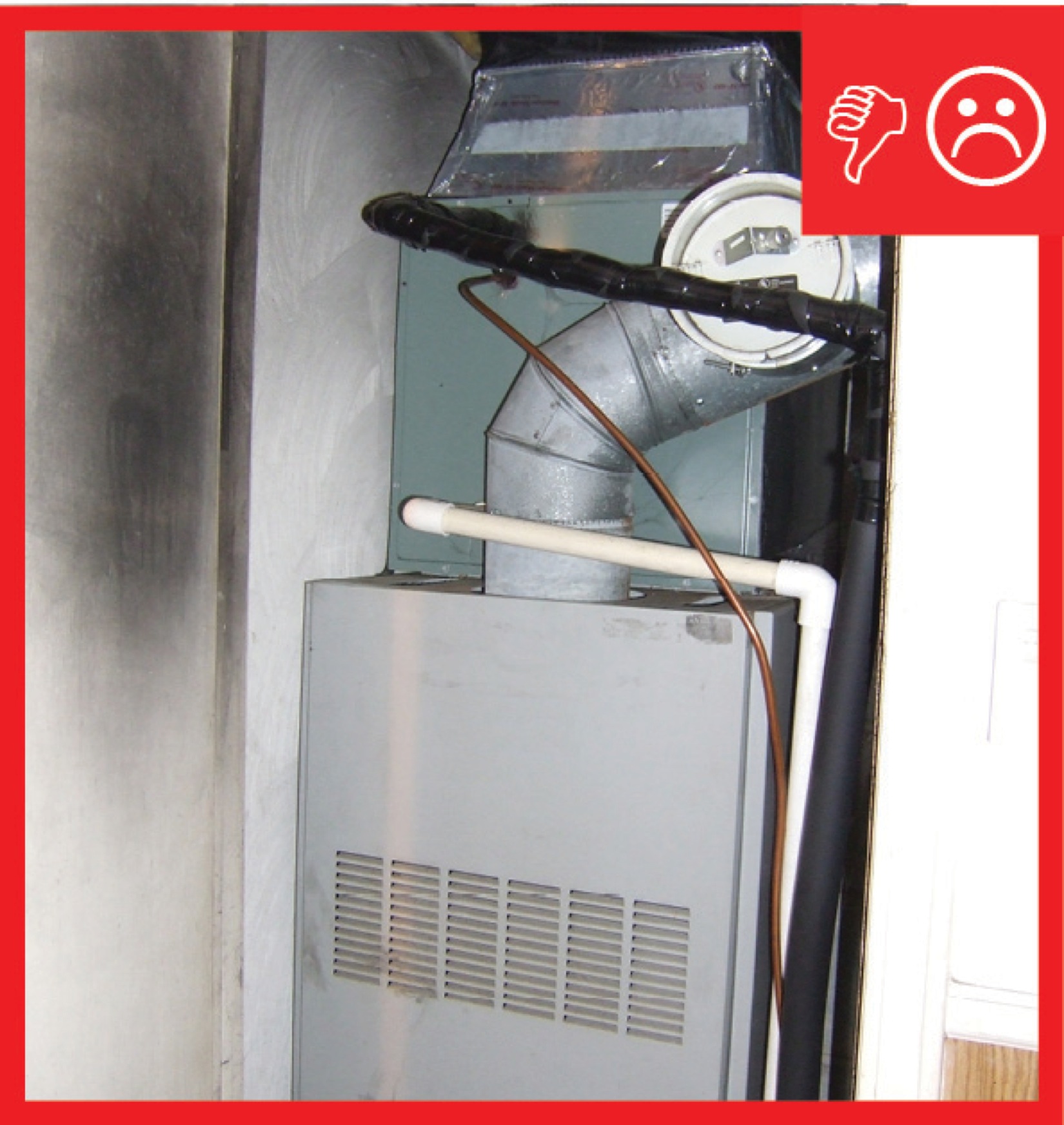
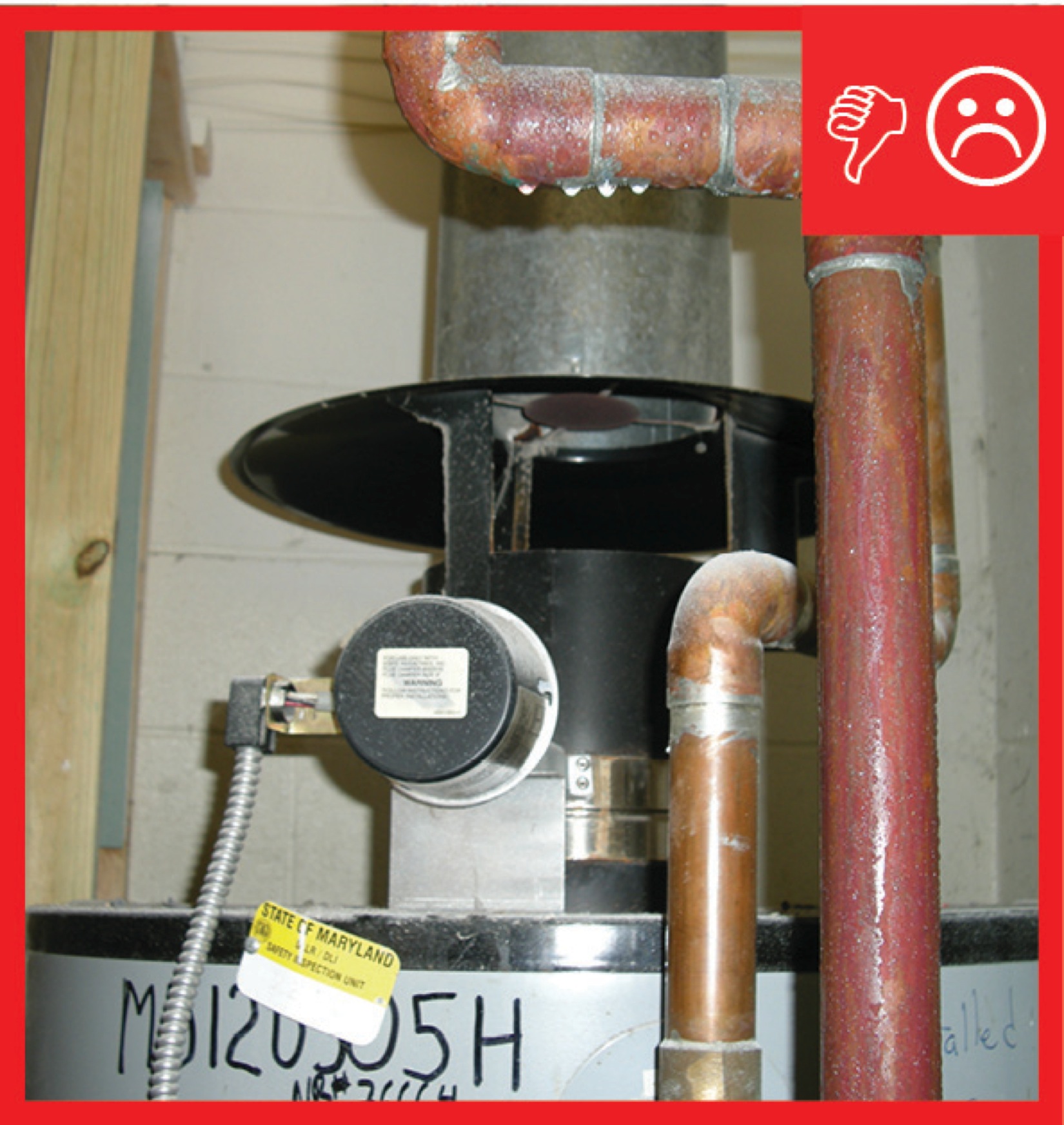
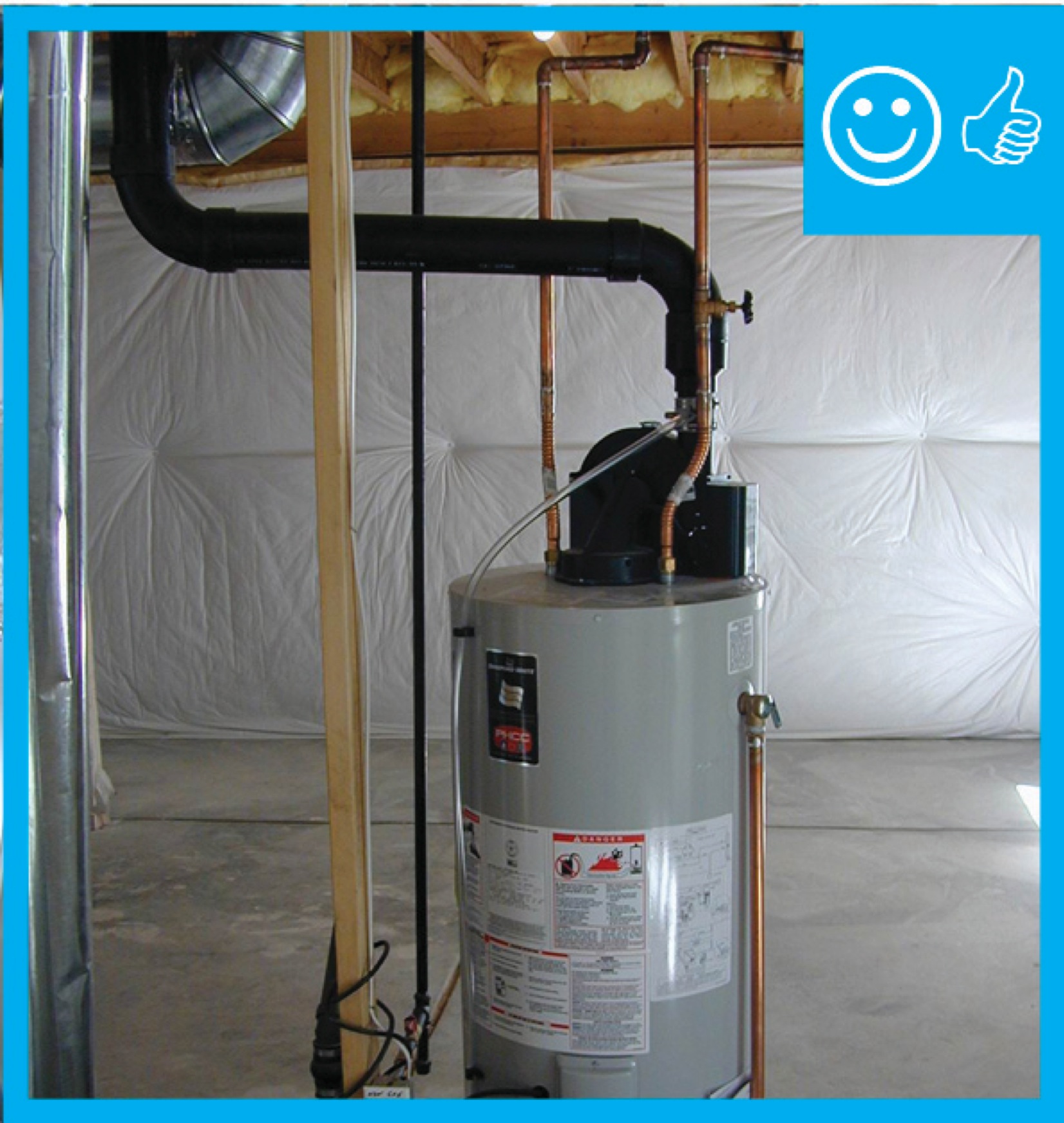
- All combustion space and water heaters should be direct vented or mechanically drafted. Do not install naturally drafted combustion appliances within the conditioned space of the home.
- Ensure that all fireplaces and wood stoves located in conditioned spaces are vented to the outdoors and supplied with adequate combustion and ventilation air according to the manufacturers’ installation instructions.
See the Compliance Tab for related codes and standards requirements, and criteria to meet national programs such as DOE’s Zero Energy Ready Home program, ENERGY STAR Single-Family New Homes, and Indoor airPLUS.
Description
When installing combustion furnaces, boilers, and water heaters inside the home’s pressure boundary (i.e., within the conditioned space of the home), the safest (and usually most energy efficient) type of equipment to install is a direct-vent, sealed-combustion appliance.
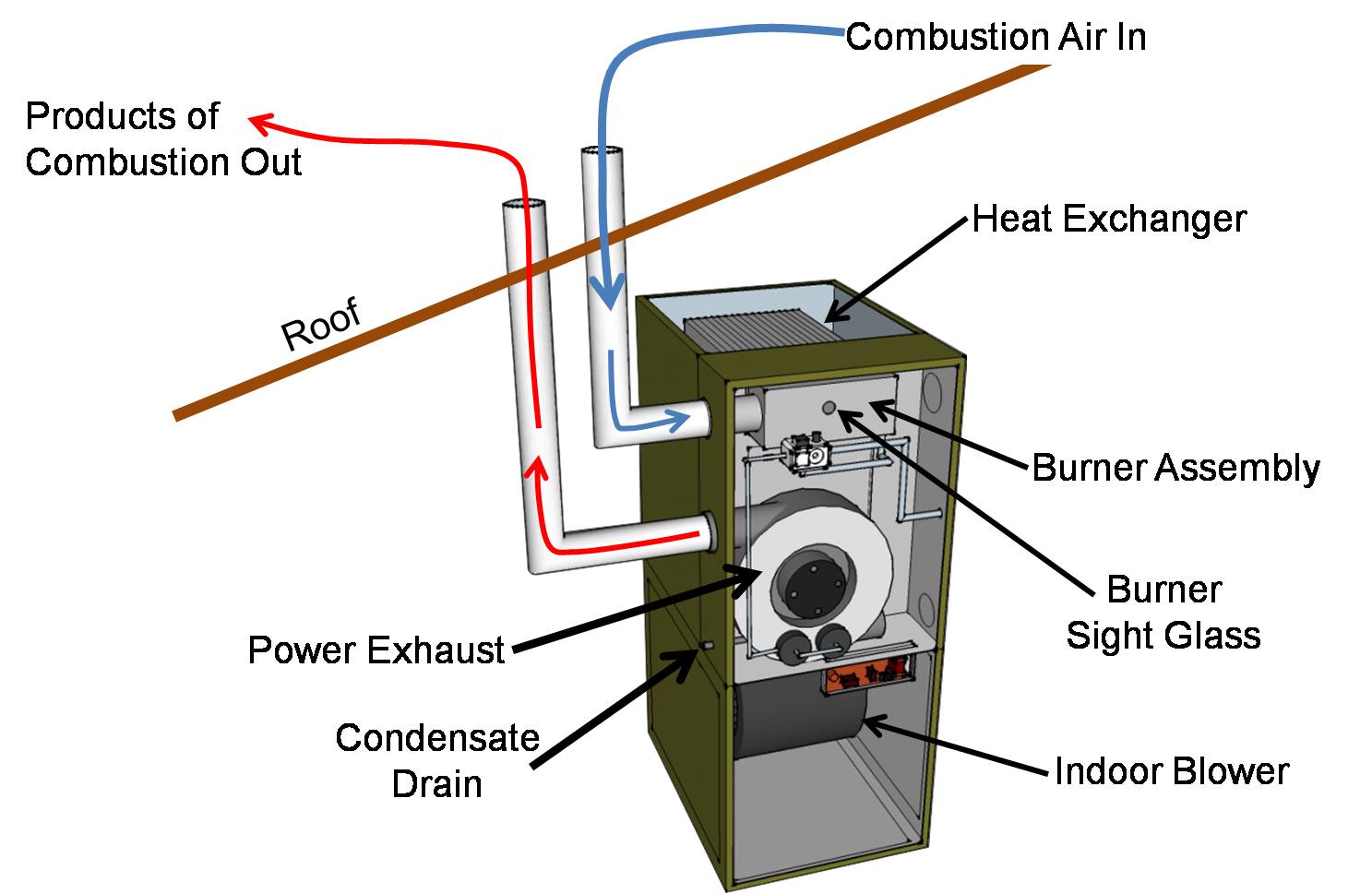
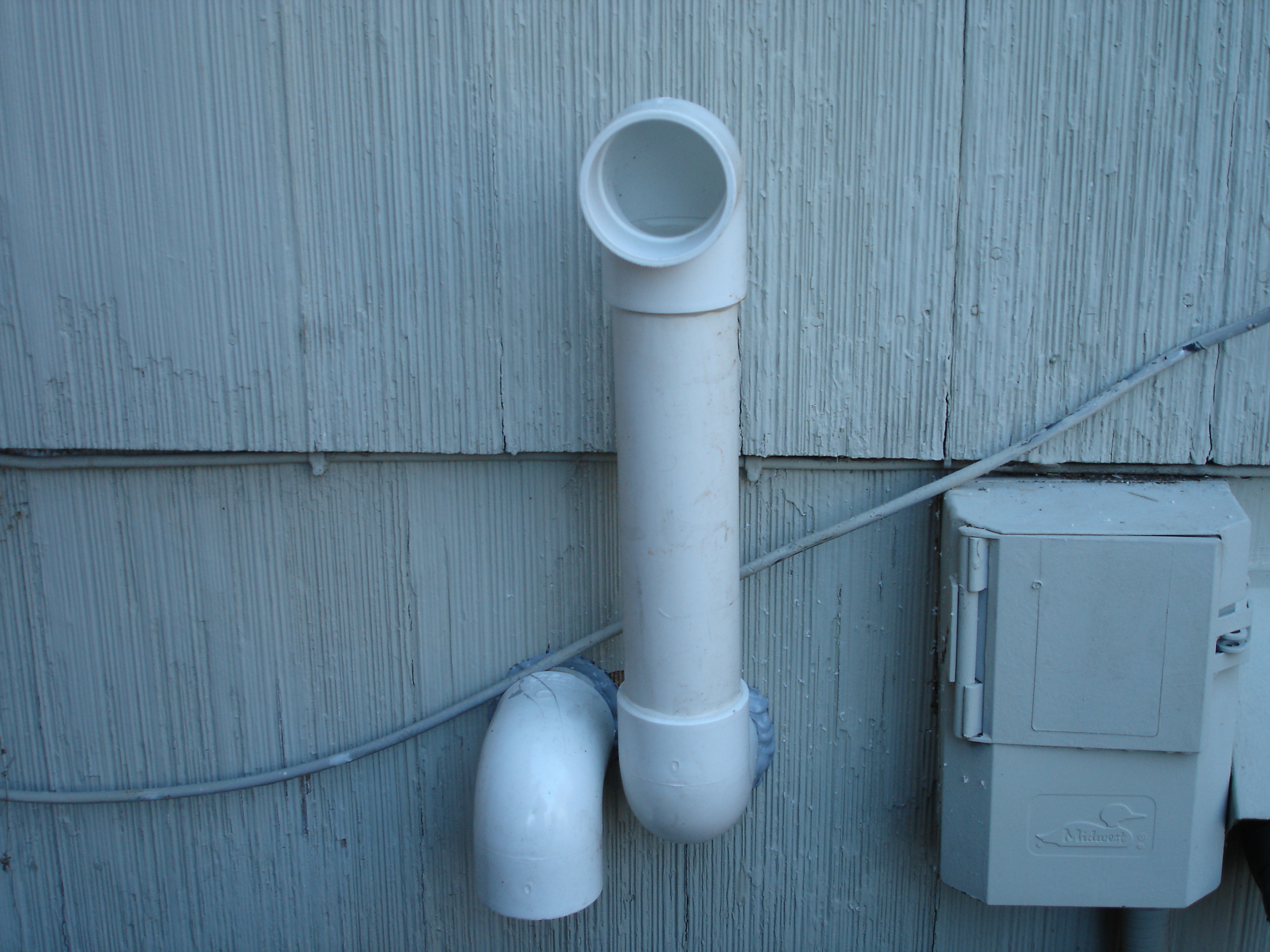
A direct-vent sealed-combustion furnace, boiler, or water heater brings combustion air directly from outdoors to the sealed combustion chamber through one sealed pipe and exhausts the byproducts of combustion (carbon dioxide and nitrogen) to the outdoors through a second sealed pipe (Figure 1). Because of this sealed combustion and sealed exhaust venting, the risk of backdrafting is eliminated. Combustion air (oxygen) enters the furnace through the sealed pipe and goes directly from the outdoors to the burner assembly. There it mixes with the fuel and is electronically ignited in the sealed combustion chamber. The heated air passes through a primary heat exchanger, which extracts most of the heat, and then through a secondary heat exchanger, where more heat is extracted, cooling the exhaust gases to the point that they condense. The condensed water and carbon dioxide exit through a condensate drain, while the remaining flue gases exit to the outside through the sealed exhaust pipe, which can be made of PVC because of the low temperature of the gases (Figure 2). Condensing furnaces have annual fuel utilization efficiencies (AFUE) of 90% to 98%.
The National Fuel Gas Code identifies four categories for combustion furnaces and water heaters (see Figure 3). The categories are based on combustion type (sealed or unsealed) and vent pipe temperature. Direct-vent sealed-combustion furnaces are Category 4 appliances. The flue and vent pipe are under a positive pressure, flue gases are under 140°F, and water vapor (a byproduct of combustion) is condensed into water liquid and drained to the outside through a condensate drain. Combustion air is piped directly to the burner, which is sealed off from the CAZ (sealed combustion) and the byproducts of combustion (carbon dioxide and nitrogen) are power exhausted to outdoors.
A Category 2 appliance is a naturally aspirating furnace with a vent temperature below 140°F that does some condensing of the flue gases and has negative pressure in the vent. Nearly all Category 2 appliances are huge commercial furnaces. A Category 3 appliance is a furnace with a vent temperature above 140°F (high enough to avoid condensation in the vent) and the vent has a positive static pressure.
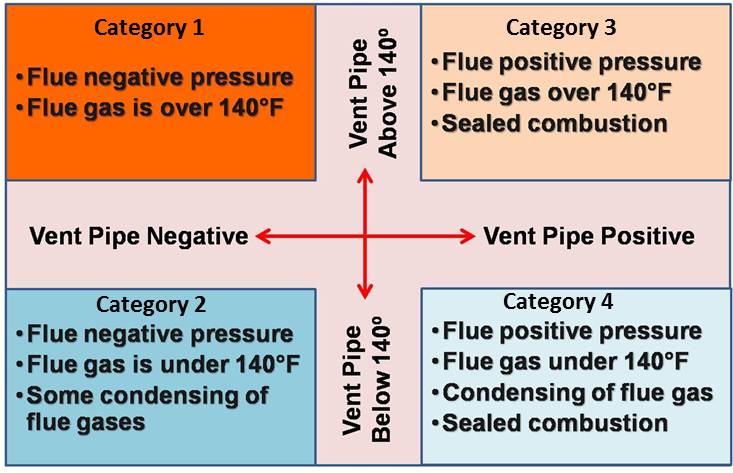
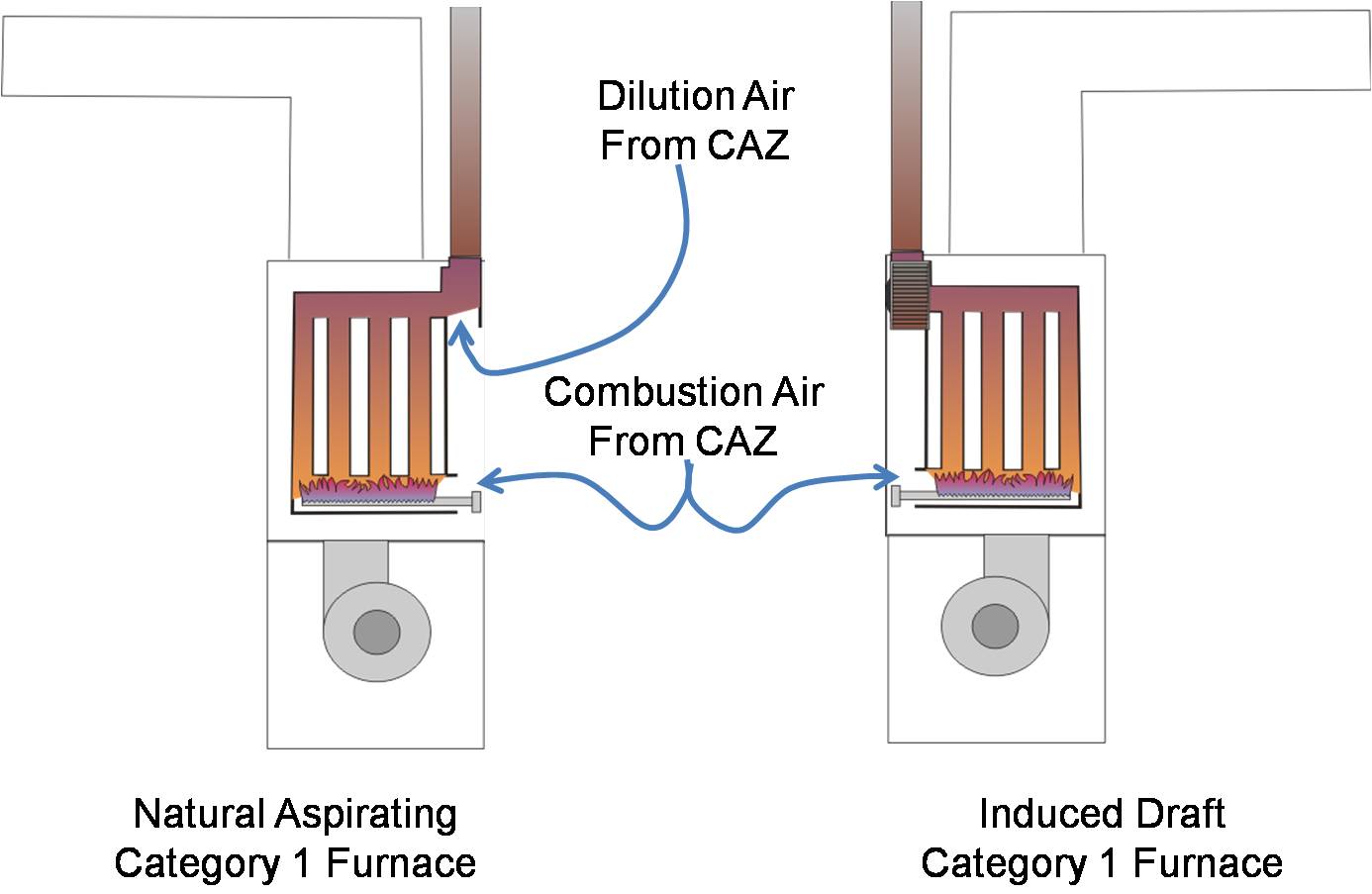
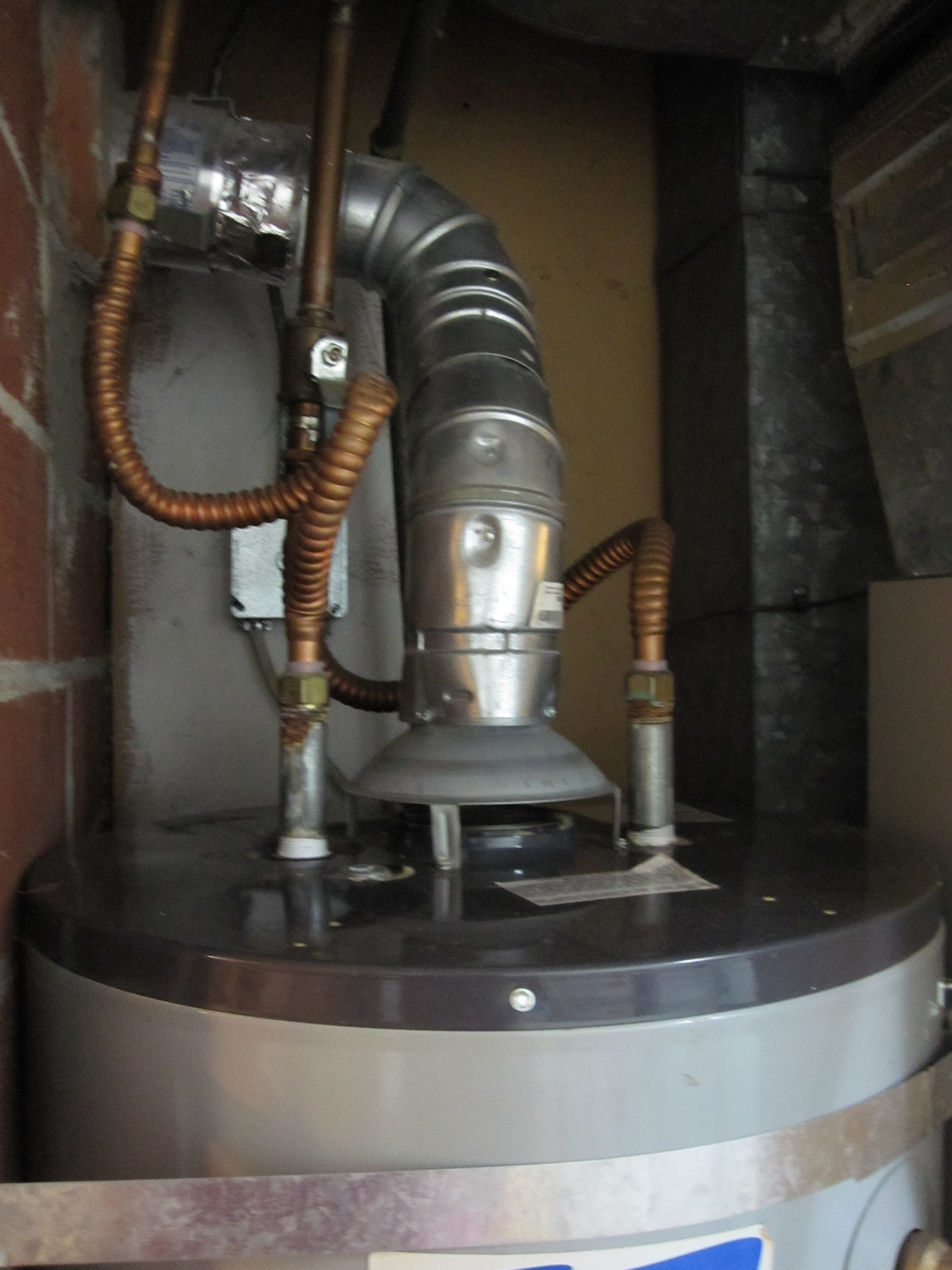
Category 1 combustion appliances are the oldest, least efficient type of combustion appliances. They have a flue gas temperature over 140°F and the flue pipe pressure is negative with respect to the space in which the appliance is located (referred to as the combustion appliance zone or CAZ). Category 1 appliances are either atmospheric or mechanically drafted. Atmospheric drafted (also called naturally drafted) furnaces use the heat in the flue to draw combustion air through the furnace and to lift combustion exhaust up and out of the chimney. Mechanically drafted category furnaces and water heaters use a small induced draft fan to pull air through the combustion chamber; however, the furnace still relies on flue temperatures to lift the combustion gases up the flue stack. Category 1 appliances are not direct vented (also known as sealed combustion); they are considered nondirect vented because there is no barrier between the burner and the CAZ. A Category 1 furnace or water heater draws its combustion and dilution air from the CAZ and the byproducts of combustion (carbon dioxide, nitrogen, and water vapor) are transported outside through the flue. Because Category 1 appliances draw their combustion air from the CAZ, they are susceptible to backdrafting.
Atmospheric draft furnaces have efficiencies of 60% to 78%. These appliances are no longer sold in the United States but are still found operating in existing homes. Induced draft fan-equipped Category 1 furnaces have AFUEs of 78% to 83% and there are still models available on the market, although direct-vent furnaces are much higher efficiency and safer to operate. Natural draft water heaters are still sold, although safer and more efficient water heaters are available, such as power-vented models, which use a fan to push combustion gases out the flue, and direct-vent models, which use a sealed intake for combustion air and a sealed flue for exhaust gases.
Naturally drafted appliances are not recommended inside the home, especially in air-tight, high-efficiency homes, where exhaust fans or other combustion appliances such as fireplaces could depressurize the home and overcome the natural draft of an atmospherically vented appliance, thus backdrafting the appliance and pulling combustion gases into the living space.
Although most building scientists would not recommend them, naturally drafted furnaces, boilers, and water heaters are permitted by ENERGY STAR Version 3.0 in Climate Zones 1 through 3 if the Rater has followed Section 805 of RESNET’s Standards, encompassing ANSI/ACCA 12 QH-2014, Appendix A, Sections A3 (Carbon Monoxide Test) and A4 (Depressurization Test for the Combustion Appliance Zone), and verified that the equipment meets the limits defined within.
For additional guidance on how to conduct combustion safety testing, see the guide Combustion Appliance Zone (CAZ) Testing.
Success
When furnaces, boilers, and water heaters are installed within the home’s pressure boundary (i.e., within the thermal envelope), this equipment should be direct-vent/sealed-combustion equipment. ENERGY STAR permits non-direct-vented combustion appliances in Climate Zones 1, 2, and 3 if the Rater has followed Section 805 of RESNET’s Standards, encompassing ANSI/ACCA 12 QH-2014, Appendix A, Sections A3 (Carbon Monoxide Test) and A4 (Depressurization Test for the Combustion Appliance Zone), and verified that the equipment meets the limits defined within.
Climate
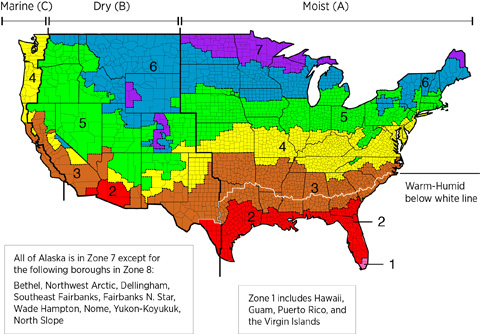
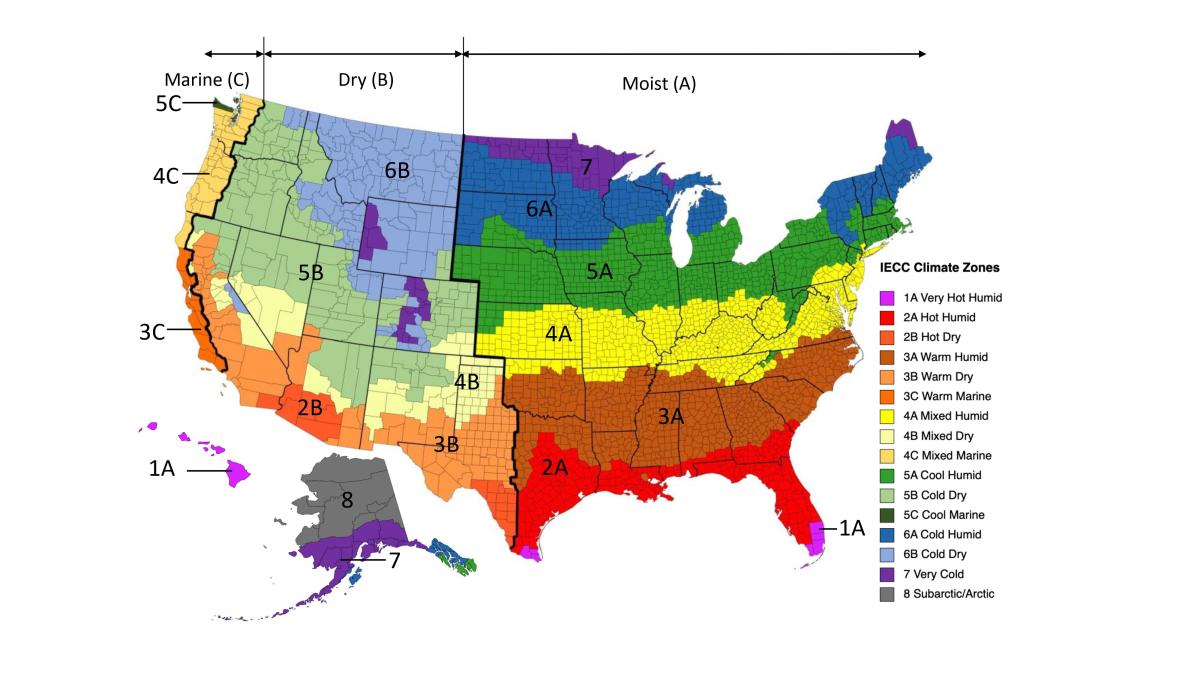
The map in Figure 1 shows the climate zones for states that have adopted energy codes equivalent to the International Energy Conservation Code (IECC) 2009, 12, 15, and 18. The map in Figure 2 shows the climate zones for states that have adopted energy codes equivalent to the IECC 2021. Climate zone-specific requirements specified in the IECC are shown in the Compliance Tab of this guide.
Cold Climates
In cold climates, in addition to proper sizing, it is critical to make sure that the air intake and exhaust discharge vents are located sufficiently above anticipated snow line. The intake should be sufficiently separated from the exhaust vent to prevent frost buildup on the cold air intake pipe. The exhaust discharge must be sufficiently high so that frozen condensation that may accumulate on the ground will not block the exhaust pipe. Condensate lines should be directed to an indoor drain.
Training
Compliance
Compliance
The Compliance tab contains both program and code information. Code language is excerpted and summarized below. For exact code language, refer to the applicable code, which may require purchase from the publisher. While we continually update our database, links may have changed since posting. Please contact our webmaster if you find broken links.
ENERGY STAR Single-Family New Homes, Version 3/3.1 (Rev. 11)
National Rater Field Checklist
HVAC System.
10. Combustion Appliances.
10.1 Furnaces, boilers, & water heaters are mechanically drafted or direct-vented. Alternatives in Footnote 66. 64, 65, 66
10.2 Fireplaces are mechanically drafted or direct-vented. Alternatives in Footnote 67. 64, 65, 67
10.3 If unvented combustion appliances other than cooking ranges or ovens are located inside the home’s pressure boundary, the Rater has followed ANSI/ACCA 12 QH-2014, Section 3.2.2, Appendix A Sections A2.2.6, A3, and A4, and verified the equipment meets the limits defined within. 64, 68
Footnote 64) The pressure boundary is the primary enclosure boundary separating indoor and outdoor air. For example, a volume that has more leakage to outside than to conditioned space would be outside the pressure boundary.
Footnote 65) Per the 2009 International Mechanical Code, a direct-vent appliance is one that is constructed and installed so that all air for combustion is derived from the outdoor atmosphere and all flue gases are discharged to the outside atmosphere; a mechanical draft system is a venting system designed to remove flue or vent gases by mechanical means consisting of an induced draft portion under non-positive static pressure or a forced draft portion under positive static pressure; and a natural draft system is a venting system designed to remove flue or vent gases under nonpositive static vent pressure entirely by natural draft.
Footnote 66) This item only applies to furnaces, boilers, and water heaters located within the home’s pressure boundary. Naturally drafted equipment is allowed within the home’s pressure boundary in Climate Zones 1-3 if the Rater has followed ANSI / ACCA 12 QH-2014, Section 3.2.2, Appendix A Sections A2.2.6, A3 (Carbon Monoxide Test), A4 (Depressurization Test for the Combustion Appliance Zone), and verified that the equipment meets the limits defined within.
Footnote 67) This item only applies to fireplaces located within the home’s pressure boundary. Naturally drafted fireplaces are allowed within the home’s pressure boundary if the Rater has verified that the total net rated exhaust flow of the two largest exhaust fans (excluding summer cooling fans) is ≤ 15 CFM per 100 sq. ft. of occupiable space when at full capacity. If the net exhaust flow exceeds the allowable limit, it shall be reduced or compensating outdoor airflow provided. Per ASHRAE 62.2-2010, the term “net rated exhaust flow” is defined as flow through an exhaust fan minus the compensating outdoor airflow through any supply fan that is interlocked to the exhaust fan. Per ASHRAE 62.2-2010, the term “occupiable space” is defined as any enclosed space inside the pressure boundary and intended for human activities, including, but not limited to, all habitable spaces, toilets, closets, halls, storage and utility areas, and laundry areas. See Footnote 51 for the definition of “habitable spaces”.
Footnote 68) The minimum volume of combustion air required for safe operation by the manufacturer and / or code shall be met or exceeded. Also, in accordance with the National Fuel Gas Code, ANSI Z223.l / NFPA54, unvented room heaters shall not be installed in bathrooms or bedrooms.
Please see the ENERGY STAR Single-Family New Homes Implementation Timeline for the program version and revision currently applicable in your state.
DOE Zero Energy Ready Home (Revision 07)
Exhibit 1 Mandatory Requirements.
Exhibit 1, Item 1) Certified under the ENERGY STAR Qualified Homes Program or the ENERGY STAR Multifamily New Construction Program.
Exhibit 1, Item 6) Certified under EPA Indoor airPLUS.
EPA Indoor airPLUS (Revision 04)
5.1 Combustion Equipment Located in Conditioned Spaces.
- Mechanically draft or direct vent all gas- and oil-fired furnaces, boilers and water heaters located in conditioned spaces. Naturally drafted equipment is allowed in Climate Zones 1-3 if the Rater has followed the combustion safety test procedures in Section 805 of the RESNET Standard (ENERGY STAR requirement).
- Fireplaces that are not mechanically drafted or direct-vented to the outdoors must meet maximum allowed exhaust flow (ENERGY STAR requirement).
- Do not install any unvented combustion space-heating or decorative appliances within conditioned space.
- Ensure that all fireplaces and other fuel-burning and spaceheating appliances located in conditioned spaces are vented to the outdoors and supplied with adequate combustion and ventilation air according to the manufacturers' installation instructions.
- Meet the following energy efficiency and emissions standards and restrictions for all fireplaces and other fuel-burning and space-heating appliances located in conditioned spaces:
- Traditional masonry fireplaces designed for open fires are not permitted, with the exception of "masonry heaters" as defined by ASTM E1602 and section 2112.1 of the 2012 International Building Code (i.e., fireplaces engineered to store and release substantial portions of heat generated from a rapid burn).
- Factory-built wood-burning fireplaces shall meet the certification requirements of UL 127 and shall have tightfitting, gasketed glass doors and a dedicated outside air supply. Advisory: Factory-built wood burning fireplaces qualified under EPA's wood-burning fireplace program are recommended.
- Wood stove and fireplace inserts as defined in section 3.8 of UL 1482 shall meet the certification requirements of that standard, AND they shall meet the emission requirements of the EPA’s New Source Performance Standards for new residential wood heaters.
- Pellet stoves shall meet the requirements of ASTM E1509 AND they shall meet the emission requirements of the EPA New Source Performance Standards for new residential wood heaters.
- Natural gas and propane fireplaces shall have a permanently affixed glass front or gasketed door, and be power vented or direct vented in accordance with ANSI Z21.88/CSA 2.33. Decorative gas logs as defined in ANSI Z21.84/CSA 2.33 are not permitted.
Note: Unfinished basements and crawlspaces (except raised pier foundations with no walls) and attached garages that are air-sealed to the outside and intended for use as work or living space, are considered “conditioned spaces” for the purpose of this requirement.
2009, 2012, 2015, 2018, and 2021 International Residential Code (IRC)
Chapter 14 Heating and Cooling equipment covers general requirements, installation, clearances, and location. Chapter 24 Fuel Gas is extracted from the International Fuel Gas Code with modifications and covers gas piping systems, appliances, venting systems, and combustion air configurations.
Section M1441.3 states that condensate from cooling coils and evaporators should be disposed of to an approved location (in order to prevent nuisance) and describes requirements for the condensate disposal.
Retrofit: 2009, 2012, 2015, 2018, and 2021 IRC
Section R102.7.1 Additions, alterations, or repairs. Additions, alterations, renovations, or repairs shall conform to the provisions of this code, without requiring the unaltered portions of the existing building to comply with the requirements of this code, unless otherwise stated. (See code for additional requirements and exceptions.)
Appendix J regulates the repair, renovation, alteration, and reconstruction of existing buildings and is intended to encourage their continued safe use.
Air Conditioning Contractors of America (ACCA) Standards
ACCA Standard 5: HVAC Quality Installation Specification, ANSI/ACCA 5 QI-2010, details nationally recognized criteria for the proper installation of residential and commercial HVAC systems, including forced air furnaces, boilers, air conditioners, and heat pumps. The Standard covers aspects of design, installation, and distribution systems, as well as necessary documentation. The Technician’s Guide for Quality Installation, produced by ACCA, explains the HVAC Quality Installation (QI) Specification and provides detailed procedures for the steps technicians must complete and document to show compliance with the HVAC QI Specification.
ACCA Standard 9: HVAC Quality Installation Verification Protocols, ANSI/ACCA 9 QIVP-2009, specifies the protocols to verify the installation of HVAC systems in accordance with ACCA Standard 5. The protocols provide guidance to contractors, verifiers, and administrators who participate in verification efforts using independent objective and qualified third parties to ensure that an HVAC installation meets the requirements in Standard 5.
National Fuel Gas Code (NFPA-5 2012)
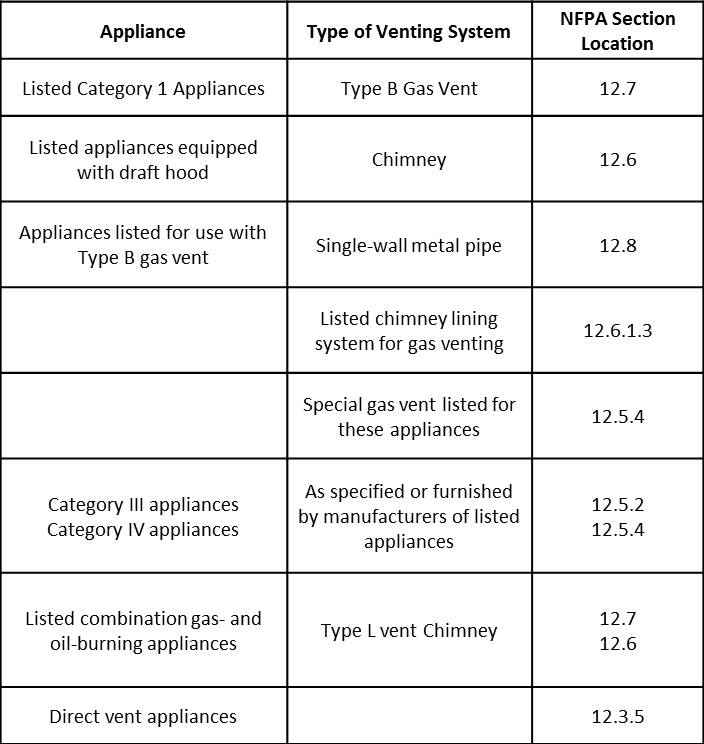
The products of combustion from a gas-fired furnace (non-condensing) are vented out of the building using specific types of vent pipes made up of different materials depending on the flue gas temperatures, as specified in ANSI Z223.1, the National Fuel Gas Code (NFPA-5 2012), "Table 12.5.1 Type of Venting System to Be Used." Table 2 shows appropriate venting materials for residential vented combustion appliances, excerpted from the NFPA Table 12.5.1.
See the National Fuel Gas Code for additional relevant requirements.
2009, 2012, 2015, and 2018 International Mechanical Code (IMC)
Comply with all relevant sections. Note, Chapter 2 - Definitions defines categories of combustion appliances based on venting type.
Retrofit
When conducting renovation work in older homes, identify any combustion appliances located in the home (e.g., gas or oil-fired water heater, boiler, or furnace) and determine whether they are sealed combustion/direct vent appliances or older-model atmospheric-draft or induced-draft combustion appliances (also known as Category 1 appliances based on their designation in the National Fuel Gas Code; see the Description tab for an explanation of these categories). Any renovation work that will involve air sealing and insulating rooms, attics, basements, or crawlspaces that may contain category 1 appliances will impact how much air is available to the appliance for combustion. Combustion safety testing must be done before and after renovation work, as described in the Description tab. If the home currently has atmospheric-draft or induced-draft combustion appliances, the best course of action is to replace them with more efficient and safer-direct vent combustion appliances or other non-combustion equipment.
For more information on combustion appliances, please see the assessment guide, Pre-Retrofit Assessment of Combustion Appliances.
The U.S. Department of Energy’s Standard Work Specifications has additional information on combustion appliances.
See Compliance tab.
More
More Info.
Access to some references may require purchase from the publisher. While we continually update our database, links may have changed since posting. Please contact our webmaster if you find broken links.
The following authors and organizations contributed to the content in this Guide.